
House Bill 2320, a bill that Washington State Legislature passed into law March 11, updates existing ‘ghost gun’ policy to make fabricating guns and gun parts using 3D printers and other industrial manufacture machines without proper permits illegal. The law will go into effect July 1.
HB 2321, currently stalled, is a follow-up bill that details the specifics of these restrictions.
There has been a mixed public reaction to both bills, with support for the strengthening of Washington's gun legislation, as well as criticism over the wording and execution of the restrictions themselves.
In Washington, a ghost gun, legally referred to as an untraceable firearm, is defined as a firearm with no serial number from a federally licensed manufacturer. The use and production of these firearms are heavily regulated.
Democratic state Rep. Osman Salahuddin of the 48th legislative district is the primary sponsor for both bills. Democratic state Rep. Strom Peterson of the 21st legislative district is one of the secondary sponsors.
“One of the things that I'm really proud of that we've done in the legislature over the last number of years is pass a lot of common sense gun legislation that keeps Washingtonians safe,” Peterson said.
The Alliance for Gun Responsibility, a gun legislation organization that scores states on the quality of their gun control laws, has raised Washington’s grade from a C- to an A.
While many agree with the sentiment of wanting to increase restrictions on ghost guns, objectors to HB 2321 in particular voiced concerns over the vague and inconclusive wording of its proposed restrictions.
Proposed regulations in beginning drafts of HB 2321 included preinstalled programs on machines that scan files that individuals are printing, blocking mechanisms that reject prints when guns or gun parts are detected, and software that flags suspect files.
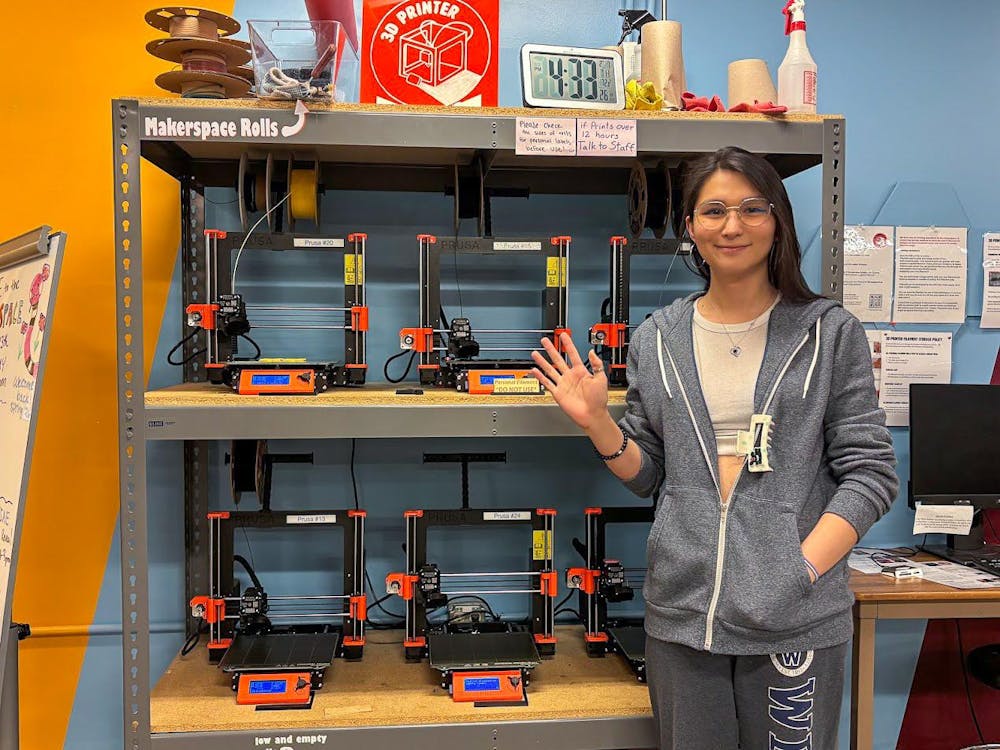
Dee Montano, a student technician at the WWU Makerspace specializing in 3D printers, worries about the ambiguity in how these bills will be enforced. Montano and other online hobbyists and technicians have pointed out a number of flaws in these proposed solutions.
“3D printing is entirely based upon the input of a person. It's not something that is done automatically for you beyond slicing a 3D model into layers. So I have, frankly, no idea how they plan to implement those restrictions,” Montano said. Because 3D printing machines can only process printing directions, a program for identifying what a printer is making would be functionally impossible, Montano said.
Student Technology Center supervisor Thayne Yazzie shared similar concerns over the accessibility of 3D printing moving forward. Yazzie worries that under the wrong implementation, automated 3D printing regulation could result in increased government overreach in creative and educational spaces like the STC.
“If (3D printing) starts getting put behind paywalls and bureaucratic components, that just makes it harder for people to make things, and that would be such a loss on society because people make amazing things,” Yazzie said.
With HB 2321 stalled, Montano and other 3D printing experts have weighed in on simpler and more effective solutions.
Since many users are not modeling the things they create themselves, Montano believes monitoring 3D model libraries that exist online is a faster and more effective solution. Moderating the most accessible parts of 3D printing makes it easier to keep suspect parts out of circulation.
Peterson reiterated that HB 2321 is being reworked with these concerns in mind, and hopes to continue working with experts and creatives in order to address issues of gun violence more effectively.
Marina Sasaki (she/her) is a current second-year and reporter at The Front. She loves reading, writing and all kinds of art. If she's not cooped up working on projects, she's hanging out with friends and adventuring. You can reach her at marina.thefront@gmail.com.