

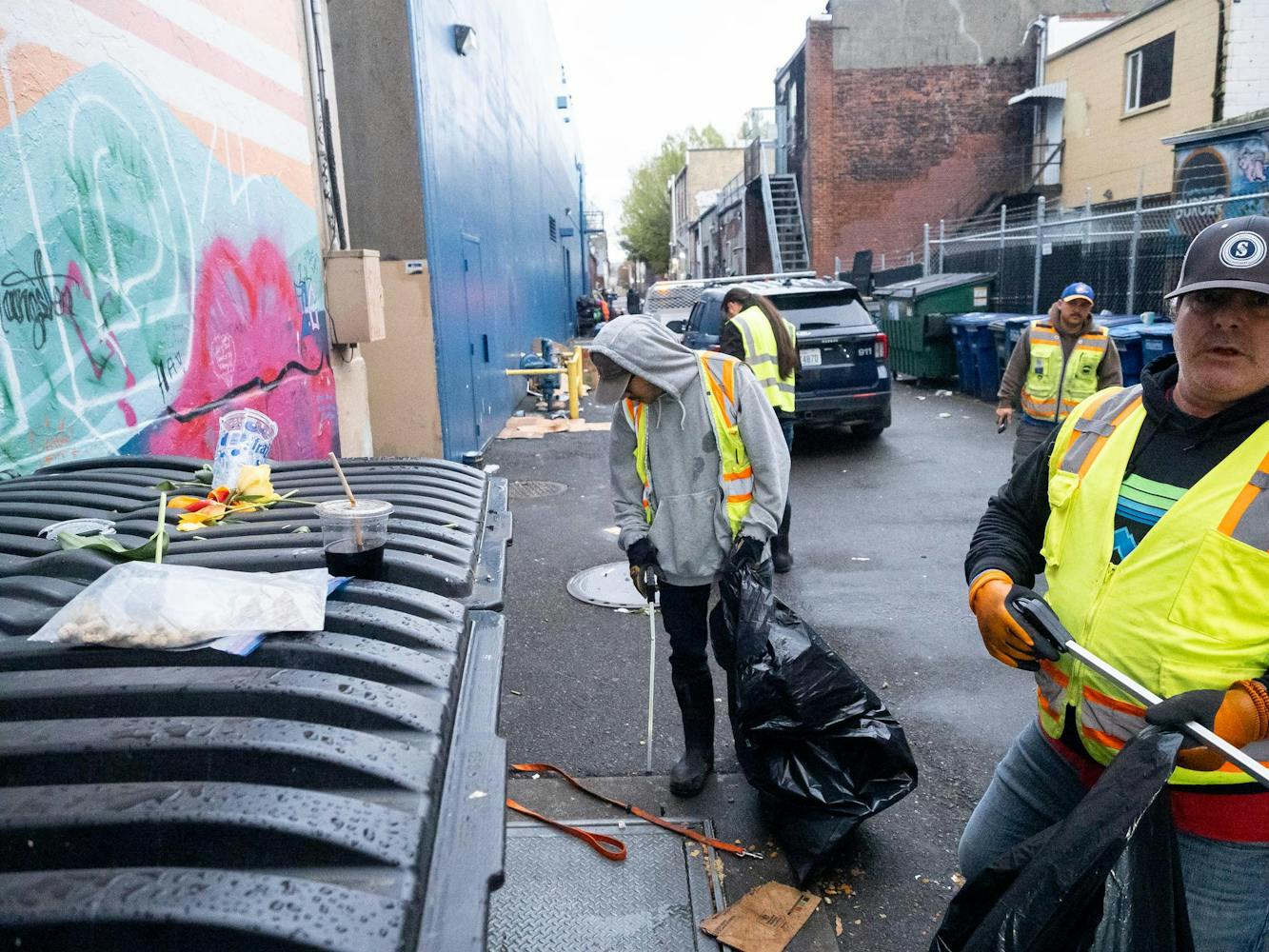

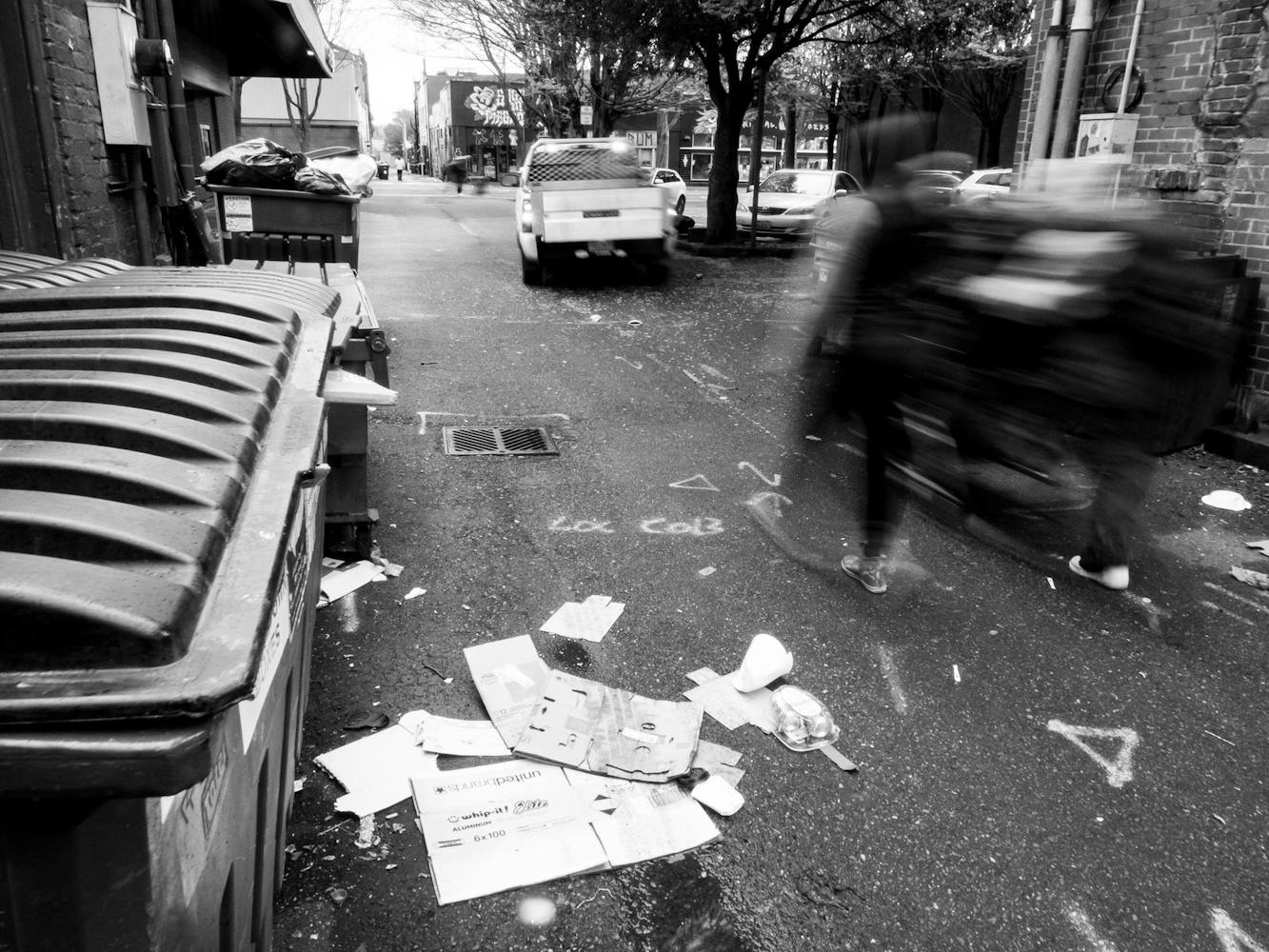
On March 23, the City of Bellingham approved an ordinance that allows the public works director, based on the recommendation of the police chief, to temporarily close certain alleyways in the downtown district and remove their inhabitants. The closures were approved on April 13, and construction began the following day.
Local business owners, like Cory Blackwood of Ritual Records, are accustomed to living and working with those facing houselessness near their storefront. Blackwood has been working downtown near the proposed alleyway for three and a half years.
“They always clean up for themselves, they’re polite. I like to show up a few hours before we open and they tell me they’ll leave right away. I tell them it’s no rush,” Blackwood said of those who sleep under the cover of the storefront.
“The alleyway can be different,” he said. “I got threatened with a knife this week.”
Blackwood said he’s torn on the alleyway closure. He feels that forcing the problems of the alley into the open will push the town to deal with them properly. Fentanyl use is a major problem for him, and he said that there was a time when people were selling dogs illegally.
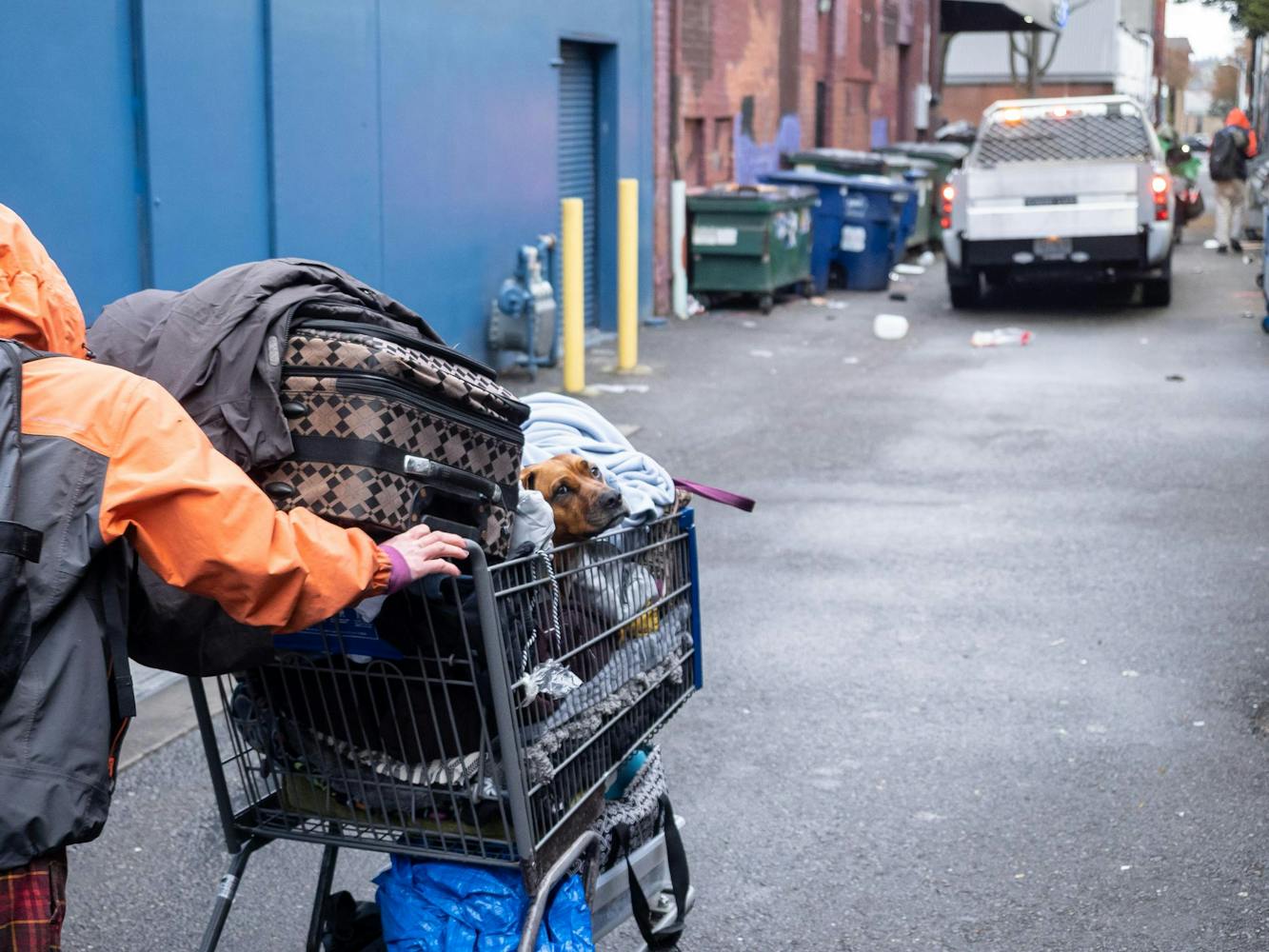
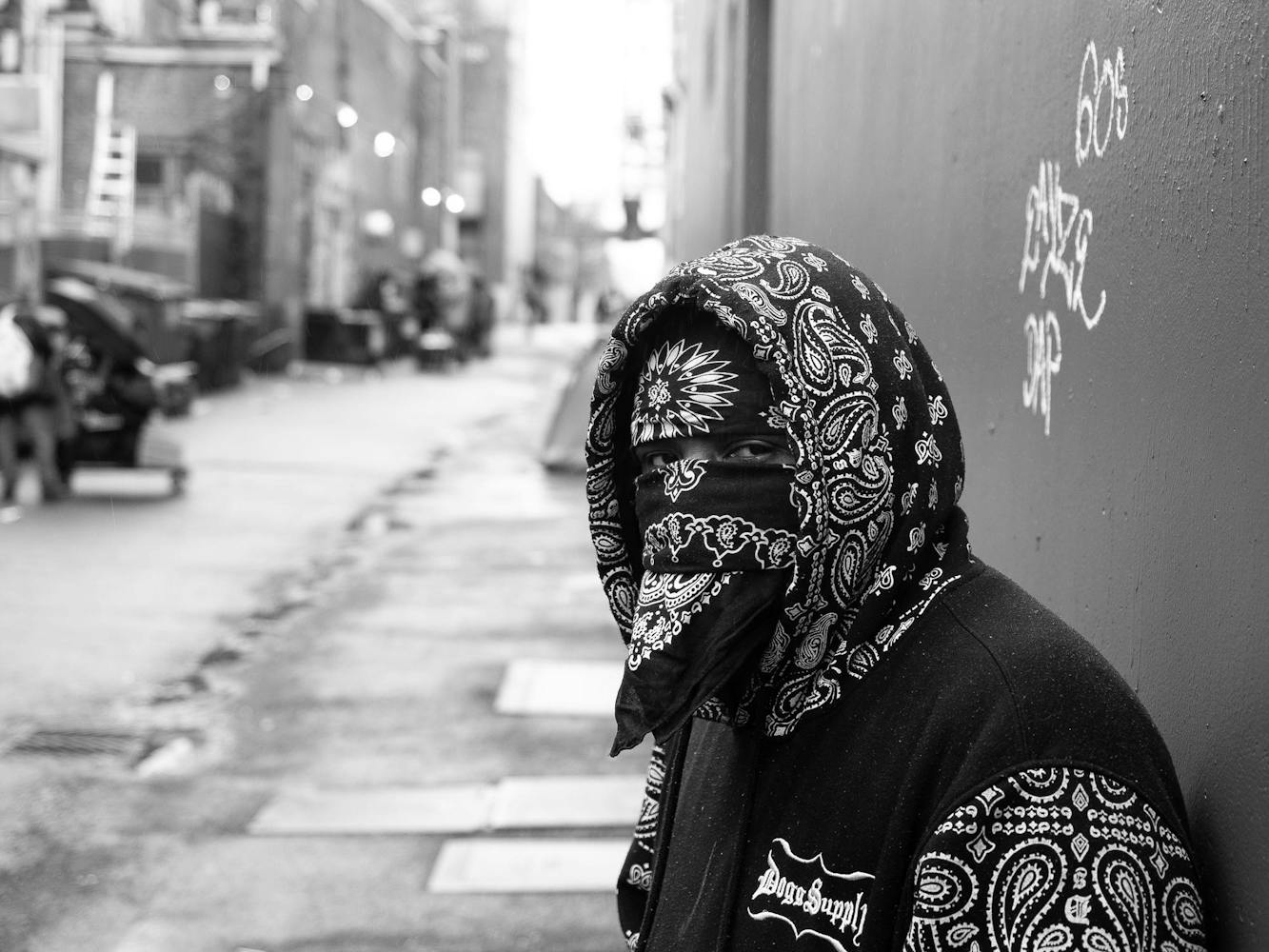
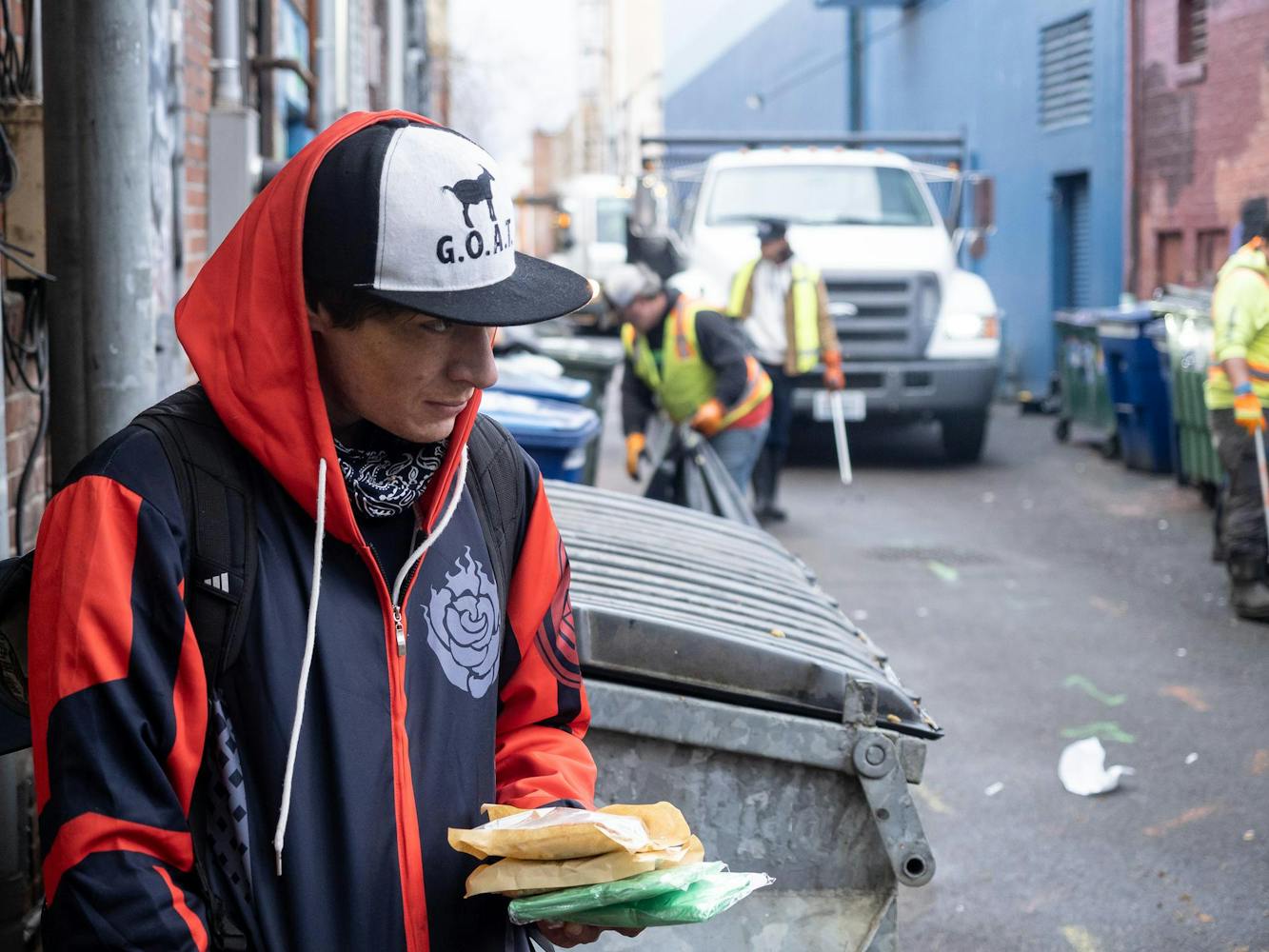
Inside the alleyways, life is anything but a breeze. A man named Kyle, who wears a flat brim hat with long chains and has a confident smile, has been living in and out of the alleyway near the Horseshoe Cafe for nine years. Another local said that delivery and garbage trucks often hit alley residents. Last week, one of their friends had their foot crushed by a truck coming too fast through the alleys.
Though life in the alleys is often hidden from the public eye, service providers and caretakers pass through during the day.
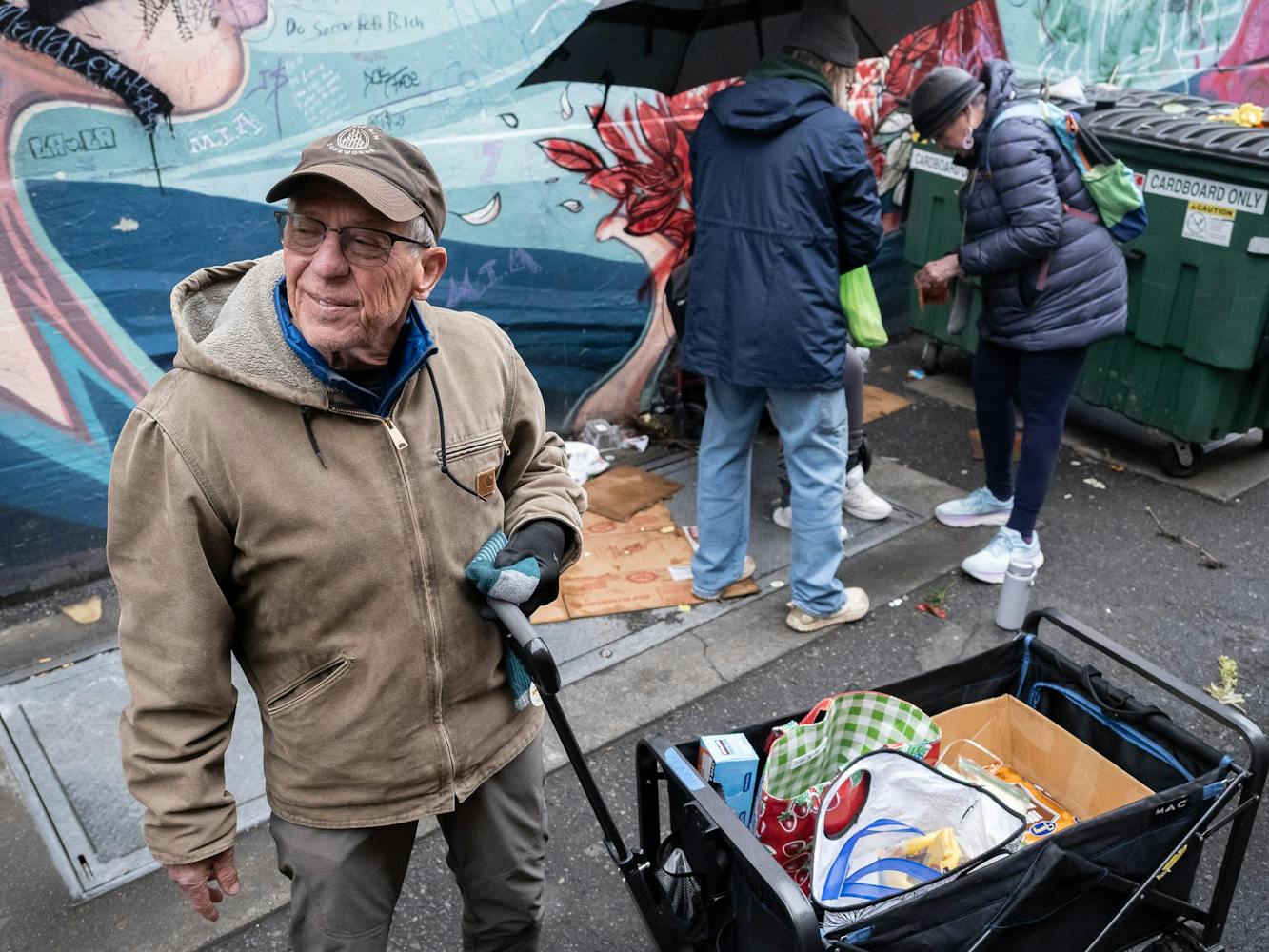
“We give out a lot of sandwiches, grains, fruit, protein bars, cigarettes,” said Michael Simpson of Road2Home, a nonprofit that builds tiny homes, or “bungaloos” as he calls them, near Whatcom Falls. He offered aid to other workers, reporters and alley residents alike.
One woman, named Ares, is 31 years old and has been living in and around the alleyway her entire life. Her mother, who also lives in the alleyway, is missing one of her arms. Ares said her mother is addicted to opioids, primarily fentanyl, but heroin is common as well.
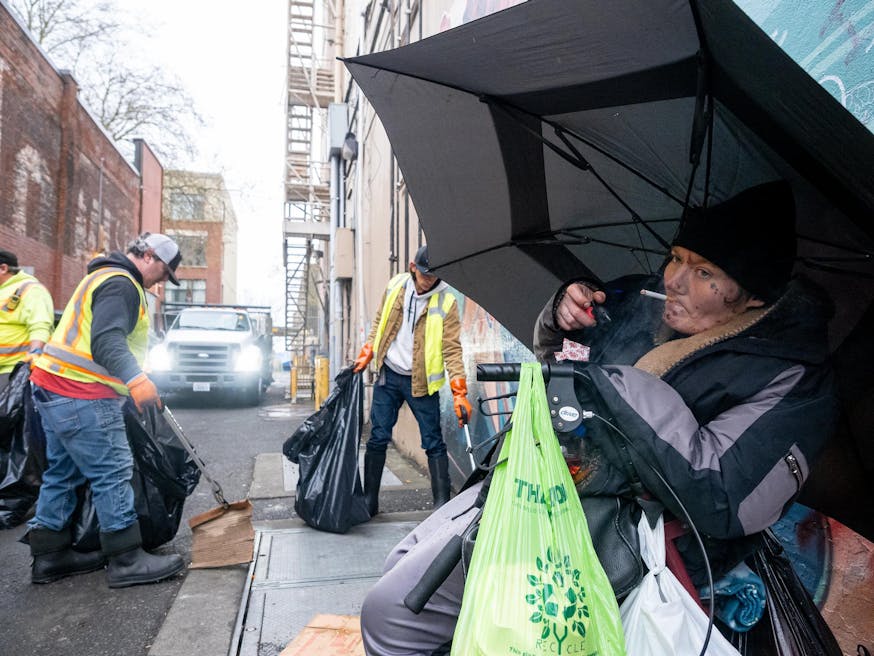
“I’ve been trying to go to detox. What can I say? I’m not clean,” Kyle said, hanging by the dumpster with Ares.
For many in the alley, their first name is the only name they share. While nicknames are common, communal names with stories behind them such as Ares, Tragedy, and Fives often take the place of legal names.
Many alley residents lead with the fact that they are in and out of detox, and some of them use drugs openly, offering them to others nearby. The offers reflect the communal nature of the alley; the residents are eager to share something valuable to them in order to uplift their neighbors.
Ares said that attacks against unsheltered women are common, but that they are safer in the alley, particularly at night. If a fight breaks out, people are quick to stop it.
Ares’ face is torn open and bleeding badly. When asked if she fell victim to such violence, she fell silent and began to cry. She said that she worries that more harm will be caused by the closures.
In 2025, the police department documented 108 incidents of violence and 342 drug-related calls, including 89 overdoses, on one three-block section of the alley between Railroad and Cornwall avenues, according to the city’s crime statistics.
“It's important to note that our focus here is on drug activity,” said Kelsey Thomas, assistant director of communications and community outreach for the City of Bellingham. “The action ties directly into the mayor’s executive order addressing the fentanyl crisis downtown. We are not trying to remove people who are homeless from downtown or displace people without support.”
Thomas said that city care workers will make their way through the alleys offering support and resources to those inside in advance of any closure, and that their effectiveness will be monitored closely. As of now, Thomas confirms that no closures are planned, though the fencing infrastructure will be installed before the end of the month.
“This past winter, we opened a severe weather day shelter, which proved successful,” Thomas said. “We are now working to open a permanent day center this fall. It’s a top priority for Mayor Lund.”
According to the ordinance, “The city worked with the Didgʷálič Wellness Center to establish a downtown location for its mobile opioid treatment center.”
Benji Cook (he/him) is a city news reporter for The Front. He is a post-baccalaureate visual journalism student with over a decade of experience as a professional photographer, covering everything from outdoor sports to political rallies. He holds a bachelor's degree in creative media production from the University of Colorado, Boulder. You can reach him at benjcook.thefront@gmail.com.