
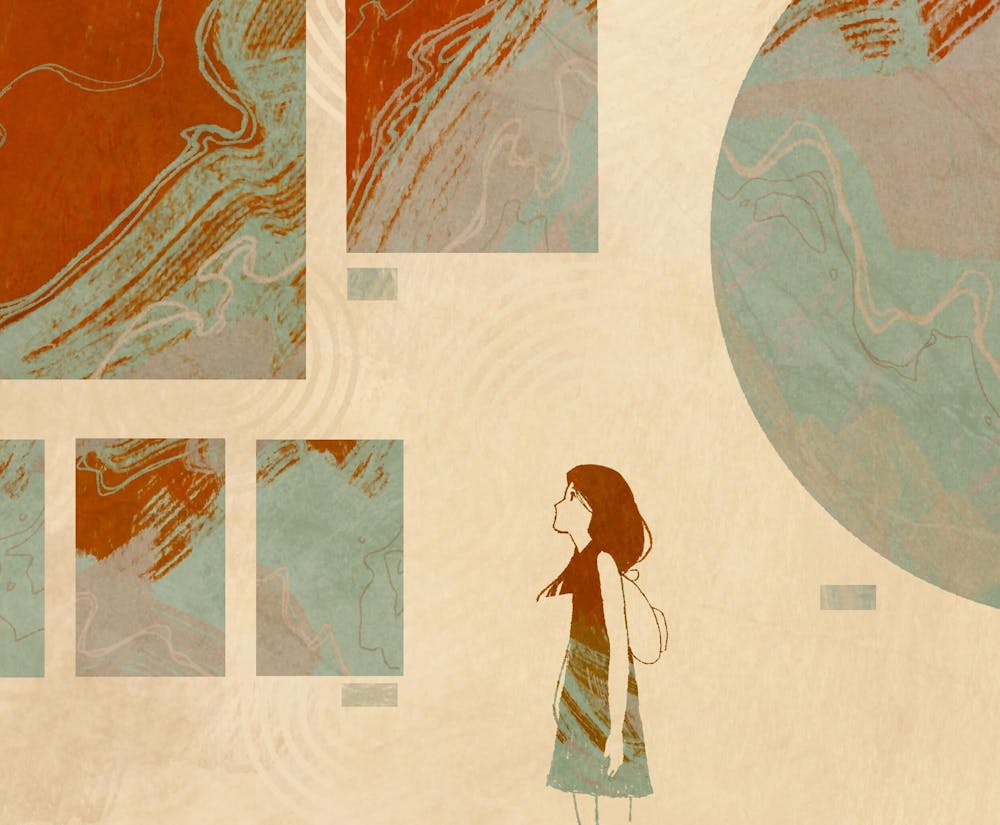
It has been three years since the last biennial faculty and staff exhibition, so this year's display was much anticipated by students and staff. With 20 artists from the art department, the Western Gallery is showcasing their pieces ranging from interactive sensory pieces to weaving to rings of photographs. This event works to showcase the reality of working within the art world, often seen as intimidating by students.
“It helps demystify the professional art world and gives students insight into things that aren’t always fully conveyed in the classroom, such as navigating art world politics, maintaining a studio practice and building exhibition experience,” Myrie Murphy, a printmaking student at Western Washington University, said.
While art students typically see the faculty and staff of the department in purely instructional environments, this event illuminates their art outside of teaching, creating a vulnerable and humanistic approach for students to benefit and learn from.
“Seeing their work in external settings adds another layer of understanding; it feels like an extension of something that’s already present in how they teach rather than something entirely separate,” Murphy said.
Director of the Western Gallery Kelly Lindner points out the excitement around this year's exhibition, while mentioning the change in perspective needed when recognizing professors in this context.
Lindner explained that a professor would likely introduce themselves as an artist instead of a professor, since they are practicing artists.
Seiko Purdue, a fiber and fabrics professor from the fine arts department at WWU, mentions something similar when interacting with students in and out of the classroom.
“We are usually teaching in the classroom, we are actually artists as well,” Purdue said. “The exhibition is about artistic talent and skill to expose to campus so the students see artists as artists, not as teachers.”
This distinction is vital for not only the professors, but also the students. The opportunity to see their artwork outside of a classroom illustrates them as peers. It gives a new perspective to the reality of the art scene.
“Those perspectives make the idea of sustaining an artistic career feel more tangible and realistic,” Murphy said.
For some art students, this world may seem so out of reach. This is why exhibitions and opportunities like this are valuable to the growth and confidence of young artists.
Make.Shift Art Space has created similar opportunities for those new to the art and music realm. Nikko Van Wyck, executive director at Make.Shift, has personal experience being exposed to mentors while finding his way in the music sphere.
“To be able to be paired with another experienced artist, or in this case students and professors who teach art, that experience is invaluable,” Wyck said.
Opportunities such as the biennial exhibition are how younger, learning artists find the ability to handle real-world issues in their field. As you grow as an artist, vulnerability is less appreciated.
Exhibitions like the Western Gallery normalize unavoidable experiences, which helps these students experiment with their work, creating an even deeper understanding between newer and more experienced creators.
“Not only do they have an impact on the fans of the art, they have a wider impact on the community of artists that that particular artist is a part of by facilitating cultural exchanges between different communities,” Wyck said.
The teaching that faculty and staff do in educational spaces is significant. But the experience of seeing a mentor's art outside of academic settings is priceless. By being an immeasurable opportunity for growth, events like these shape the minds and hearts of young artists.
Rowan Braeckel (she/her) is a third-year communication studies major, news/editorial minor and an opinions reporter for The Front this quarter. When she's not writing for The Front you can find her listening to music, at home with her snake, or spending time with friends. You can reach her at Rowanbraeckel.thefront@gmail.com.