

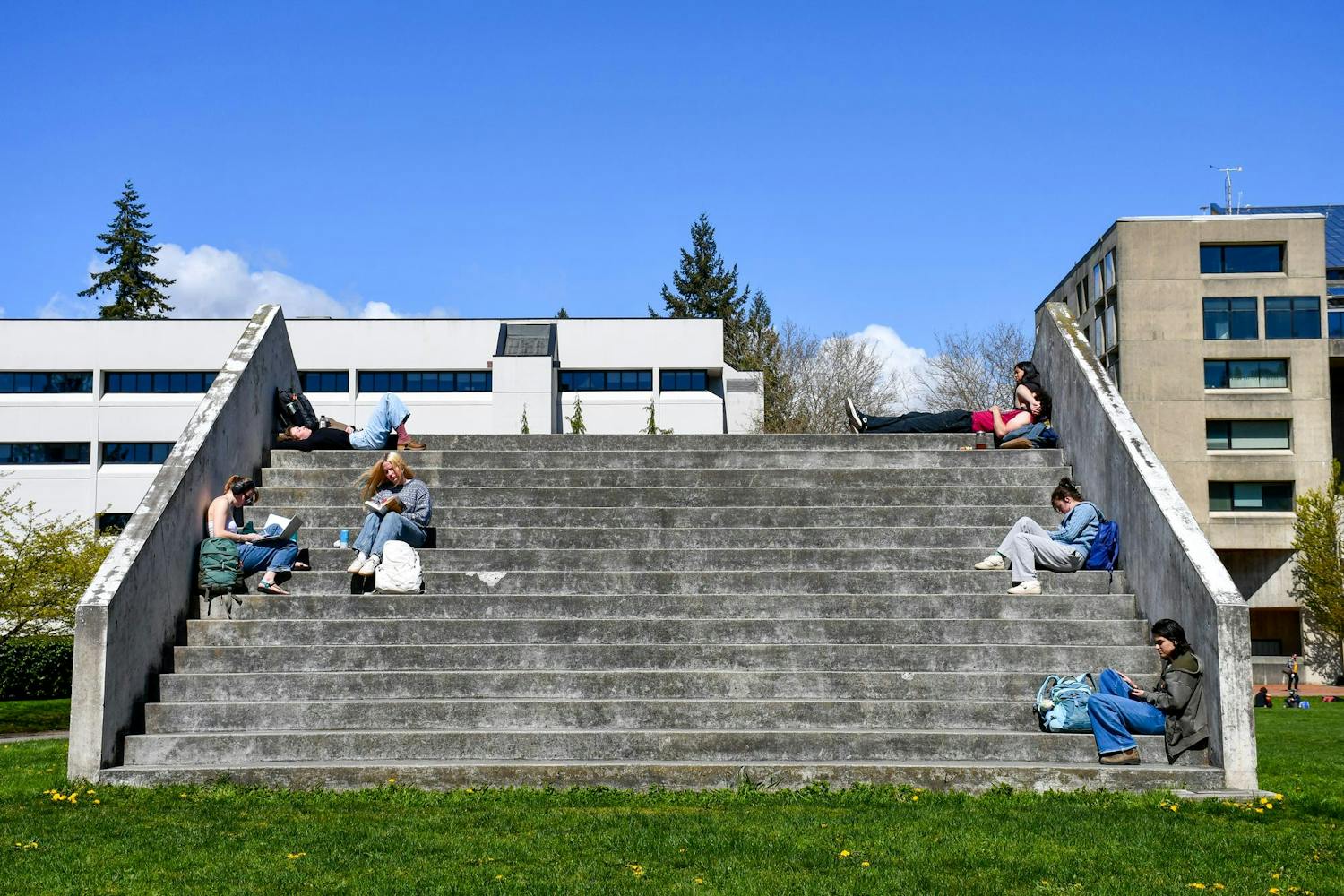
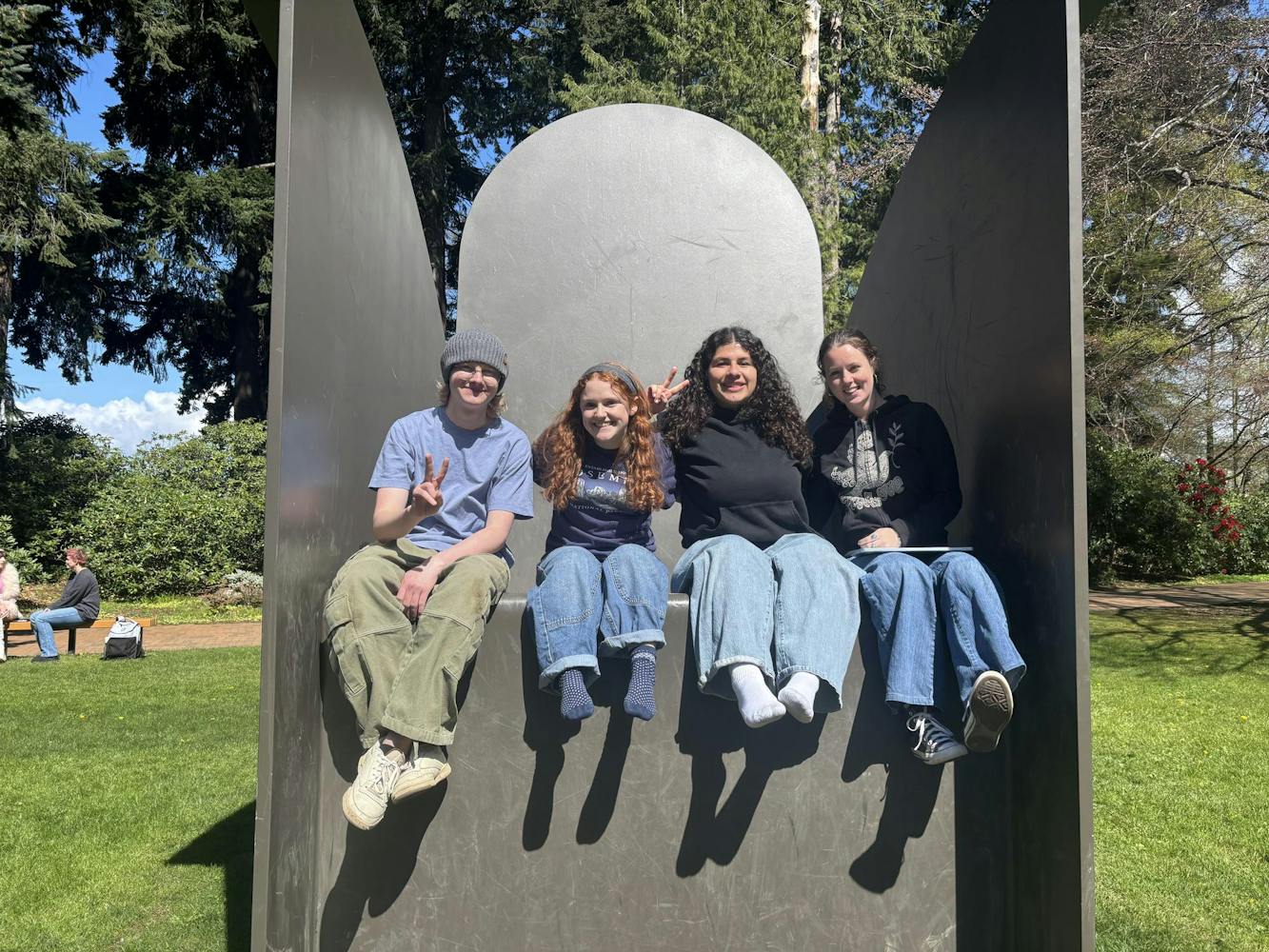
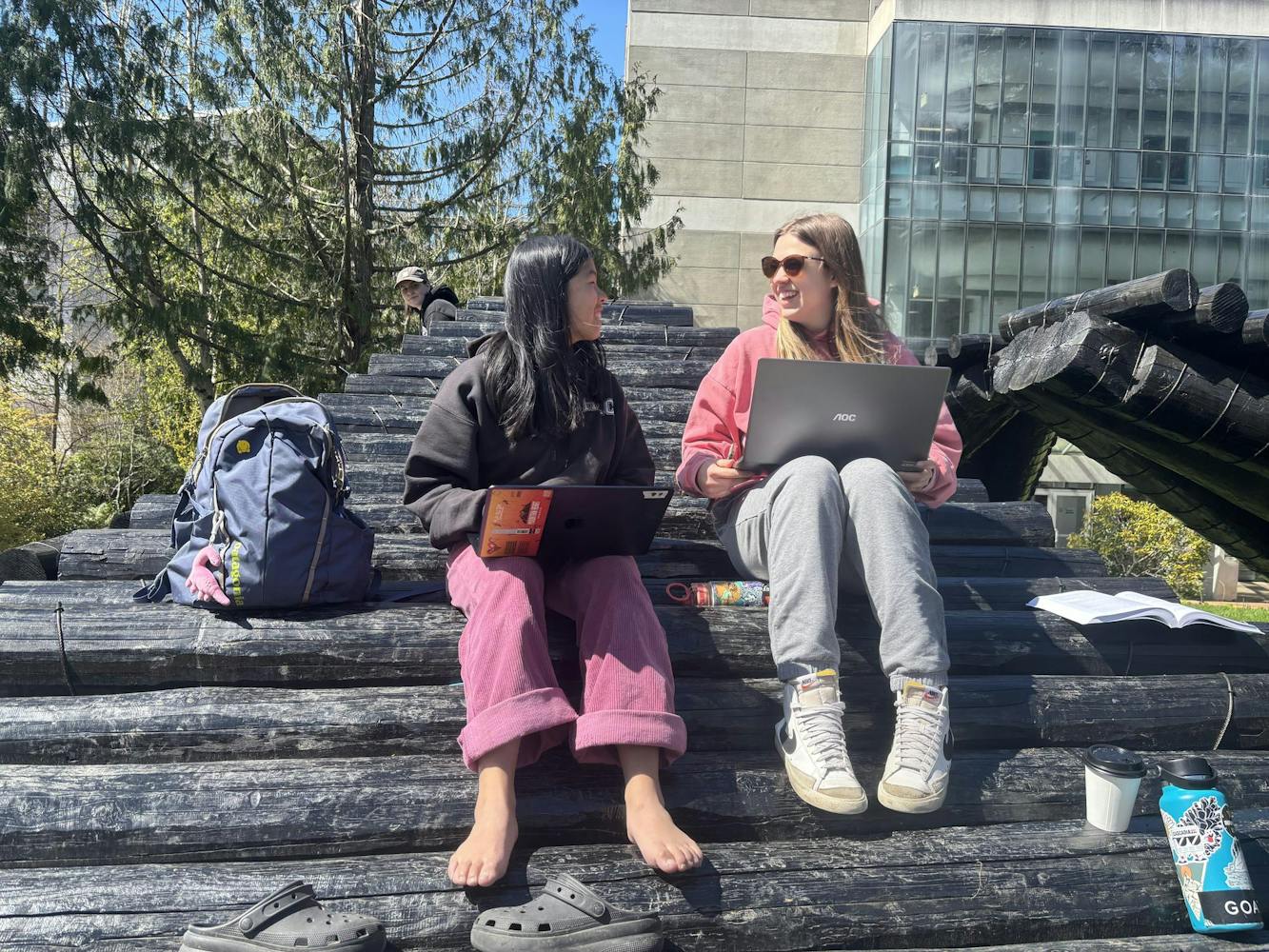
The sun has returned, and with it the spirits of Western Washington University students have lifted. Next to the Stadium Piece, colloquially known as “the stairs to nowhere,” students lay sprawled across the grass of the Communications Facility lawn with friends.
“Everyone gets so excited that the sun comes out and then everyone just embraces it,” said Pearl Quesada, a first-year Western student. "It feels like a switch overnight from winter quarter to spring quarter.”
Living in Bellingham during the winter means experiencing months of clouds and a cold climate. This makes the transition into warmer, sunny weather even more noticeable, especially for students who struggle with symptoms of seasonal depression, according to Lucie Salsbury, a student employee at Western’s Outdoor Center.
“We all know how it is, we live in Bellingham. The seasonal depression is real; it's hard to get outside in the winter,” Salsbury said. “You don’t realize how much you miss the sun until you haven’t seen it for four months.”
A poll done by PEMCO Insurance in 2021 showed that 59% of Seattle and Portland respondents experienced at least some symptoms of Seasonal Affective Disorder (SAD), despite 55% of respondents reporting the Pacific Northwest being their preferred climate. SAD symptoms include lack of motivation, fatigue and loss of interest in hobbies, according to a study by Lawrence Robinson and Jeanne Segal.
Luckily, Western’s campus is prepared for the sun’s return, offering many places to enjoy the spring weather. Students often use the grassy fields to practice hacky sacking, frisbee, or to lounge on blankets and soak up the rays.
Students Taryn Ledbetter, Yuna Choi and Annabelle Eckel all enjoy lying in the sun, chatting and laughing on a picnic blanket on the lawn of Old Main.
“You can’t beat Old Main, we love the sun,” Eckel said.
There are many mental health benefits of spending time outdoors, according to Nikki Cassidy, a wellness counselor at Western. Cassidy emphasized the importance of spending time outside and taking the time to practice gratitude and self compassion.
“The ability to go outside and spend time in nature to absorb more vitamin D, spend more time with friends and family and (have) social connection outside adds additional supportive factors that help (students) with their mental health,” Cassidy said.
The benefits of spending time outdoors are clear to the many students who feel a connection between nicer weather and an improved mental state.
“Just knowing that there's an escape outside, and a place to relax and do work definitely helps,” Choi said.
The Outdoor Center offers resources to help students access the outdoors, including rental gear with discounted rates for students and a full-service bike shop, according to Salsbury, who encourages students interested in outdoor activities to come in and take advantage of what the center has to offer.
Violet Mills (she/her) is a sports and recreation reporter for The Front. She is in her second year at Western and is a double major in journalism public relations and communication studies. When she isn't hunting down the latest news, she is usually working out at the rec center or spending time outdoors with her friends. You can reach her at violetmills.thefront@gmail.com.