

While winter rains and blue misty days persist across Whatcom County, glimpses of spring are sprouting. Bright yellow daffodils bloom along streets and in gardens, marking the start of the growing season.
Whatcom and Skagit counties host rich soils, temperate climates and long floral seasons, creating an optimal environment for growing flowers. From large wholesale operations in rural areas to small-scale urban farms in the heart of Bellingham, the area is bursting with growers who are pillars of sustainability and community.
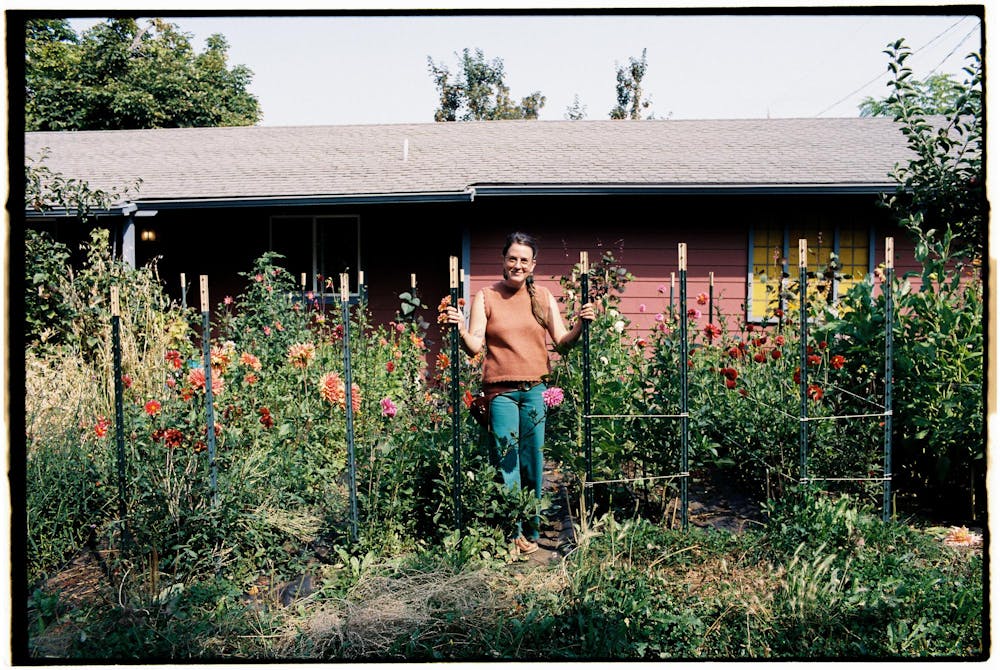
Fathom Farm, located in Bellingham’s York neighborhood, is a micro urban farm that prioritizes working with the land and space-maximizing methods.
“I have to maximize every square inch of space that I possibly can and manage successive plantings of things in order to produce the most in the smallest space,” said Lorraine Sullivan, owner of Fathom Farm.
This will be Sullivan’s fourth season running a flower farm, which she manages on her own. Before working in the floral space, Sullivan worked in commercial fishing and, in her off-season, worked in the restaurant and hospitality industries.
Although Sullivan was working a full-time job when she first had the vision for Fathom Farm, she started where she was by taking small, achievable steps.
“Balance taking steps that feel a little scary and being brave to start something new,” Sullivan said.
According to Sullivan, to market and sell her flowers she advertised on social media and sold bouquets from the Fathom Farm stand, utilizing her farm's central location.
“I was essentially making any bouquets that I could, putting them in the stand and hoping that somebody would walk by and think, ‘Oh my gosh, that's so beautiful, I have to buy it,’” Sullivan said.
Fathom Farm still sells flowers at its stand and has since branched out to bouquet subscriptions, custom arrangements and wedding floral design.
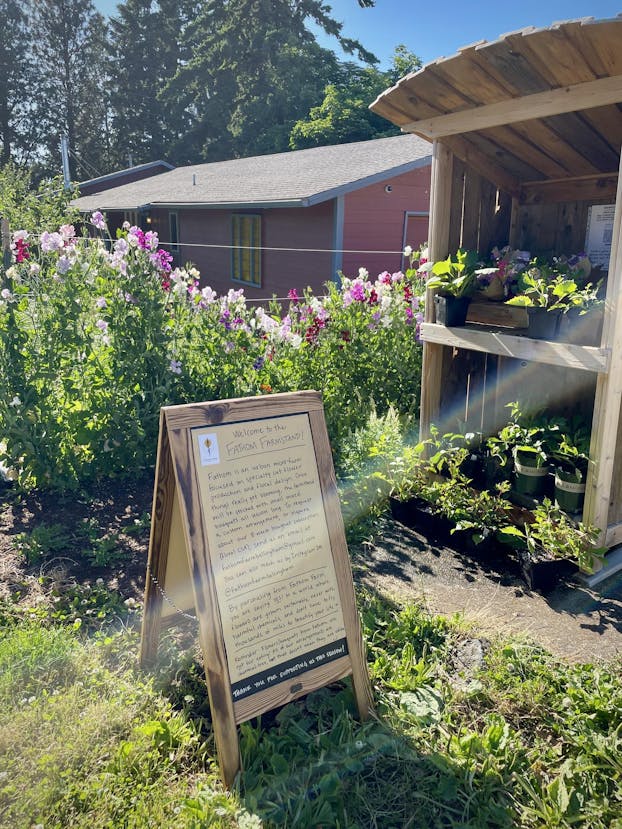
Among blocks of residential gardens, Fathom Farm hosts industrial rows of flowers and biodiverse plants concentrated in an urban setting, attracting diverse pollinators, a world of bugs, fungi and tiny specimens that keep the soil healthy.
“It's kind of a haven for wildlife, surprisingly, even though it's not like a manicured, curated ‘Anne of Green Gable's’ kind of a feeling,” Sullivan said.
Sullivan said she balances planting annual crops such as tender summer flowers with indigenous plants that nurture the soil and restore habitats.
“There are tons of plants for bugs to live in, to be laying eggs, and there's also just an abundance of food which is the great and terrible beauty of flower farming,” Sullivan said.
While working with the land, Sullivan found acceptance that, inevitably, deer and bugs will eat your crops, even weeds that interfere with crops still serve a strong purpose. Instead of working tirelessly to prevent critters and weeds, she focuses on what she can control.
“I can select crops that are maybe more drought tolerant. I can select crops that are known to be deer resistant or known to be beneficial to pollinators,” Sullivan said.
Jessica Gillis, the food and farming program manager at Sustainable Connections, wrote in an email that local farmers who implement sustainable practices can save on inputs, reduce waste and create a healthier work environment.
While crop selection can be an outlet for cost-effective, sustainable choices, Sullivan’s also found that some of her sustainable farming practices naturally stem from the mild Pacific Northwest climate. Fathom Farm saves on energy inputs as grow lights or heaters are unnecessary in the climate. In addition, the amount of rain Bellingham receives has made it possible for Sullivan to keep irrigation off till July, in some years.
According to Sullivan, Fathom Farm isn’t unique in its emphasis on sustainable practices and it’s a priority for most small, local flower growers.
“One of the core values of the flower farmers that I know is to really, really promote local production over importing flowers, and that is actually really tied to the sustainability piece too,” Sullivan said.
When buying locally, the flowers don’t travel across countries to reach you, which lowers your carbon footprint. In addition, there’s more transparency regarding values and practices when purchasing from local growers and designers.
Brianne Handforth, owner of Half Moon’s Farm and a North Sound Flower Cooperative member, holds a similar perspective.
“I cut them before and I can bring them to you the next day,” Handforth said.
Half Moon’s Farm uses regenerative practices and shies away from old-school methods. At the end of the season, instead of rototilling the flower beds, Handforth cuts the foliage to the ground, leaves the roots and places compost on top to keep the soil alive.
“We’re not spraying nasty chemicals. We try to reuse as much as possible, we’re not gonna use plastic wraps for the flowers,” Handforth said.
Promoting local production of flowers doesn’t necessarily limit the seasons you can purchase floral arrangements. A bouquet to brighten your day during the bleak winter is attainable without being outsourced thousands of miles away.
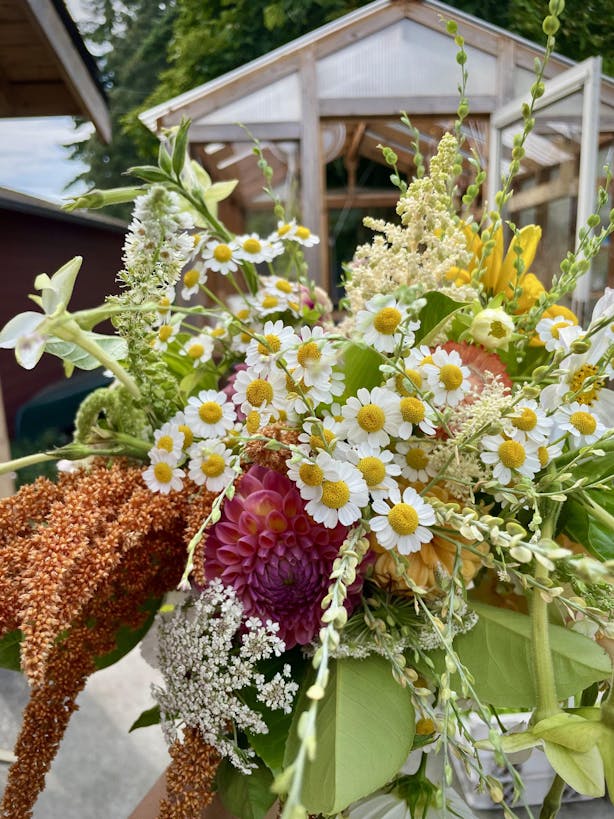
Nicole Huson, owner of Headwaters Farm and a North Sound Flower Cooperative member, operates her farm for almost a 12-month calendar year, growing flowers hydroponically.
“I do hydroponic tulips that are available starting in January,” Huson said. “It’s nice to be able to supply the market with something fresh from Whatcom County.”
Although Fathom Farm doesn’t sell throughout winter, Sullivan grows tulips, fancy daffodils, ranunculus and anemones in bulb crates, extending the farm's growing season.
Fostering community has become an increasingly important aspect of flower farming.
“Many of us are not at a scale where we have employees; some do have seasonal employees, so then you get to chit chat and not be one human attending to all of your tasks all day, every day,” Sullivan said.
Emily Hazlip-Haese, owner of Thorncrest Rose Farm and member of North Sound Flower Cooperative, said it’s been beneficial to meet people with similar codes of ethics on growing and community.
When that connection is prioritized, many small, local growers find it’s beneficial to their business too.
“I don’t see the other growers as my competition, I see them as my colleagues,” Hazlip-Haese said.
Whatcom and Skagit county flower growers recognized the necessity of connection and collaboration between growers, leading to the formation of the North Sound Flower Cooperative.
On April 1, the cooperative begins operating its marketplace in the Ohio Street Workstudios, open from 9 a.m. to 12 p.m. every Wednesday through mid-fall.
The marketplace provides a framework for small-scale growers taking their flowers to market and establishes a centralized location to sell and buy flowers, Sullivan said.
Annika McIntosh, owner of Hazel Designs and a North Sound Flower Cooperative member, said, “I want a market for my flowers that I’m not using, and I also want to be able to get super fresh flowers without driving around to 10 different farms.”
In addition, the marketplace will offer retail options and workshops, making it accessible for the whole community.
The cooperative's business model promotes stronger communication between growers and designers. In the cooperative, growers can communicate crop plans to each other, preventing overlap on the flowers they grow. The goal is for everyone to be able to sell all their flowers and limit competition, McIntosh said.
Likewise, floral designers can communicate trends and flowers they may need for weddings, informing growers on what to plant that year. This cuts out the need for florists to outsource flowers.
“It's really gratifying to be plugged into a professional community,” Sullivan said.
Katherine Konicke-Dunlop (she/her) is a city life reporter for The Front. She is in her second year at Western, this is her second quarter writing for The Front and she is majoring in news/editorial journalism. Katherine can be spotted out hiking, on long walks around town or with her eyes glued to a book in her spare time. You can reach her at katherinekonickedunlop.thefront@gmail.com.


