

In the dead of night, a band of first-year students creeps across Western Washington University’s campus. Their pockets jingle as they pass through Fairhaven College, full of lucky pennies.
They are headed toward a secluded sculpture, widely recognized by Western students under a humorously vulgar pseudonym.
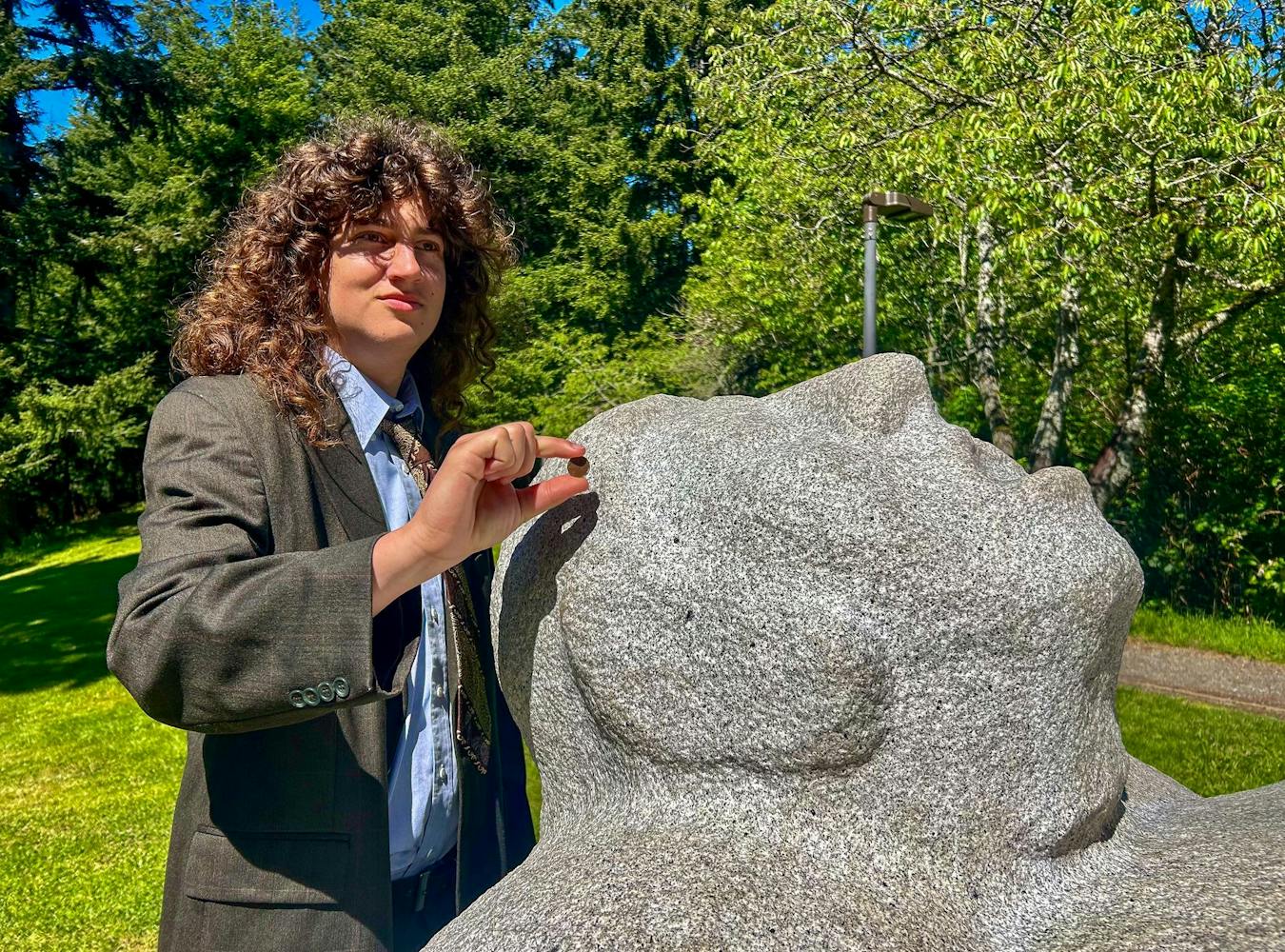
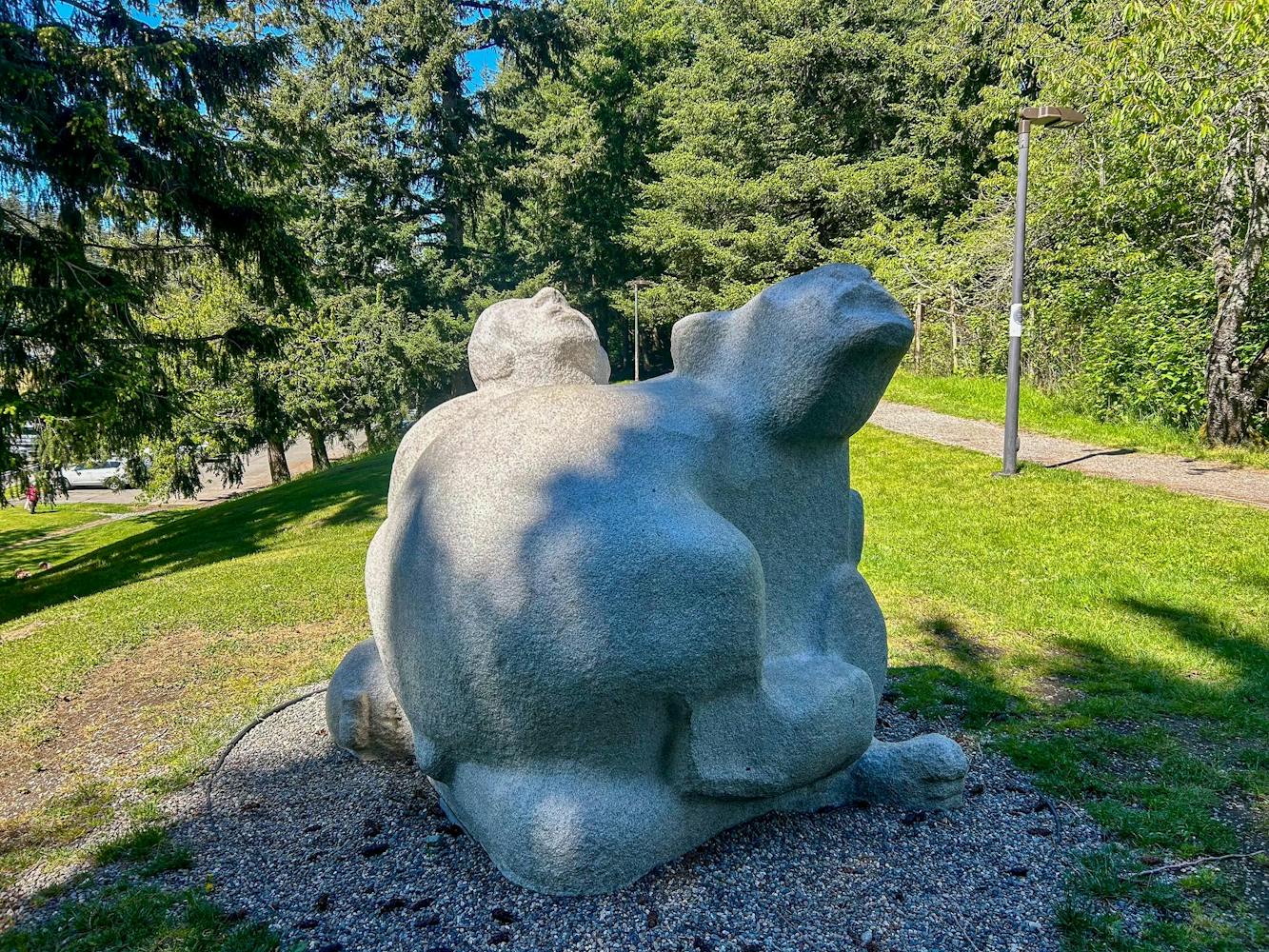
The Man Who Used to Hunt Cougars for Bounty by Richard Beyer has been a feature of Western’s Outdoor Sculpture Collection for more than 50 years. Its nickname arises from the placement of the depicted man behind the cougar; both figures frozen with open-mouthed expressions.
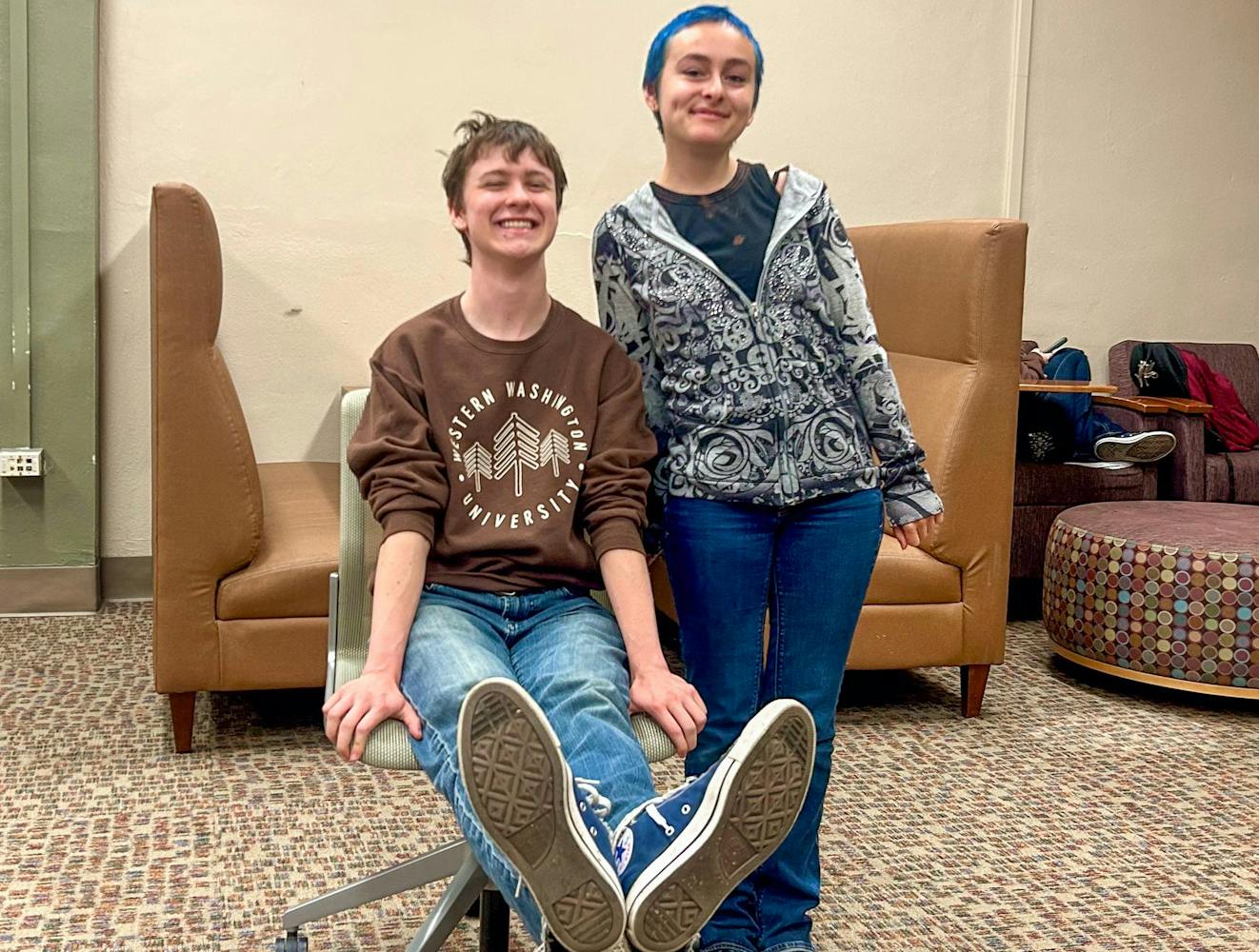
Tegan Coughlin and Max Crouse, both first-year students at Western, have taken advantage of the sculpture’s humorous and interactive nature, and invented their own campus tradition. Every finals week, they place a penny on top of the sculpture for good luck on their exams.
“It’s sort of an urban legend,” Crouse said.
The two implemented the tradition in good fun, but a desire to include many of their friends and classmates followed.
“We were walking around and Max had a deep calling to just make something up,” Coughlin said.
By this point, the pair had established reputations as creative pranksters on campus: building inconvenient leaf piles in front of unsuspecting victims’ doors, placing miniature paper cranes in residence hall nooks, and – most relevantly – creating fictional stories about Western’s public art.
On this occasion, Crouse and Coughlin happened to be passing The Man Who Used to Hunt Cougars for Bounty, and remembering its infamy, declared it the perfect target for their new tradition. The two even devised a plan to collect the pennies for profit after finals week.
Unfortunately, groundskeeping beat them to it.
Since fall quarter of 2025, Coughlin and Crouse have spread the tradition through word of mouth and social media, creating an elaborate backstory to emphasize the importance of paying homage to the sculpture.
“Part of the mythos was my mom, since she went to Western,” Coughlin said. “We told everyone she passed down the tradition.”
Although partially untrue, this information spread among Western peers and eventually circulated past original expectations. The pair reported high volumes of pennies placed on the sculpture during the finals weeks of recent quarters.
Although Coughlin and Crouse denied any particular connection to Beyer’s art piece, they claimed the statue has an intrigue unmatched by other campus installations.
Chris Casquilho, public relations officer for the Western Gallery, attributed this interaction to what is known as the built environment of a sculpture.
When it comes to bigger pieces on campus, like For Handel by Mark di Suvero, Casquilho said artists are always considering how passersby will interact with sculptures.
For example, tour groups of local elementary schoolers at Western use larger sculptures as playgrounds or vessels of imagination.
“They don’t care about what the concept is,” Casquilho said. “They will interact with it in a very physical way.”
Nicknames are another form of creative interaction, according to Casquilho. Although the man and cougar in Beyer’s piece may appear to be engaging in acts not originally intended by the sculptor, the connections that Western students create by imprinting their own views are just as valuable as the art itself.
When examining Beyer’s sculpture, Casquilho noted a vague totemism, potentially responsible for Crouse and Coughlin’s interest.
“If you're going to go ask for boons, you might ask something that looks a little more figural and a little more alive,” he said, comparing the animalistic sculpture to other geometric works at Western.
While it is unclear if Beyer’s statue retains any magical powers, Tallan Avery, a first-year Western student and friend to Coughlin and Crouse, has found success in the tradition.
“It worked in the first quarter,” Avery said. “I passed all my classes.”
Supposedly, his winter quarter did not go as well. No offering was made to the statue.
Avery believed the tradition was long-standing and was unaware of the potential ploy to collect pennies until recently informed.
Crouse and Coughlin, now reformed from their original intentions to remove the sacred coinage, hope the tradition will carry on with a new fervor.
“I’m going to keep telling people about it for as long as I’m at Western,” Crouse said. “And if they think it’s real, I hope it helps them pass their finals.”
Gray Pendell Jones (he/him) is a campus life reporter. He is a pre-major on the environmental studies/journalism track, happy for the opportunity to work with a dedicated team of reporters at The Front. Gray enjoys rock climbing, backpacking and catching a quick sunset on the beach. Originally born in Albuquerque, he is still searching for good Mexican food in Bellingham. You can reach Gray at graypj.thefront@gmail.com.


