

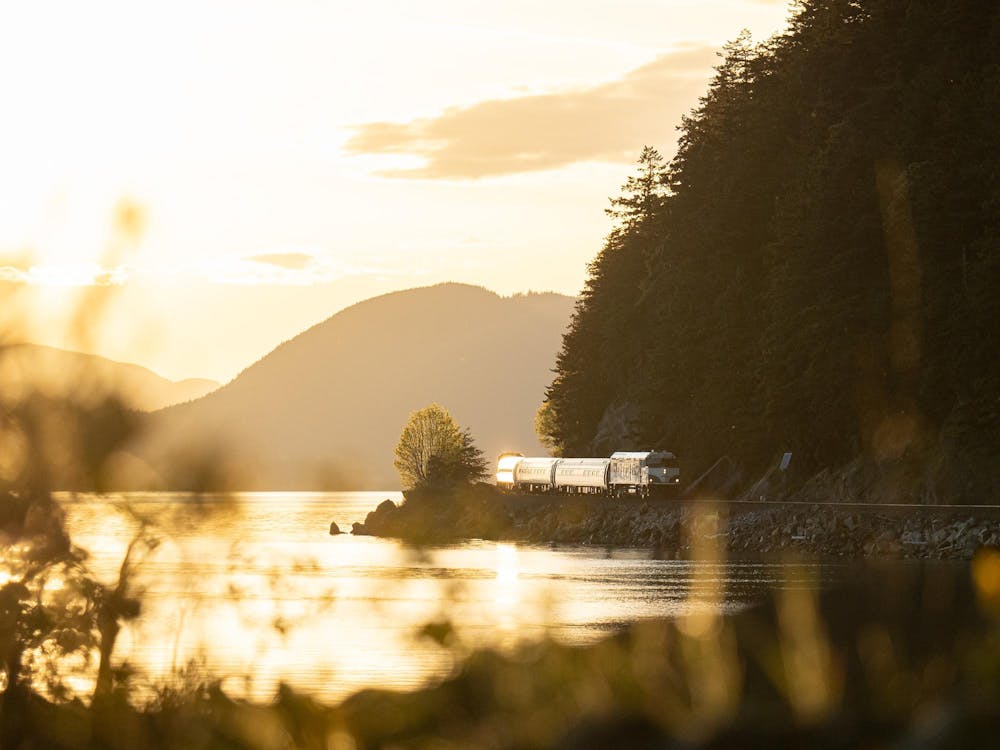
Every four years, the Washington State Department of Transportation (WSDOT) releases a state rail plan that outlines the state’s goals for both freight and passenger rail upkeep and expansion. While the last rail plan was released in 2020 and the current rail plan has been delayed for over two years, a new preliminary findings report for the 2026 State Rail Plan was released last month.
The report states the need to expand both passenger and freight rail operations, but cites a key rift between regional passenger and freight rail operators when it comes to sharing tracks.
“WSDOT works with BNSF Railway, the owners of the railroad tracks Amtrak Cascades uses in Washington, to determine which construction projects will have the greatest impact and allow for more trains to run in the Corridor,” said WSDOT’s Rail, Freight and Ports Communications Manager Janet Matkin. “There are no plans for the state to acquire any of BNSF’s railroad lines, we will continue to lease track time on BNSF’s railroad to operate the passenger trains.”
Currently, between 10 and 14 BNSF freight trains run through the Cascade Corridor between Portland and Vancouver, B.C. each day. Four Amtrak Cascades trains run each day: two northbound and two southbound, in the morning and evening.
The preliminary findings report states that by 2050, WSDOT’s vision is to see four new Amtrak Cascades roundtrips between Seattle and Vancouver, B.C. and 10 new Amtrak Cascades roundtrips between Seattle and Portland.
“From what I see, freight rail isn’t compromised as much as they make it out to be,” said Ben Stainbrook, a recent graduate of Western Washington University’s visual journalism program and an avid rail photographer and videographer. “To the argument that there’s not enough space, I feel like that’s the state’s fault. There are so many rail lines that once existed that don’t exist anymore.”
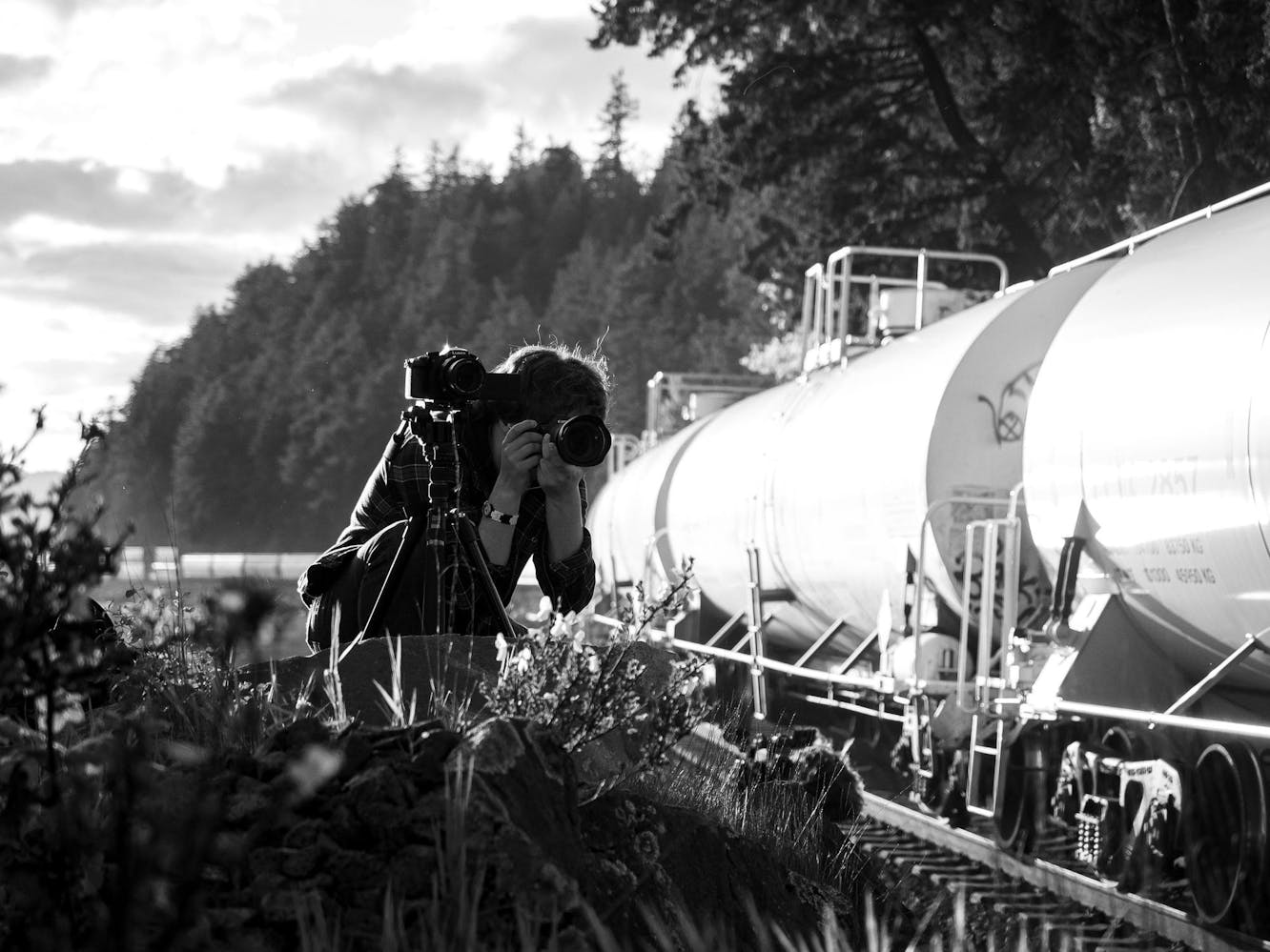
Stainbrook, who tracks and monitors trains for media purposes, said that he has seen BNSF run up to 12 trains per day at times but sometimes they only run three. “Now we’re in a day and age where a lot of those (removed) rail lines could have been useful today.”
Amtrak Cascades trains are notoriously plagued by delays and unpredictable pricing models. While a new fleet that will provide roughly 40% more seating is on its way, Matkin previously confirmed that the fleet will not change train schedules, pricing, or station staffing at this time.
Considering WSDOT’s 2050 goal of seeing freight rail haul up to 45% more tonnage per day while also seeing up to a 300% increase in some daily passenger train routes, Stainbrook expressed doubts about the feasibility of the state’s goals.
“I can certainly see BNSF not taking that very well at all,” Stainbrook said. “I can see a few more things being added, but definitely not to the level that (the state) described.”
Currently, BNSF and Union Pacific own 1900 miles of track in Washington. WSDOT owns only one line in the state: the Palouse and Coulee City Rail System, spanning 298 miles. Only 150 more miles of rail lines in the state are under public control.
While freight and passenger carriers attempt to negotiate track sharing, passengers still share the same complaints about not only Amtrak service, but the state of public transit in general. For Amtrak travelers, clearing customs to cross the U.S. and Canada border is a frequent spot for hangups.
“It was cool, it was just a long wait,” said Terry Roos, a traffic controller who lives in Vancouver and rode the Amtrak across the border for the first time last month. “It took a bit longer than expected.” Terry was asked to show her passport before boarding the train, despite the fact that customs happens at Vancouver Pacific Central Station regardless of direction of travel.
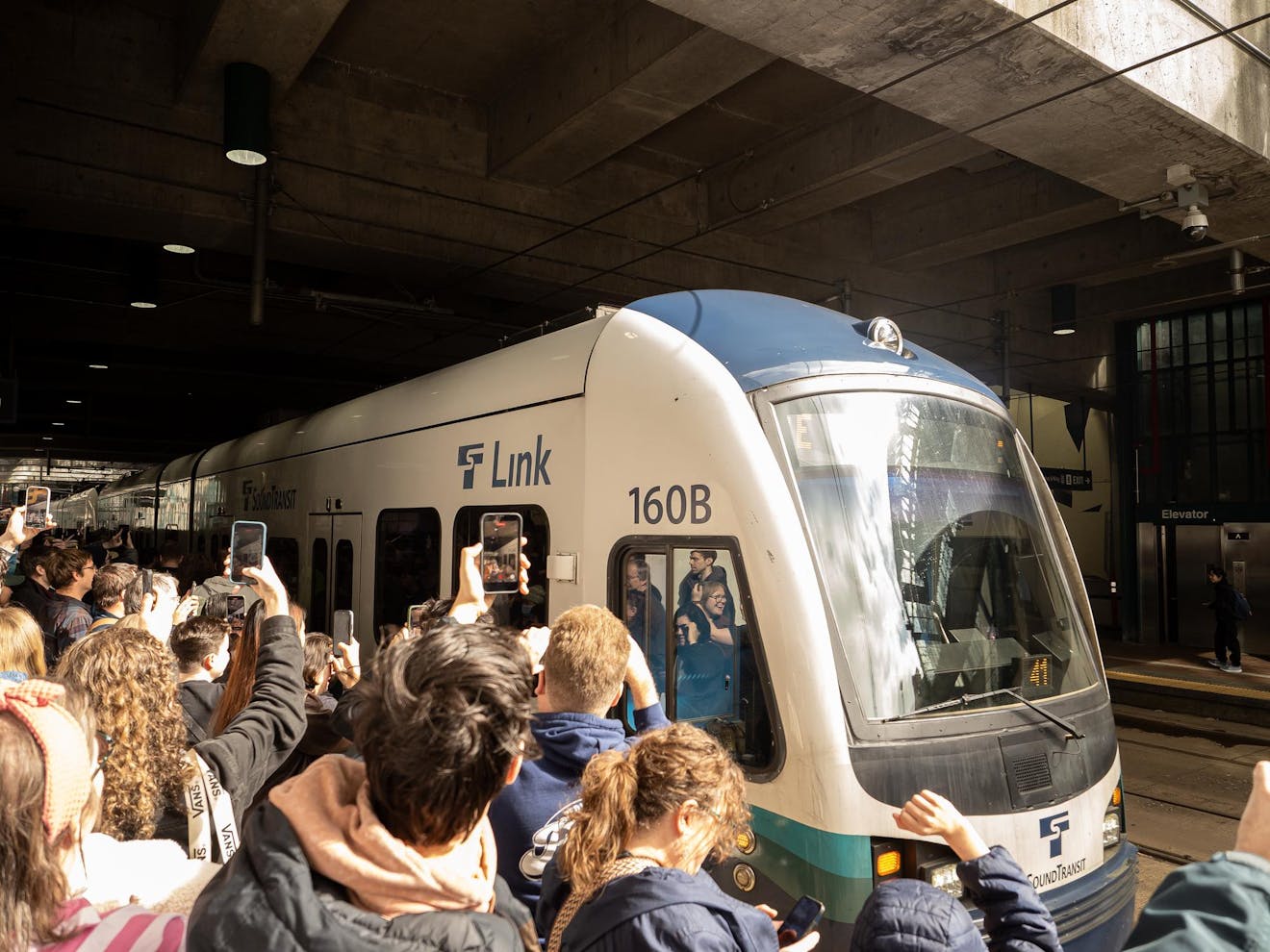
While the state rail plan mainly focuses on regional and freight rail, public transit rail plays a major factor in the state’s operations, as transit operators such as Metro Seattle own some of the tracks that regional operators ride on. Recently, the opening of the 2 Line Crosslake Connection in Seattle on March 28 marked the realization of a 17-year-long transit project.
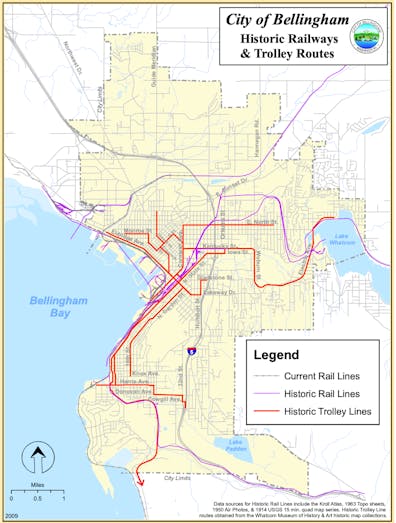
In Bellingham, an elaborate electric railway and trolley network operated from 1891 until 1938, when it was dismantled for bus service and freeway expansion. Many of the former tracks have been converted to bike and foot paths, such as the Interurban Trail to Clayton Beach.
With a new wave of public transit activism stirring in American cities, increased demand and rising gas prices from the Iran war are straining already burdened systems. In Whatcom County, tensions are higher over upcoming fare hikes for bus transit.
“People are just getting more edgy these days with commuting in general,” Terry said. “(There’s) less patience. It’s routes for everything; this train, SkyTrain, we just need more routes or schedules.”
Benji Cook (he/him) is a city news reporter for The Front. He is a post-baccalaureate visual journalism student with over a decade of experience as a professional photographer, covering everything from outdoor sports to political rallies. He holds a bachelor's degree in creative media production from the University of Colorado, Boulder. You can reach him at benjcook.thefront@gmail.com.