
For some multilingual and immigrant households, getting outside can be filled with barriers that are not made accessible for Spanish-speaking families.
Since everyone has a different level of expertise, the most important part of getting people outdoors is not just inviting them, but also inventing the space for them to feel welcome, according to Walter Topete, development lead for the Vamos Outdoors Project.
“A lot of folks come to Washington really not having a great grasp on the seasonality,” said Joseph Gonzalez, the communications director for the Washington Trails Association.
The WTA has created an online hiking guide to give Washingtonians the inside scoop on how to find their next trip outdoors, Gonzalez said. Something that people who are unfamiliar with the area can refer to when deciding to recreate outdoors.
The Vamos Outdoors Project works to lift the cultural barriers by calling up Spanish-speaking families to schedule field trips where children get to go out into the wild, according to Topete.
With funding primarily from donations, Vamos provides Latinx, migrant and multilingual students the opportunity to have a greater connection with nature. Since its founding in 2018, Vamos has worked with over 1,000 families throughout Whatcom and Skagit counties, according to their website.
In addition to getting outside with students, Vamos provides family programs to give tax support and mental health resources for migrant parents who are struggling with access to the system, according to Topete.
Topete was born in Mexico and moved to Houston, Texas when he was 2 years old with his parents and five siblings. Getting outdoors for him looked like chasing after rattlesnakes and jumping into the bayous of Texas.
He was 8 years old when he was diagnosed with cancer. By the time he was 14 years old, he was gifted a trip to Wyoming, where he said he was able to see stars for the first time.
“After knowing hospital rooms my whole childhood, I got to really experience the outdoors and it literally changed my life,” Topete said.
Memories of his trip to Wyoming inspired Topete to partake in an internship later in college with Northern Arizona University, where he got to go backpacking for the first time in Flagstaff, Arizona. Once he returned, Topete pivoted his studies from pursuing medical school to concentrating on macrobiology.
“When we take a kid outdoors, we hope to foster a connection with them to learn the outdoors so they keep coming back to it,” Topete said.
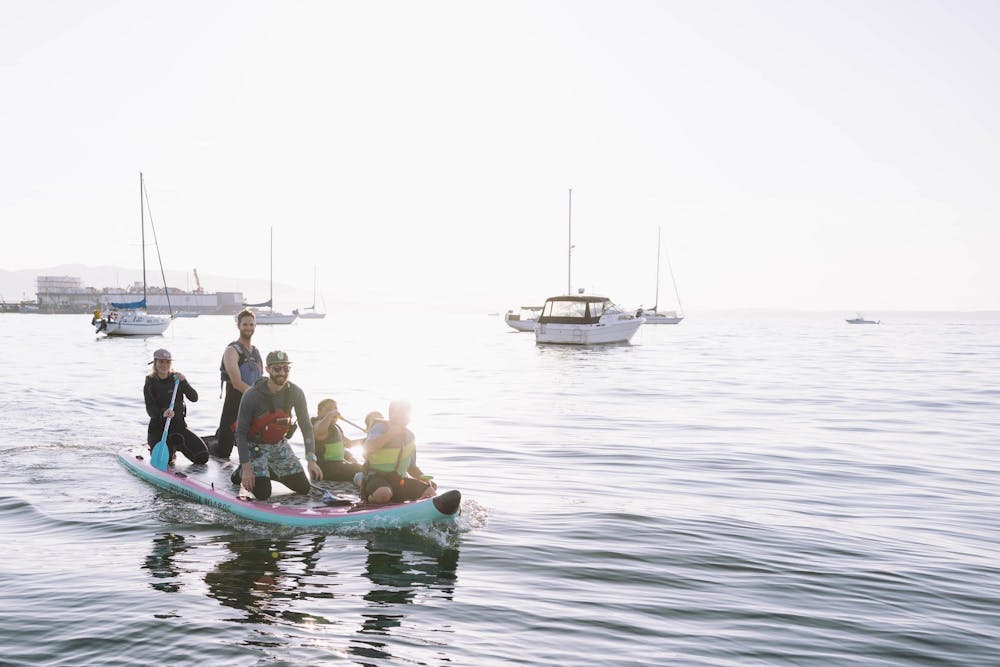
Alongside independent programs and scholarships, Vamos has created partnerships with the Community Boating Center to offer field trips, after-school programs and summer camps to students with all levels of experience, free of charge.
“With the co-leadership model (between Vamos and CBC), it means there is representative leadership to all these programs,” said Sara Welsh, strategic and development planner for CBC.
The CBC was founded by a group of kayakers in 2006 with the goal of getting more people out on Bellingham Bay. Now the organization offers scholarships, season passes and boat rentals to anyone seeking to try out watercraft sports such as kayaking, sailing or paddleboarding.
To give students a chance to learn about Indigenous ways of thinking, the CBC has worked closely with the Nooksack Indian Tribe to bring elders on the water with students, according to Welsh.
“Every opportunity we get to share these wild places are just going to keep protecting it for generations to come,” Welsh said. “It’s just more fun when there are more people at the table, it’s a lot more interesting than hanging out with lots of clones of yourself.”
Julianna Quarto (she/her) is a third-year student studying journalism and public relations at Western. She is currently reporting for the sports and recreation beat at The Front. Outside of the newsroom, she can be found doing yoga, playing piano or guitar, or making beats on her computer. You can reach her at julianna.thefront@gmail.com.