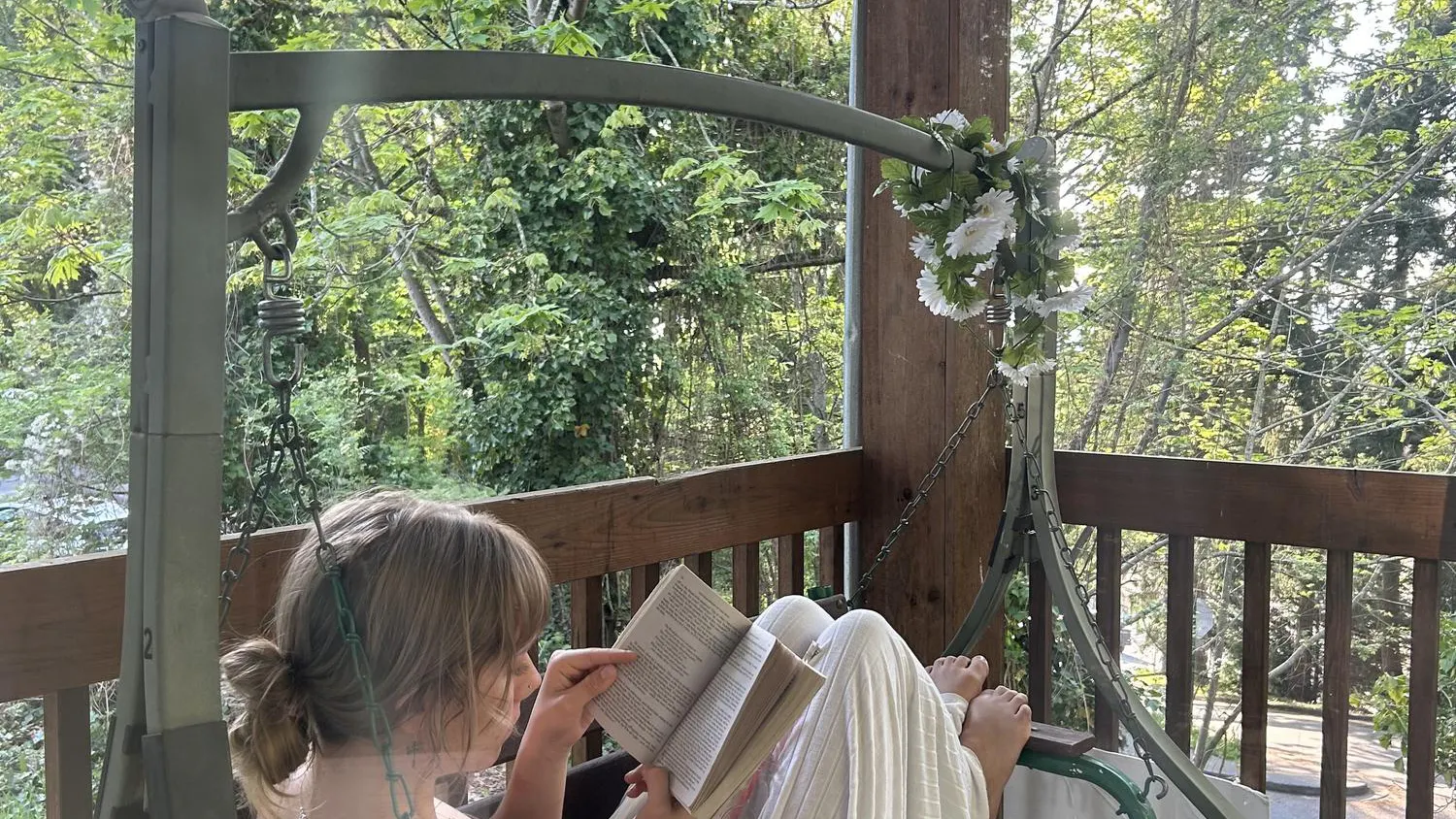


The first time I enrolled at Western Washington University in 2019, I was freshly out of high school, homesick, unfocused and unmedicated. I flew home for spring break at 18 years old. I wouldn’t return to Western as a student until I was 23. COVID-19 wrecked what I thought my college experience was going to look like, leaving me dejected and without motivation for years.
When I finally returned, I regained a sense of excitement toward continuing my education that I didn’t realize I had lost. It no longer felt like an obligation. Those years off from school proved to be beneficial. I was diagnosed with ADHD, prescribed proper medication, experienced the world outside of academics and had grown up considerably.
However, as an undergraduate student who’s almost 25 years old now, I’m presented with new challenges. Being among my younger peers who are miles ahead of where I was at their age has often led to feelings of failure and isolation. These feelings ebb and flow; it helps to remember that everyone’s experience with higher education is different and that we all move at our own pace.
It’s also encouraging knowing that I’m not alone. According to Western’s student enrollment demographics, of a total of 12,696 undergraduate students, there are 835 students between the ages 25 and 39 and 133 students age 40 and above.
Taking a full course load is a privilege not always afforded to older students. Balancing three to four classes on top of working a full-time job, among other responsibilities, is nearly impossible and the reason many adults choose not to enroll.
Sarah Strutz, 35, is a first-year Western student. On top of school obligations, she also works up to 30 hours a week and is a full-time parent to her 16-year-old daughter.
She typically struggles to register for courses because class schedules are not created with nontraditional students in mind.
“It’s really, really hard to find classes that align because I can’t be here five days a week,” Strutz said. “It’s damn near impossible on the perfect days.”
Being unable to form connections with younger peers poses difficulties as well. It’s unhelpful that most campus-sponsored social events are planned with adult students as an afterthought because they don’t typically live in residence halls.
“A lot of it is geared toward, like, that fresh-faced college freshman … but that’s not everyone, right?” Strutz said.
Older Students of Western is a club that focuses on “building a community for older students at WWU,” according to the Western Involvement Network. By hosting study groups and off-campus meetups, the group creates opportunities for older students to connect with each other.
“It’s been nice to connect with people in a similar life stage to me,” said Bryce Vining, a 30-year-old Western student who is a part of OSoW.
Heather Curfman, 35, is also a part of OSoW and an AS senator representing the College of Business and Economics. They advocate for students in regard to the classroom, curriculum and other support resources. Curfman is especially determined to represent the voices of older students as they tend to get overlooked in discussions of new programs and student retention practices.
Additionally, many of them are working adults and can’t be on campus as frequently as their younger counterparts, leaving them to choose between financial security or attending university at all. Even those with part-time jobs have to make sacrifices.
“I’m living on the financial edge at all times,” Curfman said. “I’m prioritizing my work on campus. But now I have zero additional money because student jobs are minimum wage.”
In order to better support adult students, Curfman believes the university needs to take a step back and recognize that the average student may look different than how it has looked in the past.
“Sometimes when you’ve been in the same role in an institution for a long time, there’s a risk of a normalcy bias,” Curfman said. “We really need to meet students where they’re at.”
Generational gaps in the classroom, however slight, can make interactions with peers awkward at times. Though the scenarios can cause feelings of disconnect, at least they’re often amusing.
“Every once in a while, they’re like, ‘yeah, we can tell you’re a millenial,’” Curfman said. “Like, damn. Sometimes you get humbled by a teenager.”
Even when facing feelings of isolation and other obstacles, attending higher education as an adult is extremely fulfilling. Try not to let these challenges dissuade you from beginning or continuing your college journey. Sometimes our lives don’t go according to plan; it’s the experiences we have along the way that prepare us for what comes next. Returning to campus with a grown-up mind is life-changing.
“I know it can be really intimidating and feel like you're behind,” Curfman said. “But that life experience that we have is so unbelievably valuable.”
Raleigh Nolan (she/they) is an opinion reporter for The Front. She is a Journalism major and a Women, Gender, and Sexuality Studies minor. Raleigh is originally from Michigan and has lived in Bellingham since 2021. Since then, she has made many wonderful friends and adopted a sweet/evil kitty named Olive. Some of her favorite spots in Bellingham are Rumors Cabaret, Avellino Coffeehouse, and Colophon Cafe. You can reach her at raleighnolan.thefront@gmail.com.