
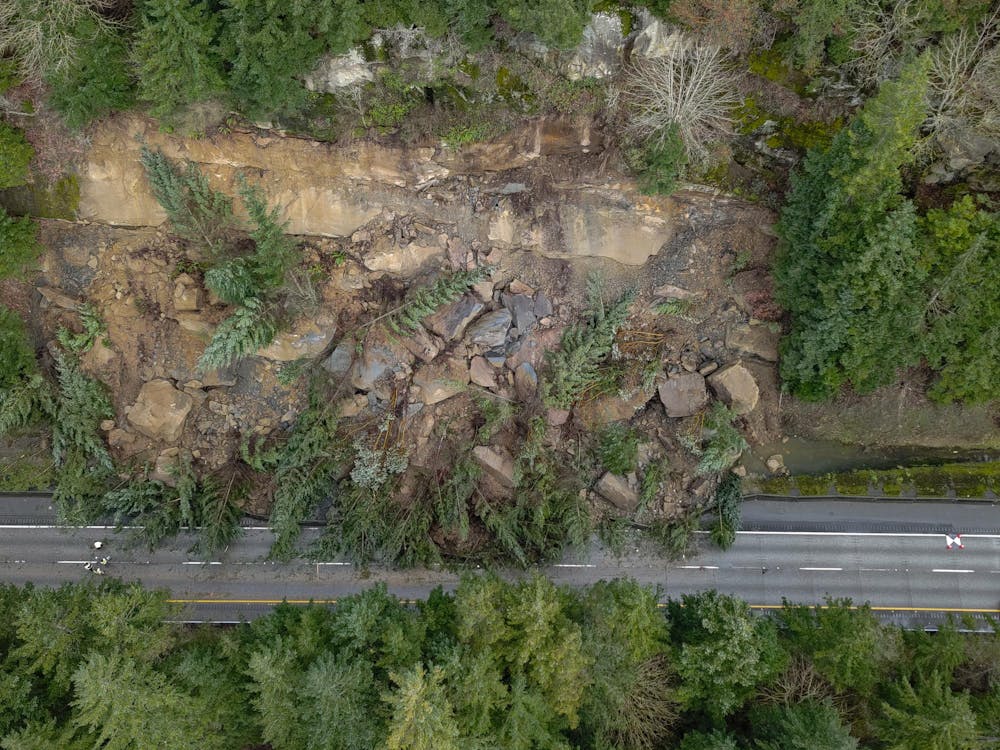
All lanes of northbound Interstate 5 opened after nearly a month-long closure from March 19 to April 15 due to a large-scale landslide blocking a four-mile stretch of the highway.
The shutdown, between mileposts 248 and 249, comes after two other road closures in Whatcom County — one in February for Mount Baker Highway due to atmospheric rivers, and one in April 2025 for Chuckanut Drive due to landslides.
According to Amelia Lorentson, a second-year student at Western Washington University who had to deal with delays coming back from spring break, construction vehicles on the road backed up I-5 incredibly far.
“I ended up getting put on a detour onto Chuckanut Drive and wasn't able to see the landslide, but what I was able to see looked really bad,” Lorentson said.
David Rasbach, the Washington State Department of Transportation (WSDOT) communicator, discussed the complexity of the clean-up operations for the over seven thousand cubic yards of boulders, trees and other debris.
“It is a lot of specialized crews working together and it’s a very deliberate, precise process,” he said. “The crews moved as quickly as it was safe to do with the intention of opening as soon as it was safe to do so.”
The processes included removing boulders as big as semitrucks, technical crews rappelling down the slopeside in order to stabilize loose debris and the use of bolts on the mountainside, Rasbach said.
While I-5 reopens for commuters, some experts remain concerned over the increased incidents of road closures in the greater Whatcom area.
Doug Clark, a professor of geology at Western Washington University, noted the vulnerable nature of the roadcuts on I-5 created by the freeway construction.
“When they put the freeway in, they came in and undercut this slope which made it much steeper and much more susceptible to failure than it would have been naturally,” he said.
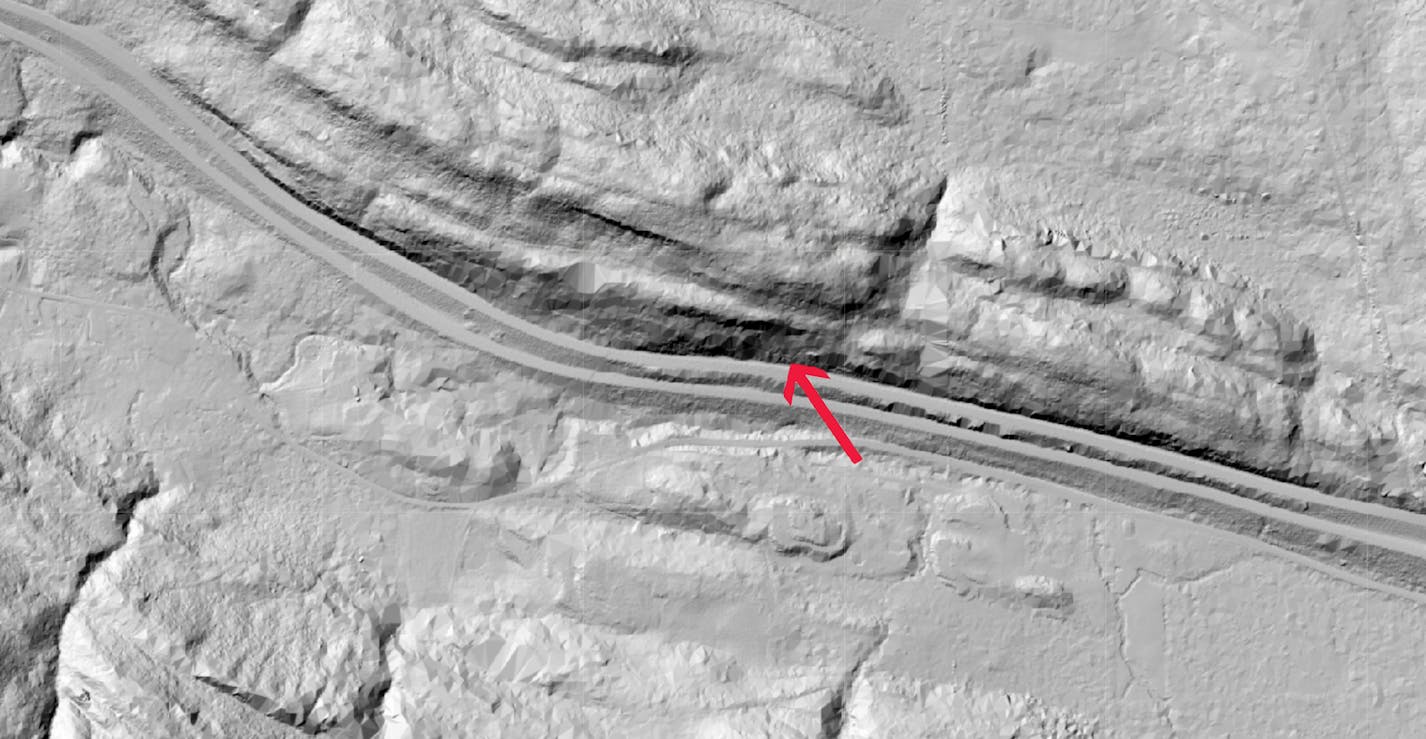
According to Clark, the section of northbound I-5 is part of the Miocene Chuckanut Formation, a deposit of sandstones interbedded with coal and shale. The 40 to 50 million-year-old bedrock is fragile due to the rock composition being weak to horizontal stresses.
With the aggressive roadcuts from freeway construction, the rock layers become increasingly susceptible to rockfall.
Clark noted that on top of the undue stress from the roadcut and the various faults surrounding the area, with excessive rainfall and wetter climates, the rain acts as a lubricant for landslides.
“So the question is, will it happen again?” he said. “Almost certainly it will.”
The two most important factors in addressing the future of increased landslides are climate change and earthquakes, Clark said.
Climate change threatens to bring extreme weather seasons, which means in Bellingham, wetter and rainier years. This March was the wettest March of all time in Bellingham since the freeway was built in 1964, with a total rainfall of 6.4 inches.
Clark noted that the Cascadia subduction zone and local faults could play a role in the fallout of an earthquake.
“We know we’re going to be getting earthquakes because we’re in an earthquake country,” he said.
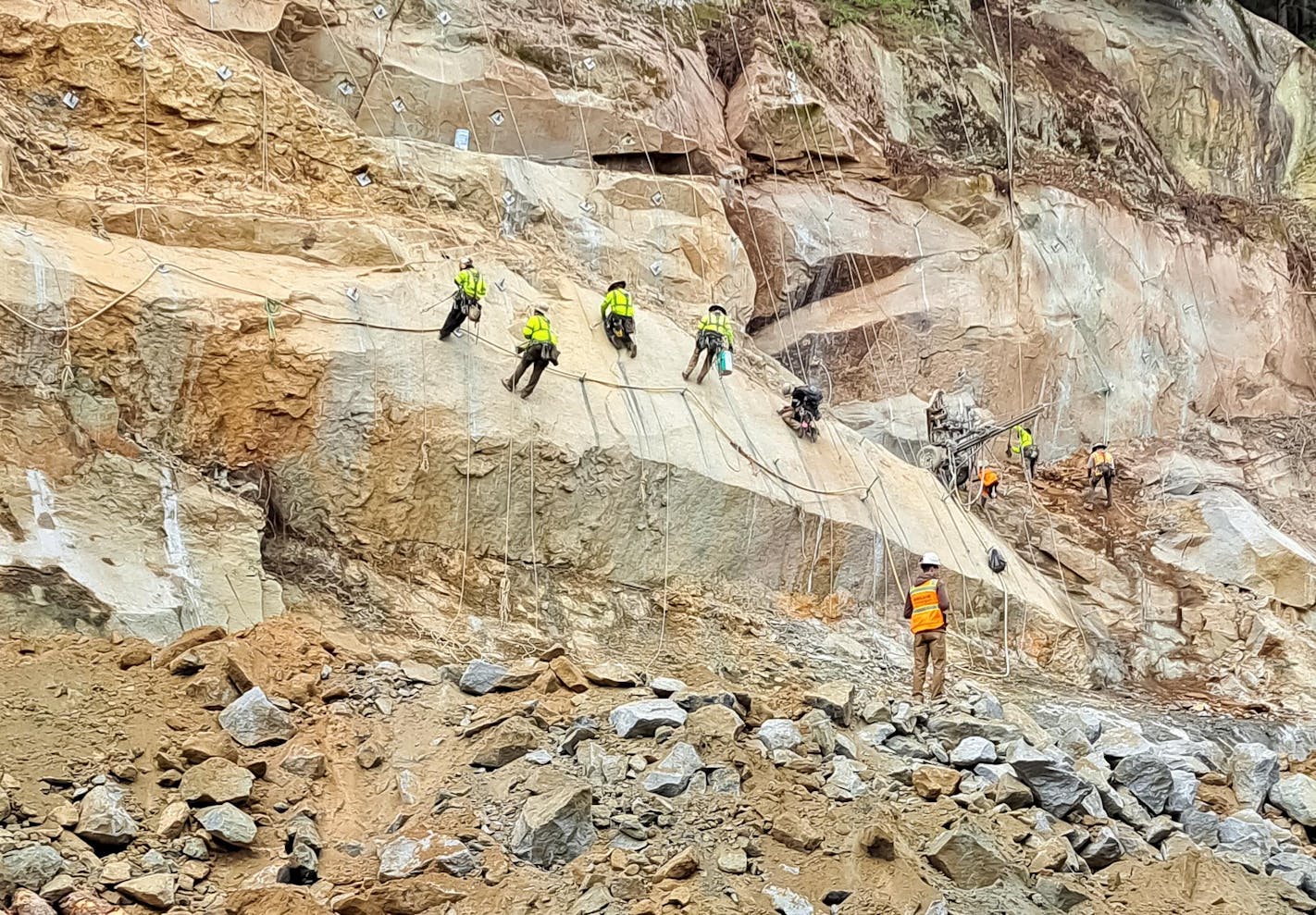
Bolting, the process of installing long steel rods into a slope, stabilizes high-hazard slopes and could alleviate the potential damage of an earthquake. Bolting will also significantly minimize the chance of future landslides.
Though the section of I-5 impacted by the recent landslide has been repaired and bolted by the WSDOT crews, many more miles that lie along the freeway remain unsecured.
“It’s all equally susceptible to future failures,” Clark said, “but they don’t have enough money to go and bolt everything.”
River Martinez (he/him) is a city news reporter for The Front this quarter. He is a first-year visual journalism and political science major. River spends his time doing model United Nations, climbing and tinkering on his film camera. You can reach him at marti722@wwu.edu.
Jackson Prandy-O'Dell (he/him) is a second-year public relations journalism pre-major, creative writing minor and an opinions reporter for The Front this quarter. When he's not writing for The Front you can find him walking around campus listening to music, playing video games or playing Dungeons & Dragons with friends. You can reach him at prandyodell.thefront@gmail.com.