

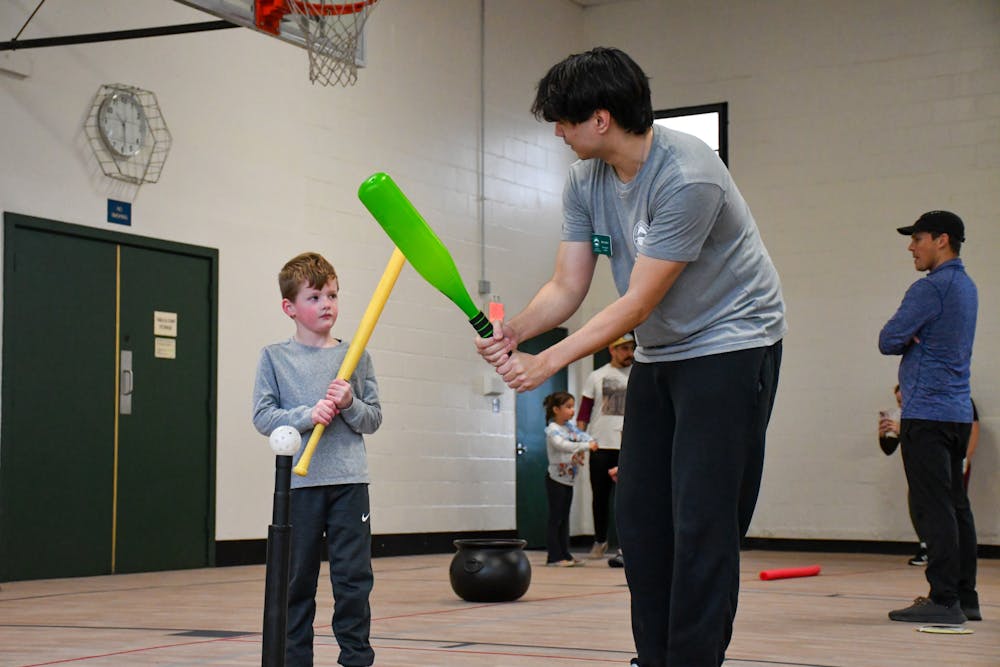
Small sneakers squeak across the gym floor at the Bloedel Donovan Community Center as their owners take turns swinging plastic bats and chasing after each ball. Some run straight to their parents while others share their bat with the person next to them, but all of them cheer for each other.
The Bellingham Parks Department heads a program called Mini Ballers, an introductory class for the four main sports in America: football, soccer, baseball and basketball. The classes, though they run through the basics of each sport, focus more on giving children a space to play and build confidence.
“It’s really about giving kids their first fundamental understanding of the game, the rules and sportsmanship,” said Brandon Hudson, a recreation leader for the City of Bellingham Parks and Recreation Department.
As youth sports continue to grow more competitive at younger ages, the program offers families a slower, more playful introduction to team sports, one that emphasizes fun, teamwork and community over winning. Hudson, along with the other parents involved, works to show each kid how to develop each skill while building a community within the group.
Hudson explained that the program is built to remove that early pressure that some children experience with team sports, simply introducing them to multiple things without the fear of failing. Parents stay involved throughout each session, helping guide their children through drills and games while reinforcing encouragement and teamwork.
“It’s less about teaching and more about letting them have room to fail and figure things out,” Hudson said. “It’s about giving them the tools to build upon, rather than trying to teach everything at once.”
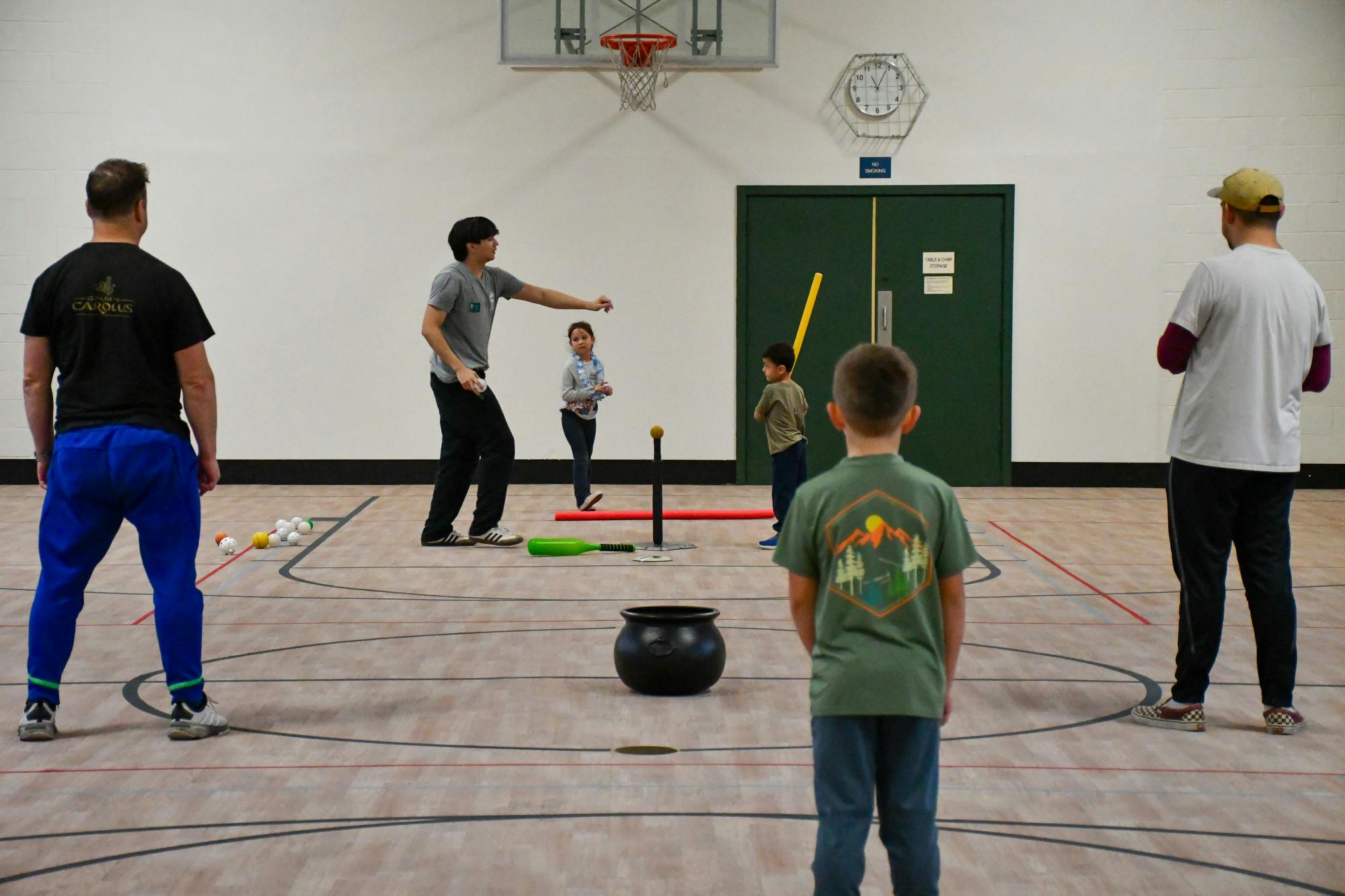
Parents and the coach direct a makeshift game of softball combining the skills that the participants were taught on Jan. 31 in Bellingham, Wash. The activity gave children a chance to practice catching, throwing and batting in a fun, team-oriented setting. // Photo by Caitlin Grygorcewicz
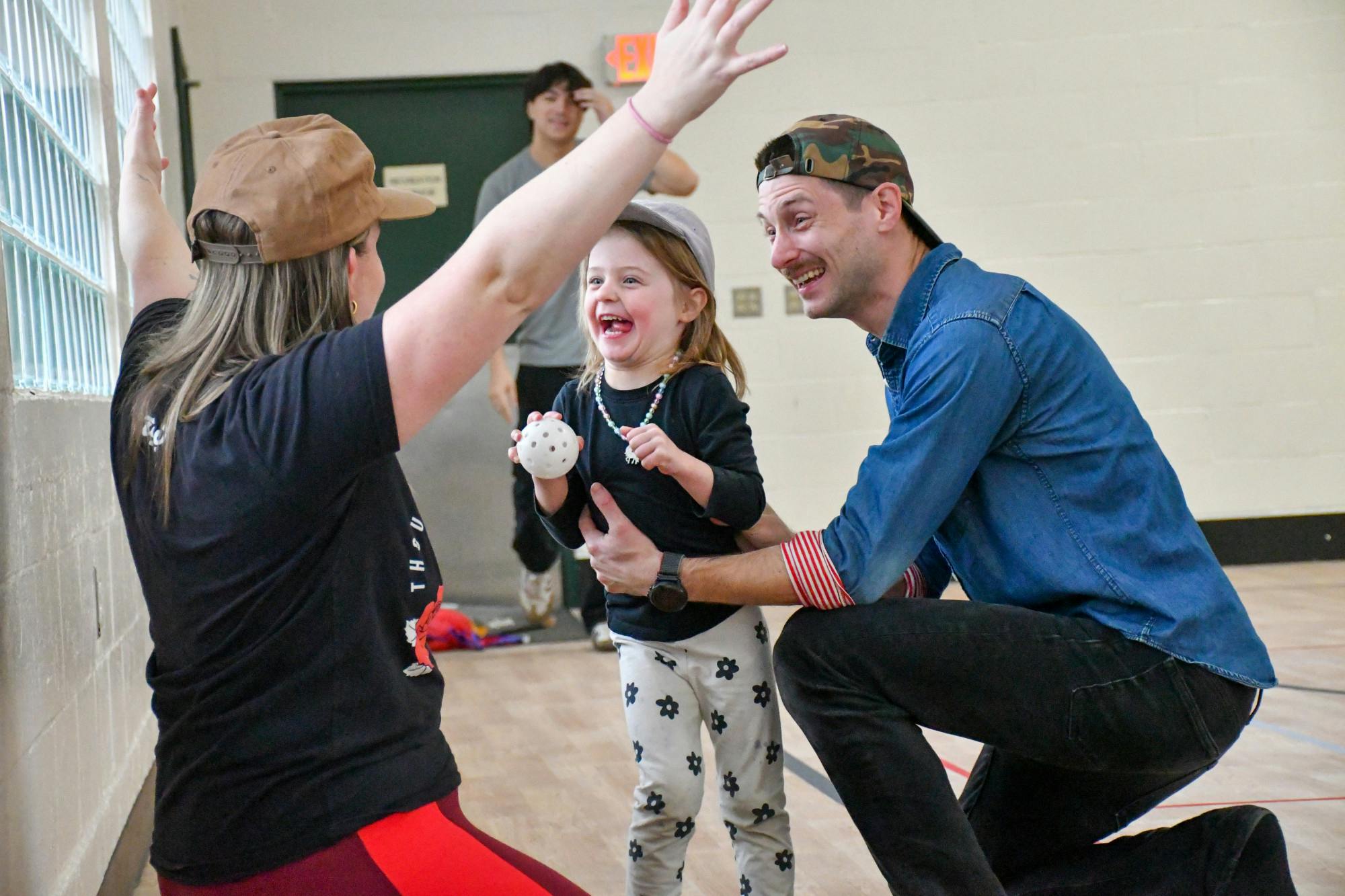
For parents like Brittany Henry, whose 5-year-old son Max is a new participant in the program, that low-pressure environment made the program more approachable. “This is the first time Max has done any kind of sports program,” Henry said. “A big selling point was getting to see what he gravitates toward and what he enjoys, without any pressure.”
For many of the children, the program offered a chance to explore activities in a low-pressure environment. Henry noticed a big change in Max’s confidence.
“Before, he was very clingy, and today he wasn’t with me, he was with other kids. It’s really fun to see that he’s more comfortable in this space and can move around on his own,” Henry said.
Hudson said he has seen similar growth across the group. In the first few weeks, many children were shy and only played games like tag with their parents, but have since branched out and started interacting more with teammates.
“You know, if we just forcefully do one sport, I don’t think a lot of the kids would show up again,” Hudson said. “So it’s good to give them a wide variety, because it keeps things interesting as well.”
While programs like Mini Ballers emphasize play and teamwork, research shows that not all youth sports environments offer the same benefits. Jessyca Arthur-Cameselle, professor of sport and exercise psychology at Western Washington University, touched on this concept.
“If it’s a competitive environment, kids often don’t report having a good experience or the same kind of social development,” Arthur-Cameselle said. “Too much technical feedback can overwhelm young children. Their developing brains can only handle one or two pieces of information at a time.”
The program works exactly as it should with children so young.
“Introducing kids to multiple sports and positions early on keeps things fun and prevents monotony and prevents early specialization burnout,” Arthur-Cameselle said.
As the session came to an end, parents and their children all work to clean up the balls, cones and other equipment that was used in the last game of the session. One by one, families filtered out of the gym, all ready for the next part of their day.
“I’m really happy about this program, both sessions have been really fun, and the kids and parents have been great,” Hudson said. “I hope kids walk away with more confidence and a better understanding of how to work as a team.”
Caitlin Grygorcewicz (she/her) is a sports and recreation reporter this winter quarter. She is in her second year, majoring in visual journalism, and is returning to The Front for a third time after previously serving as the photo and video editor. In her free time, you can catch her cleaning her camera, climbing rocks and cooking good food. You can reach her at caitlingrygorcewicz.thefront@gmail.com.


