
While American prisons are typically geared toward incarceration, a growing movement believes that true rehabilitation may begin between the pages of a book.
Books to Prisoners, a nonprofit organization based in Seattle, sends free reading material to incarcerated individuals. More than just a charitable gesture, the project offers a powerful statement about the role of education, dignity and escapism in rehabilitation, said Chloe Dietrich, a longtime volunteer for Books to Prisoners.
Limited literacy skills can be a major contributor to poverty, and illiteracy is a barrier for those marginalized by race and economic status, according to Katherine Freimund, executive director of the Whatcom Literacy Council, in an email interview.
About 75% of incarcerated individuals are illiterate, a statistic that points to deeper systemic failures, Freimund said. Those failures often begin long before adulthood.
Providing access to literature — from fantasy novels and manga to self-help guides — can help support personal growth, autonomy, and a sense of purpose for incarcerated individuals.
In a region where over 70% of jobs require training beyond a high school diploma, according to the Washington State HELM Report, literacy and education aren’t just academic goals — they’re economic lifelines.
While education can break the cycle, for those already incarcerated, access to books remains a critical second chance.
Though prison libraries are great at supporting individuals on a small scale, according to Andy Chan, a member of the board of directors for Books to Prisoners, the system is limited in space and funding.
The Whatcom County Jail has a budget of $4,500 a year to acquire new and gently used books, said Meagan Wheeler, public services assistant for the Whatcom County Jail.
“The current jail library is in a converted mop closet, which is awkward,” Wheeler said.
As library budgets are often the first things to be cut, receiving books from projects like Books to Prisoners can make a difference and even save lives.
“If prison libraries were functional, there might be less need for us to exist,” Chan said.
According to Chan, access to books creates a “gateway drug” to education and self-empowerment that was previously absent from the lives of many incarcerated individuals.
“Reading, especially for incarcerated individuals, is distinctly important,” Freimund said.
“The jail library offers an opportunity for self-directed education,” Wheeler said.
The policies and practices that push students, particularly from marginalized communities, out of schools and into juvenile and criminal justice systems are often referred to as the school-to-prison pipeline, said Freimund.
Without the ability to read, write and think critically, students are more likely to disengage from school entirely, she said.
According to Freimund, libraries offer vocational and self-help resources that support reentry and may reduce reoffending.
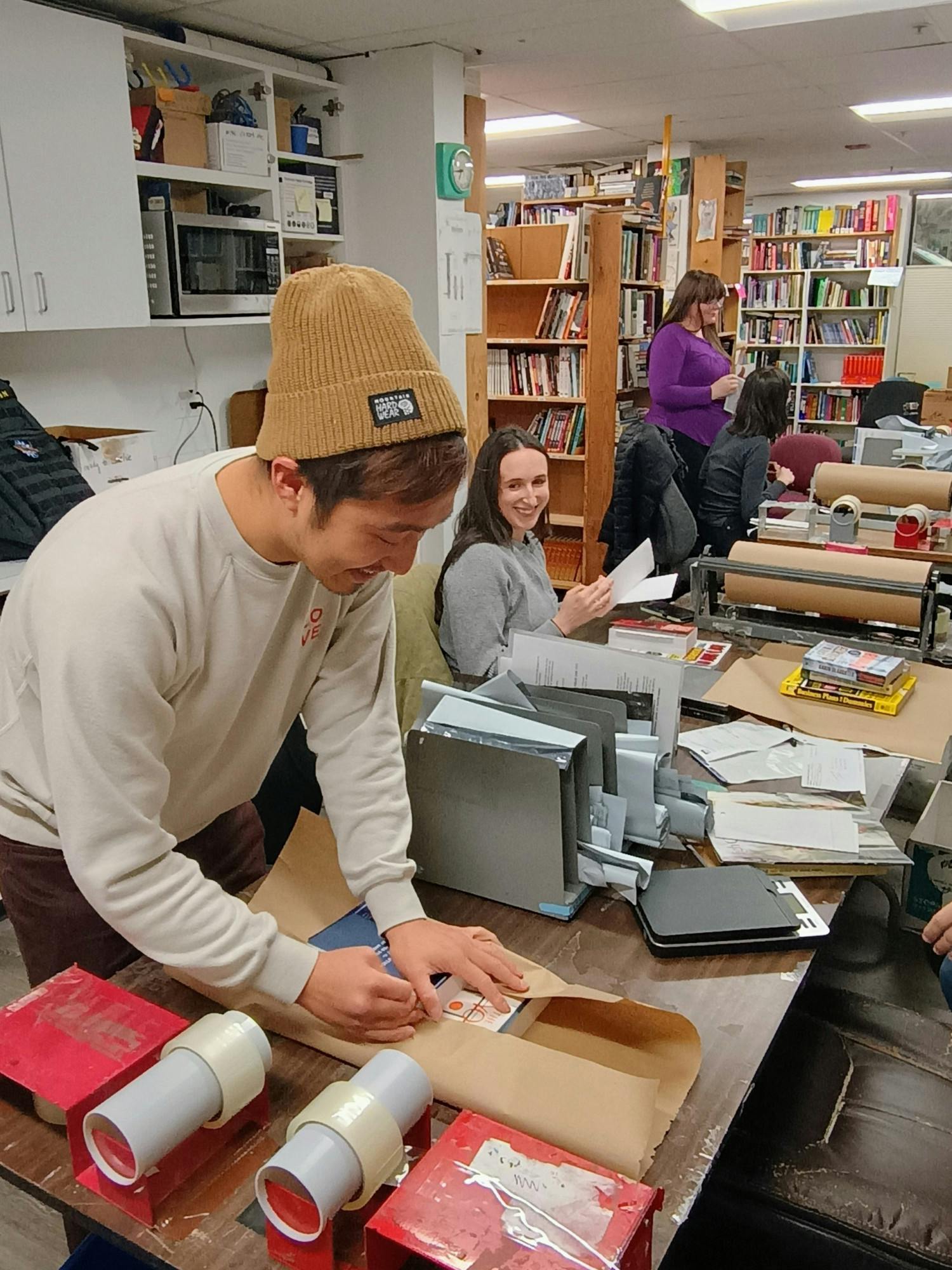
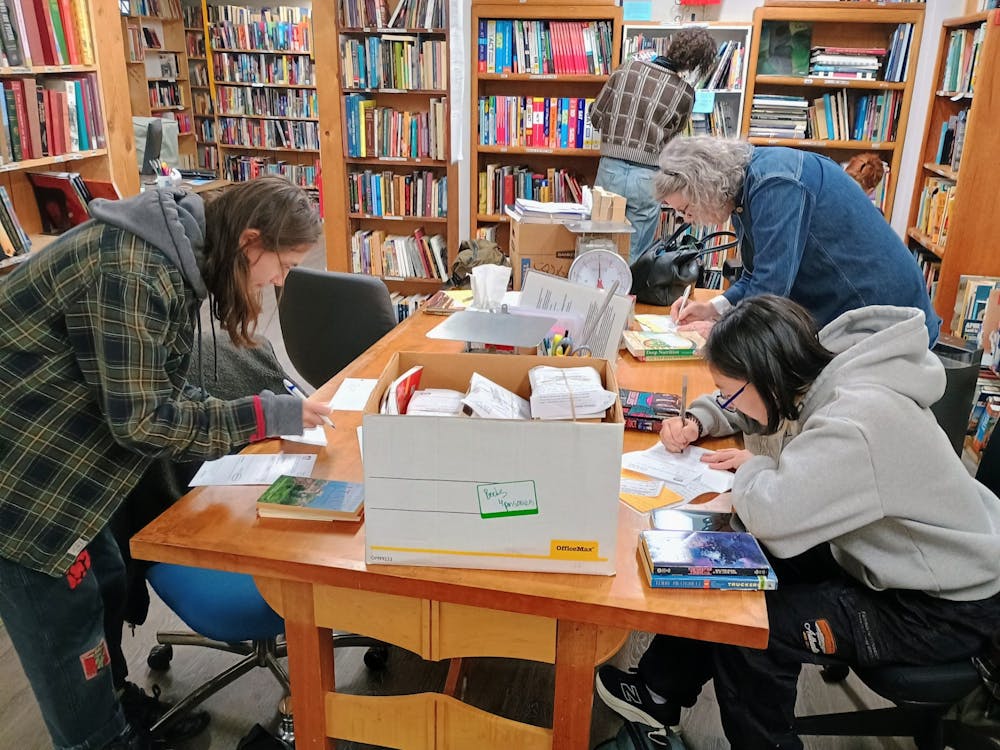
Volunteers sift through many handwritten letters from incarcerated individuals in Aug. 2025 in Seattle, Wash. Books to Prisoners then fulfill those requests through books in circulation or by purchase. // Photo courtesy of Andy Chan
“To solve systemic socioeconomic problems like workforce development and poverty relief, it is critical that we build a more literate population,” she said.
The hope is that by providing reading material that people want, libraries can support incarcerated individuals’ autonomy and affirm their desire for personal growth, Freimund said.
Based in Seattle, Books to Prisoners processes about 14,000 book requests each year from jails and prisons across the U.S. With only about 150 volunteers, Dietrich said, the process can take up to four months, from receiving a letter to mailing out a book.
Dietrich said sometimes letters from prisons can be stuffed with requests from various incarcerated people. When only one person has a stamp, 30 or so people might share and piggyback onto it.
Books to Prisoners receives a wide range of requests. Sometimes they are specific titles, but often just a general genre or topic the reader is interested in.
A popular genre, said Wheeler, is urban fiction. These books cover topics of trauma, poverty, crime and drug use. They are written in a conversational style that makes them more accessible for readers with lower literacy levels.
However, many prisons and jails have banned certain types of books, which causes trouble for the team at Books to Prisoners Seattle, Dietrich said.
Often, when a book or certain material is banned, the effect isn’t immediately apparent. Dietrich said her team is only made aware of these bans when the book is returned to them without notice months later.
In a system built on control and punishment, the simple act of offering a book can be revolutionary.
“The jail library models something different,” Wheeler said, “Equitable access and choice are quiet acts of reform.”
If our goal is truly rehabilitation, not retribution, then books are not a luxury. They’re a necessity.
Myla Balser (she/her) writes opinions for The Front. She’s a third-year Journalism student at Western, minoring in political science and film. You’ll usually find her reading, movie-marathoning or never turning down a good debate. You can reach her at mylabalser.thefront@gmail.com.