
Dozens of loyal customers lined up, ready to shop at Ragfinery’s grand reopening on Jan. 9 at 115 Unity St., just a few blocks away from the previous store which closed due to fire damage in December of 2024.
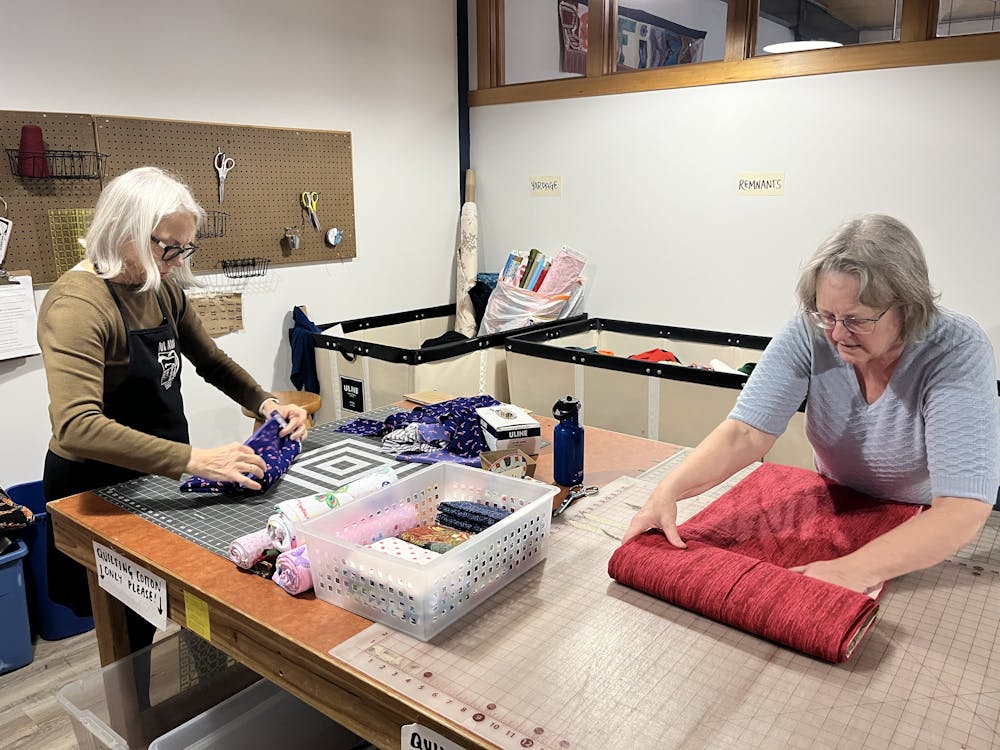
Ragfinery is a local non-profit that sells second-hand clothes, fabric, thread, yarn, needles and other craft supplies at affordable prices. They also offer job skills training and mending sessions to the community. Since opening in 2014, Ragfinery has diverted more than 1 million pounds of textile waste from landfills.
Early on Dec. 29, 2024, a fire started in the alleyway next to Ragfinery and crept into the building. No one was injured, but the attic caved in and the building sustained smoke and water damage.
“I’ve been waiting (for the reopening) with bated breath,” said Tania Corliss, a previous Ragfinery shopper.
Gina Brooks, one of the shoppers at the reopening, felt devastated and heartsick when she heard about the fire, but was elated to see Ragfinery open again, especially since JoAnn Fabrics, a chain retail store for fabric and crafts, closed in May 2025. Brooks was given a sewing machine for Christmas, and was excited to see the variety of fabrics in Ragfinery.
Thousands of dollars worth of product and operating systems were lost in the fire, said retail manager Arora Timberlyn. She couldn’t estimate the building cost because the space was rented.
In the year it took to reopen, Ragfinery had to build up the stock and supplies it lost and find a new building, which was the most challenging obstacle. Timberlyn said there weren’t many retail spaces which were near a bus stop — so Ragfinery could be accessible to more people — that could also accommodate for the volume of donations it receives.
Ragfinery has been entirely donation-based since the end of its consignment with retail store Eileen Fisher, which used to regularly ship second-hand clothes to Ragfinery to sell on its behalf. It donated a set of clothing racks and clothes after the fire.
Local support was vital in getting Ragfinery up and running again, whether from those who donated items or money, or those who volunteered their time to paint and move supplies to the new space. Timberlyn estimated it took at least $75,000 to reopen, a majority of which was given through fundraising, donations and grants from Bellingham residents.
“It’s unusual for someone to be able to recover as a small business unless they’re truly beloved by the community the way that we have been so lucky to be,” Timberlyn said.
It would have been impossible to throw in the towel on Ragfinery and let go of all the support, she said.
Six retail employees temporarily lost their jobs after the fire, but they all returned when the store reopened, except for one former employee who moved out of town.
Xi Wang, Western assistant professor for the Environmental Studies department and Institute for Energy Studies, said the production process for textiles is energy and carbon-intensive, since the various steps often take place all over the globe, not just in one place. Ragfinery encourages its customers to shop second-hand or extend the life of clothing they already own, in an attempt to reduce the demand for new textiles.
“Most of us have been misled to believe that solutions to climate change only matter on a global scale,” they said. “We should be asking if it’s meaningful on a community scale.”
Noelle Reger (she/her) is a second-year journalism student and campus news editor for The Front this quarter. When she's not reading or writing, she can usually be found gambling at the claw machines in Sharetea.
You can reach her at noellereger.thefront@gmail.com.