
Western Washington University’s student workers’ union is taking its fight for collective bargaining rights to the state legislature this session. A bill backed by the union shows promise of passing and enabling Western Academic Workers United (WAWU) to protect more student workers following a 2025 strike.
The bill, first introduced last session, would unify the educational student employees and the operational student employees (OSEs) under the same union, increasing the union’s size by almost double and expanding the bargaining power of student workers. The bill has support from many parties, including sponsorships from 25 legislators and Western’s administration. This progression builds on the prior work of the union.
“The bill is shaping up the way that it is because of the collective action that the operational student employees and educational student employees took last spring with the OSE strike for recognition,” said Erin Magarro, the campaign’s staff organizer.
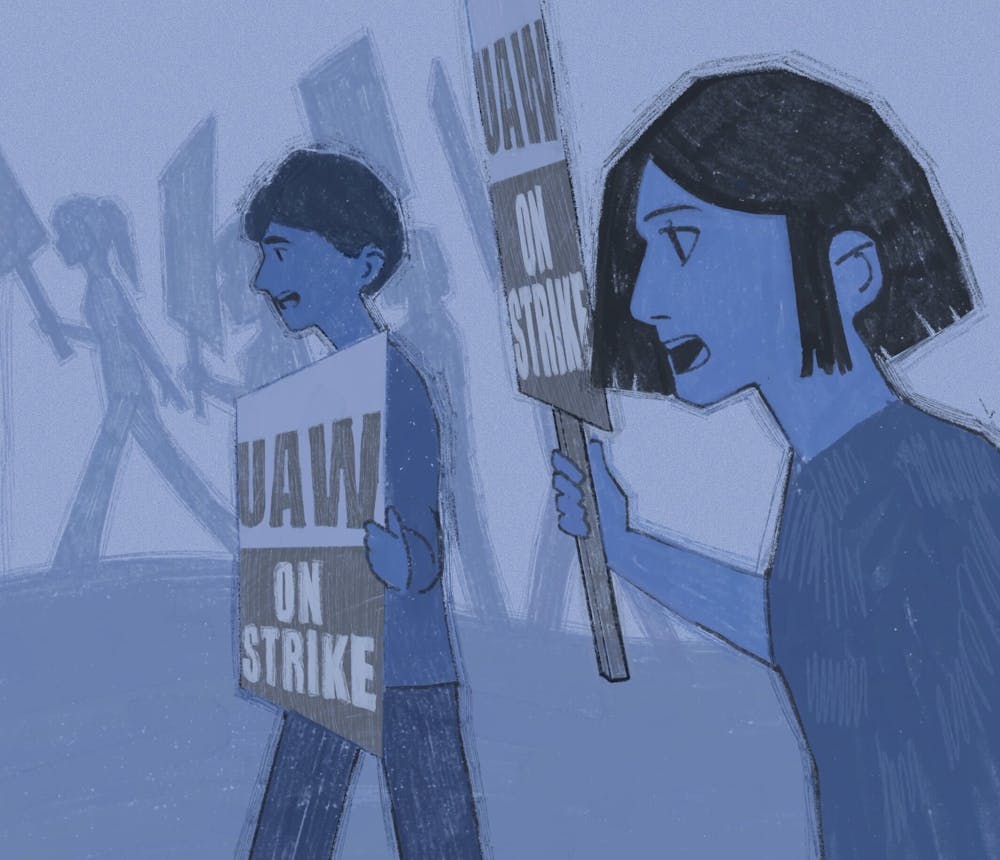
The strike, which took place in late May and early June 2025, was not successful in getting Western’s voluntary recognition of the OSEs as a part of WAWU, but it did open channels of communication for collaboration on the recognition bill.
“WAWU has been working quite closely with Western to eliminate any barriers to passing this bill,” said Chair of the Community Action and Partnership Committee Colleen Ryan.
While there are still some indeterminate costs, the bill’s fiscal note — its financial impact — is zero, neutralizing many concerns about the financial consequences of this legislation.
“The fiscal note would not be zero without last year’s strike,” said Associated Students President Aspen Cates-Doglio, as the union has now been able to collaborate with WWU to ensure such a thing was possible.
While the union and the university work together on this issue, the union will still negotiate in circumstances where goals do not align as much as they do here. If passed, the bill has the potential to change the union’s negotiation in the future.
“The energy in the room may be slightly different,” said Cates-Doglio. “There will definitely be tension over a multitude of issues, for sure.”
This bill would give a voice to OSEs at Western, granting them an official pathway through which they can negotiate for better working conditions.
“I think that people’s concerns should be heard,” said former resident advisor (RA) Audrey Gasser. “It’s been a constant fight to get any tiny little bit of anything we’re asking for.”
Gasser, who was an RA from September 2024 until December 2025, described the job as having negatively impacted her mental health, with far more busy work than the prior year.
“I don’t think we should have to be striking to ask for mental health support when we go through traumatic events,” Gasser said.
A hearing in the House Appropriations Committee took place Monday, Jan. 26, allowing constituents to sign in for or against the bill. Starting in February, the union’s team hopes to focus on passing the bill in the Senate, where it must pass several committees before reaching the Senate floor and potentially becoming law.
“Bills like this don’t get passed in a vacuum,” said Magarro. “When it passes, it’ll be a win for thousands of workers and their allies.”
Elliot Nicoletti is a second-year journalism and history student at WWU. He covers campus news at The Front. Outside of school, he plays and listens to music or modifies his clothes. You can reach him at elliotnicoletti.thefront@gmail.com.