

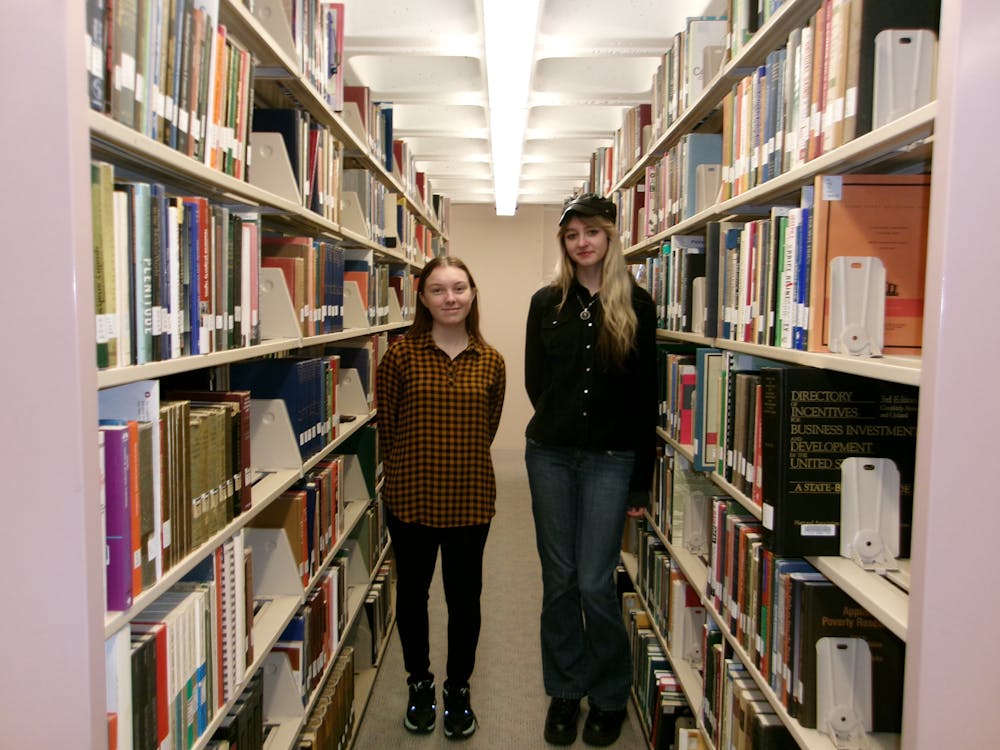
Within a week, Western students received three emails alerting them to reports of indecent exposure in Ridgeway residence halls and in Wilson Library, quickly sparking conversations between students. Katie Butler, a Western student, first learned about the situation through the campus advisory notices.
“The first one I heard people talking about was the older person in the library,” Butler said.
That first alert, issued on Jan. 28, reported that University Police responded to a report of indecent exposure at the library, where a student witnessed a white male, described as 50 to 60 years old, engaging in inappropriate behavior on the third floor. Officers searched the area but were unable to locate him.
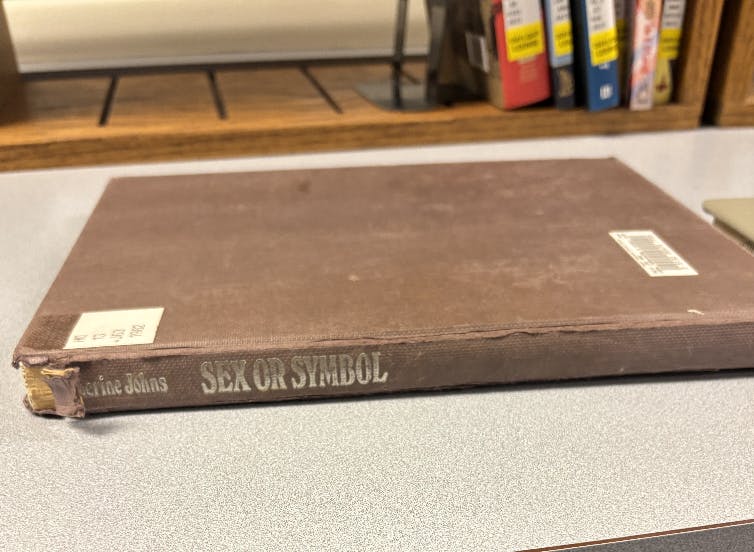
On Jan. 28, 2026, a suspect accused of indecent exposure left behind three books containing sexual content, including “Sex or Symbol," by Catherine Johns. // Photo provided by Western Washington University Police Department
Another concerned Western student, Josie Newman, also heard about the incidents through the advisory emails and conversations with her peers.
“To be honest, when I heard about them, my first reaction was to laugh at the absurdity,” Newman said. “It’s ridiculous but also definitely a bit scary and uncomfortable.”
Butler's reaction was similar to Newman's — seeing these alerts arrive one after another felt absurd.
“What do you mean there’s, like, a Peeping Tom in the library?” Butler said. “It just feels very old school.”
Fellow Western student Ashlynn Tibbot echoed similar frustrations after receiving multiple alerts in a row. She said she shook her head in disbelief and was reminded of similar events that had happened at Western.
“It’s not the first time that it’s happened on Western’s campus,” Tibbot said.
For Butler, the pattern of these incidents felt like a never-ending escalation, and potential involvement of the same person added a new level of fear.
“It worries me that these incidents are just able to happen,” Butler said.
Both Butler and Tibbot agreed that the incidents are especially impactful for women on campus and are changing how some students move through public spaces.
“It’s just a reminder that I will never feel 100 percent safe out in public,” Butler said.
Another email was sent days after the first incident on Feb. 2, describing a new suspect as a college-aged man in Ridgeway Kappa who exposed himself when exiting a bathroom with his pants down to his thighs. According to the advisory, he returned minutes later and exposed himself again, making eye contact before leaving.
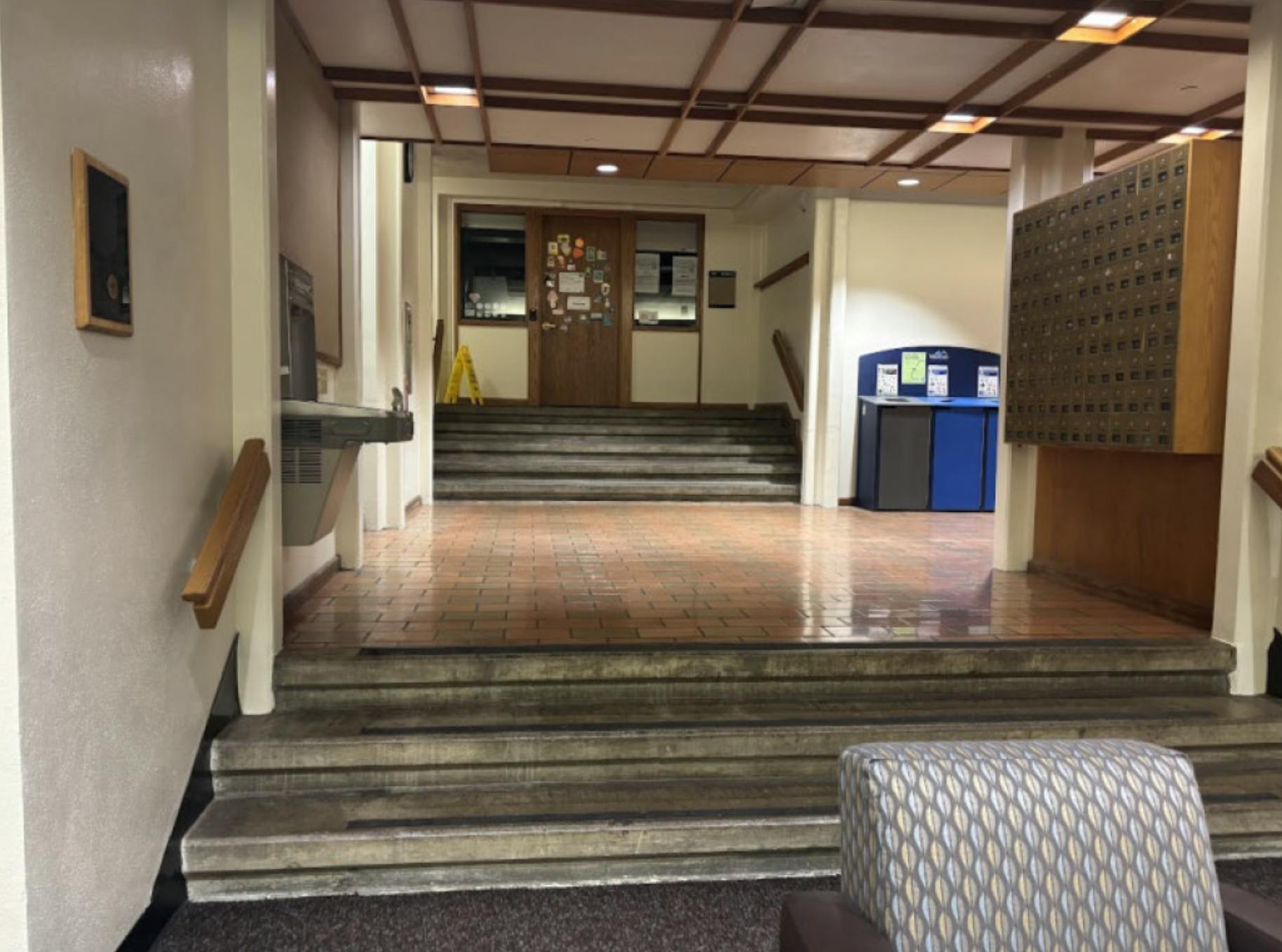
In Ridgeway Kappa on Feb. 2, 2026, a suspect exposed himself inside the student lounge when leaving the gender-neutral bathroom. He came back a few minutes later to expose himself again, then fled the scene. // Photo provided by Western Washington University Police Department
When Tibbot discovered that one of the suspects was a man of college age, she felt that this added another level of anxiety to the situation and to the way she navigates life on campus.
“This could be anyone if it’s a student,” Tibbot said. “I feel like it just goes to show you don’t always know what people are thinking.”
Kristin Anderson, a sociology professor who specializes in partner violence and the legal system, said reactions to these repeated incidents can vary, shifting how a campus community feels about its safety.
“It kind of shatters this idea that campus is safe and this is a place where we can be comfortable studying and walking around and learning,” Anderson said. “Some people will be unaffected, and some people will be deeply affected depending on history and experiences.”
Butler used to think of Western as a secure place for her to experience college life and felt safe enough to walk alone at night. But now, she’s not so sure.
“I don’t think I will ever feel safe here as I did then,” Butler said.
A third email sent Feb. 3 described another indecent exposure incident in Wilson Library, where the suspect is similar to the Ridgeway Kappa incident, but it is unconfirmed to be the same person.
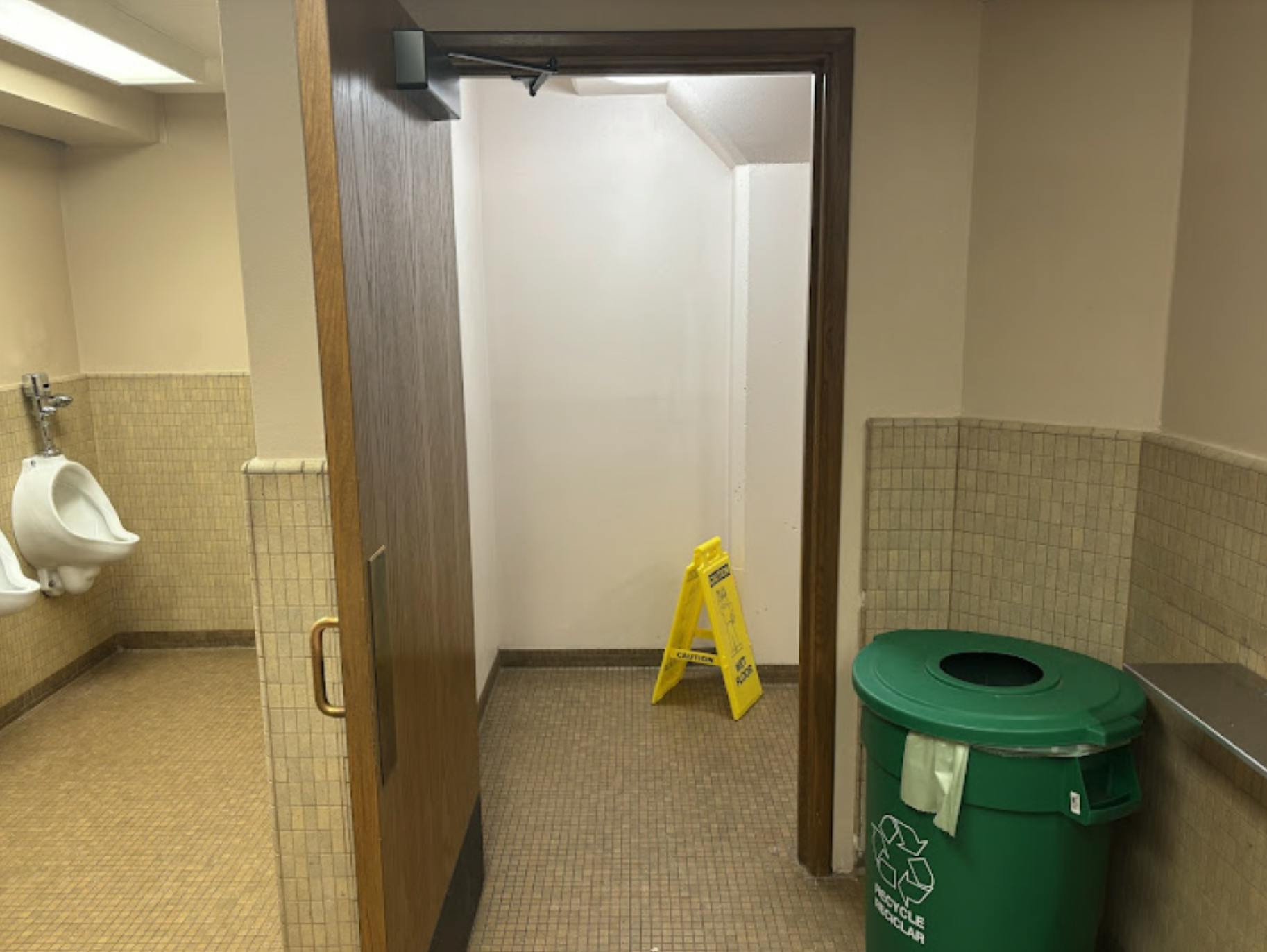
On Feb. 3, 2026, one day after the Ridgeway incident, the suspect was seen the next day in Wilson Library using the third-floor men's bathroom with the door propped open, exposing himself. The suspect fled from the scene and had a description that was similar to the one from the previous day. // Photo provided by Western Washington University Police Department
As a student who often studies in the library until closing at least twice a week, the reports changed how Newman views certain spaces on campus.
“Sometimes I use the bathroom in the basement because it’s usually almost entirely empty, but given recent events, this makes me reconsider,” Newman said.
After these incidents, some students expressed mixed feelings about reporting future suspicious behavior. Newman similarly expressed uncertainty about the cost and the lengths one must go to speak with campus police.
“To be honest, I don’t even know where to find them,” Newman said. “I don’t know if I would think to go to the police unless something made me feel extremely unsafe.”
Tibbot thinks she would be comfortable stepping in and reporting something suspicious but questions the broader prevention efforts of the UPD.
“There has to be some sort of preventative measure,” Tibbot said. “They should be able to find a solution and not just have it happen multiple times over.”
When reporting an incident, and when no physical harm is reported, the emotional impact can still be just as significant.
“Anytime there’s a violation reported of your privacy or sense of space or your sense of safety, it has an impact because it raises the specter of something more serious happening,” Anderson said.
Anderson also emphasized transparency between the university police department and the public during open investigations.
“We need to know and deserve to know what’s going on,” Anderson said.
University Police Chief Katy Potts said her department is updating the campus with vital information regarding public safety while still actively investigating potential suspects. She confirmed the department has increased patrols in response to these incidents.
“Our goal is to keep the campus informed while preserving the integrity of an investigation,” Potts said. “In this instance, we increased our patrols on campus and checked with the neighboring community to see if they had any similar instances.”
Potts acknowledged student frustration about the limited public information and understood the desire for more information. She further encouraged students to report any concerns they have and trust their instincts.
“If something feels off or unusual, do not hesitate and call 911,” Potts said. “Even if you are not sure, it is always better to err on the side of caution.”
Recently, campus advisory later sent out a separate email following reported sightings of the suspect from the Jan. 28 incident. On Feb. 23, UPD trespassed the suspect from all Western properties.
Western’s Survivor Advocacy Services offers confidential support for those affected by sexual violence, stalking, relationship violence or sexual harassment. Students can decide what they share about their experiences and have support for their next steps.
Deidre Evans, Western’s Survivor and Advocacy Coordinator, feels there is no single way students may respond to hearing about incidents like these.
“There is no one way or right way to be impacted, feel or cope,” Evans said. “The goal of survivor advocacy is to create space for students to be supported in the next steps and goals that they set for themselves.”
Cody Sauter is a third year at Western studying PR and journalism. As a reporter for The Front, he writes for campus news. When he's not working, he enjoys reading, dancing with Western's SINI-HHA and watching movies with friends. You can reach him at codysauter.thefront@gmail.com.


