

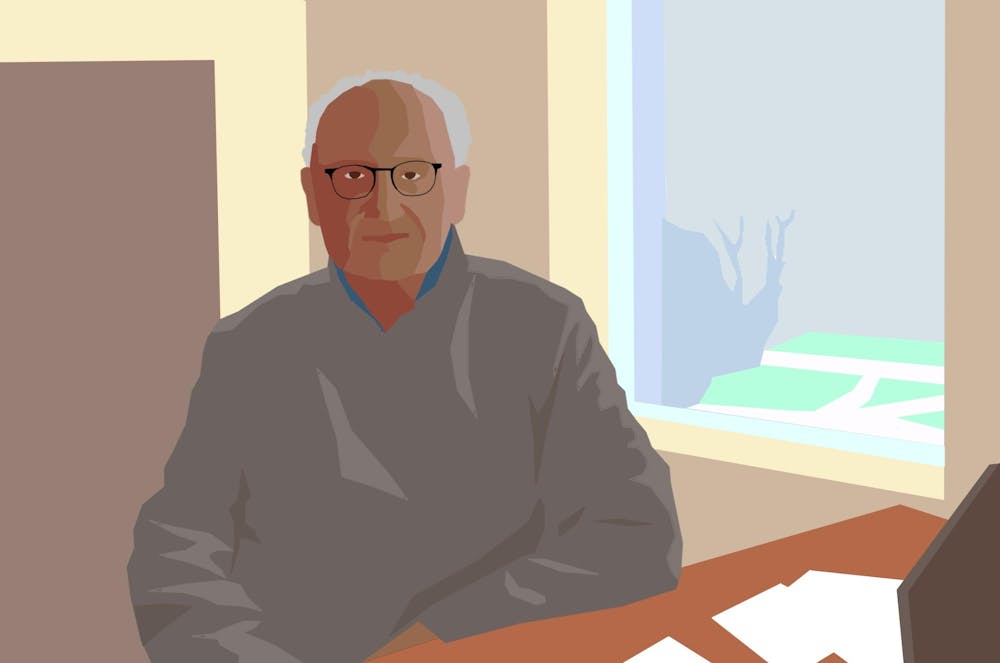
I spoke with Randhawa about his promises to the university and worries from students and staff. This is the continuation of a Q&A with Sabah Randhawa, President of Western Washington University. You can read the first half of the interview here. His answers have been trimmed for clarity and brevity.
Q: To touch on your State of the University Address last September, you set some expectations and standards for yourself and the university. Lack of funding has been plaguing the university – you know this better than anyone – but in your address, you spoke on a focus of increasing revenue rather than reducing spending. Would you mind expanding on that a bit?
Randhawa: The reason that I focus specifically on revenue is because the past couple years, we have spent a lot of time cutting expenses. The past 18, 20 months we have removed close to 10% of the university’s base budget, $23 million, and that has all been expenditure cuts. You know, a combination is needed; you need a balanced approach. The base wasn’t sustainable given where the state was.
Budget is not just a 1-2 year thing. When we look at the state, we’re not just looking at what they’re going to do this year. We’re looking at projections for the next biennium, next two biennium, because education is here for the long haul and the question is: How do we position ourselves best in the long haul?
So, there were some cuts that were needed, given what the state looked like, but you can only go so far with cuts. What we tried to do was protect the academic enterprise as much as we can. We didn’t cut any degree programs; we didn’t eliminate any departments; we didn’t merge any colleges, even though we did on the administrative side.
Part of it was we really wanted to make sure that we continued to offer the same suite of degree programs and support services that are needed. Any more cuts and we would have to go on the academic side and, of course, our goal is to avoid that as much as we can.
That’s why the focus is on increasing enrollment. Certainly we’ll do the best we can to advocate for state resources, but I know that there’s no money on the table and we aren’t going to be getting any more from the state, at least in the next year or two. What I hope is at least they don’t cut us anymore.
Then the question is; where do we go from here, particularly if we’re going to advance our aspirations? The way to do it is to grow revenue. The university budget is 50% tuition and 50% state in roundabout terms, so we have research money, we have fundraising, but they’re all restricted money. If we have a grant for work in the Arctic, they expect work to happen in the Arctic, not to use the money to teach courses in history.
Q: Additionally, in your address, you mentioned the expectation that there wouldn’t be any more layoffs. Is that still the case, four months later?
Randhawa: That’s still the case. Whatever we did last year was one thing, but we have not eliminated or reduced any positions. We may have frozen some vacant positions and so on, but we haven’t laid any employees off.
Q: I’ve spoken with many students leading up to this interview and asked them about their most pressing worries – what they expect from your administration. By far the most brought-up topic was salary increases to administration while layoffs and budget cuts happened to staff. How do you justify these salary increases to students?
Randhawa: That’s a fair question. I would ask the same question if I were in their shoes.
So a couple of observations; for administration, we are in the same competitive market as we are with faculty and staff, and if we have to hire a faculty member in computer science or whatnot, we have to compete. In order to retain high-quality administrators, we need to make sure they’re offered competitive salaries.
The second thing that students may not know and they have no reason to know, is last year, when the university gave salary increases to faculty and staff, we didn’t give any to administration at all. I think it was 3% if I recall correctly, but we decided not to make the increase for university administration.
The third reason is that we have two fewer vice presidents and their divisions. A lot of that responsibility has been asked to be carried by other vice presidents. So many of their portfolios have increased by a factor of 1.5 and, in some cases, even more than that. So, trying to be equitable in terms of responsibilities has been the other factor.
But, I hear where the students are coming from and understand that worry, particularly in a tough budgetary environment. But as I said, it’s about making sure we can retain them and the compensation is equitable.
(Note: At the end of the interview, Becca Kenna-Schenk, Chief of Staff, who sat in on the interview, said the state requires cost-of-living adjustments for employees, which played a role in the salary increases of administration.)
Q: Considering the instability of Western’s budget right now, the future of the university is uncertain. I’m wondering what you see for the university in the next 3-5 years. Is it going to get worse before it gets better? What do you think?
Randhawa: As I said, I was in Olympia last week, and I mentioned this to several legislators, that I remain really bullish about the future of the university. The University of Washington is a wonderful institution, but it’s a very different beast. It’s a research institution. It’s a medical center. You know, I think we’re fortunate that we have an institution like UW in the state of Washington.
But outside of UW, if there is one institution that can really deliver on high-quality education and access, it is Western. I remain convinced that it is ours to lose. So yes, there are indicators like the state budget that are challenging in the next year or two, and there may be other indicators. For example, the challenges with federal support for research grants and all the changes that are going on at that level, but as I said earlier, education is here for the long haul.
It’s hard not to worry about, but you just can’t lose your sleep thinking about who’s the president of the United States all the time. I truly believe education and the purpose it serves to society is a worthy cause. I really believe Western is in a great position, both in terms of the quality of education, the quality of faculty, and the student base we draw in, in terms of serving the state in our region.
I am not too worried about the future of the university. Western was established in 1893, and I think it’s going to be here for another 150 years, plus. The real – if you like to call it a challenge – the real opportunity we have in front of us is, how do we keep Western as a leader among the type of institutions that we serve. How do we lead the pack in terms of assuring access and quality remain at a high level?
Liam Britt (he/him) is a second-year visual journalism major and guest writer for The Front this quarter. Liam also takes photos for The Planet, a student-run magazine at WWU. In his time away from work, Liam enjoys going to music venues, skateboarding with friends and getting creative in the kitchen. You can reach him at liambritt.thefront@gmail.com.


