
Federal funding cuts, a statewide budget crisis and lowered enrollment have all played a role in Western Washington University’s current financial position. Students breathe an air of uncertainty, having seen layoffs and shrinking budgets across campus throughout the past year.
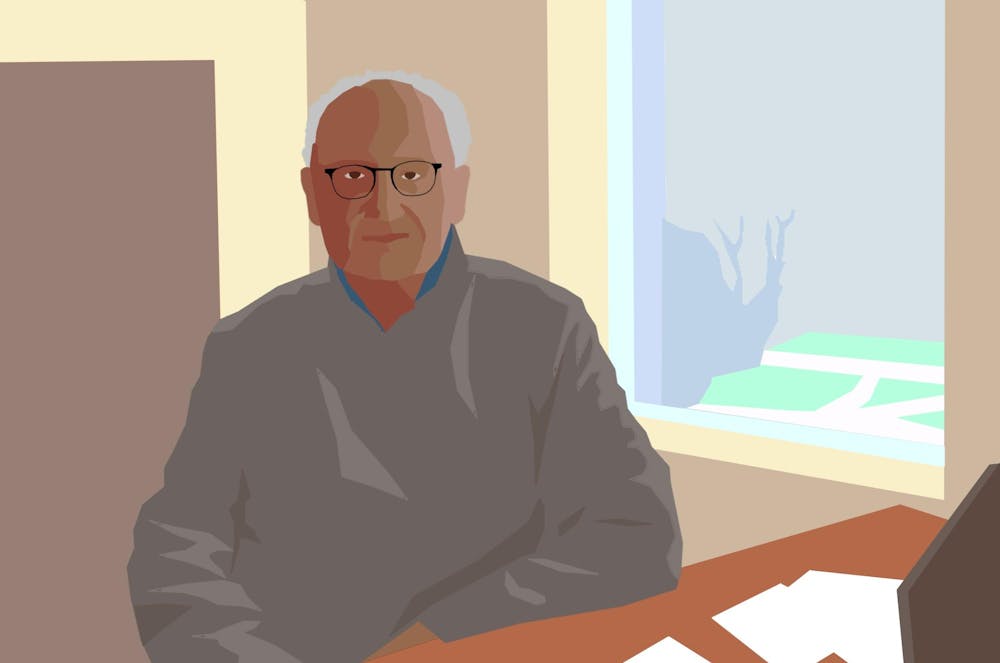
For nearly a decade, Sabah Randhawa has been the president of Western, and with a contract extension last October, he’ll continue his presidency until July 31, 2028.
I spoke with Randhawa about the past 10 years as president, as well as his hopes for the future of the university. His answers have been trimmed for clarity and brevity.
Q: Looking back on the past decade as president, what stands out to you the most? What are you most proud of? What do you wish you could have handled differently?
Randhawa: First of all, I’m really proud that the university, in spite of issues, whether it’s the pandemic, the federal government or the state budget, continues to do a great job in terms of delivering on the mission of the university.
As a public institution, our first and most important responsibility is education to students. I am really proud that over the past several years we have graduated 3,500 students each year, but more importantly, I’m proud of the quality of education that is provided.
You probably know that our students rank third nationally among comprehensives in terms of our students who go on to earn doctoral degrees, and that’s a testimony to the student body we have. It’s also a great testimony to the faculty, and that’s the other thing I’m really proud of; that we have been able to attract and retain really high quality faculty.
I’m really proud of the work we’ve started on the peninsulas. It will take time in terms of fully delivering on that commitment, but I’m glad to see the institution come together and realize that we have a role to play in the state of Washington that goes beyond the walls of Bellingham.
Q: With your recent contract extension, expectations are high, both with students and staff. I’m wondering how your priorities have changed and shifted, compared to 10 years ago.
Randhawa: Well, they are certainly shaped by the urgencies of today, but I think the core of what we’re trying to do really hasn’t changed. It’s not that we don’t have the flexibility to change, that’s not the issue. I think since we completed the Strategic Plan in 2018, nothing has changed.
The attainment goal was one of the key things that really hasn’t changed. If anything, the pandemic has made it even worse and even more of an urgency to address that issue.
(Note: Randhawa is referring to Washington’s Attainment Goal, meant to promote higher education. The state hopes to achieve 70% of adults with a credential beyond high school.)
As you also know, one of the things that the state of Washington – which is progressive in many ways – unfortunately has not changed is its college-going culture. Only one in two students from our high schools go on to any post-secondary institution and there are parts of the communities that we serve here on the peninsulas where it’s way less than 50%.
What has changed is the environment we work in. Certainly, the pandemic has brought its own issues with it. You probably know better than I, since you are sort of the product in terms of your own transition towards the university.
One of the things – maybe it hasn’t changed, maybe I didn’t pay attention, or we didn’t pay attention collectively – is the transfer pipeline from community colleges. For a long time, students came here without us making the effort. It’s a different world out there and so that’s one thing that has changed: the competitive environment of recruiting, because everyone from Vermont to Los Angeles is recruiting in our backyard. So how do we more intentionally go about recruiting, whether they’re students from K-12 or they’re students from the community college system.
The other thing that’s certainly taken a much higher importance over the years is the community seeking more insurance about safety, both emotional and psychological. Certainly, among students, there’s a much higher proportion of students who struggle with basic needs, whether it’s food insecurity or housing insecurity or mental health issues, so that has progressively increased over the past 10 years, over the past 30 years in high education.
Q: Touching on the goal to get more transfer students, Western has had a big push for guaranteed admission from community colleges. Could you elaborate a bit on the plans to continue focusing on transfer students?
Randhawa: So, if I were to just step back and look at the longer term trend, about 25% of students who come to Western each year are transfer students, give or take, about 3,000 freshmen and 1,000 transfer students. Of course, over the years the cost of education has gone up and there are most students that are, appropriately so, seeking a community college education for the first two years.
Not to mention, the one in two statistics of students going onto post-secondary education also holds true for community colleges. Just about half of students who get an AA degree in a community college ever go on to a four-year degree, so there is a whole population of transfer students that, for whatever reason, whether financial or proximity, don’t continue to a four-year degree.
I also believe that in the global society we’re in today, you need a four-year credential, just like how in the 1930’s, you needed a high school credential to move in society. While you can get a job immediately if the job market is really good, in the long term, the earning power of individuals and their contributions to society, both financially but also civically, really is enhanced significantly with a four-year degree.
If I were to wave a magic wand, the wand I would have would make four-year as a base. Just like how high school education is free, four-year education should be free, and anything above that, students should pay. But we’re not there and we’re not going to get there right away.
So there are 34 community colleges (in Washington State) and we can’t reach out to all of them, at least immediately, so our focus is on the 8-10 community colleges on the I-5 corridor and the two on the peninsulas to remove as many barriers as possible to allow more students to get here.
The barriers, beside finances, have to do with losing credit and not getting the right advice from community colleges. When they get here, we transfer the courses but they don’t get credit towards a degree from those courses, so how do we minimize that waste.
Q: I know a lot of high school seniors are worried if college is right for them. Jobs aren’t a guarantee straight out of college and it’s a big investment to try and work towards a degree. As a first-generation college graduate, what do you think makes Western special? Why should I spend 4+ years and 10’s of thousands of dollars here instead of any other university?
Randhawa: I would like to get them in any post-secondary institution, in any university. I think if they are a better fit for another institution, we are doing them a disservice by forcing them to go to Western. Maybe we don’t offer a program or our capacity is limited. At the same time, if we do provide the programs and the right environment, I would absolutely love them to come to Western.
The state of Washington is very generous when it comes to financial aid. Perhaps a lot of the high school students and their families don’t know about it. I think part of it is not just the education of the student but also the education of the families and communities.
We have a deliberate effort in terms of raising scholarship money. In spite of all the financial aid between the state and the Feds, students still need support. At times, it’s not enough to cover housing and some of the other elements that make Bellingham expensive. We are trying to do our best in terms of mitigating some of the financial implications.
I think it’s also sending a message that Western really has a great brand of education. I was in Olympia last week and they may not have any money for us, but the legislators all talk very highly of Western’s education. So we have a lot to offer and in the long term, the jobs and opportunities to our graduates have been really good as well as their record of going to medical school or doctorate programs.
Liam Britt (he/him) is a second-year visual journalism major and guest writer for The Front this quarter. Liam also takes photos for The Planet, a student-run magazine at WWU. In his time away from work, Liam enjoys going to music venues, skateboarding with friends and getting creative in the kitchen. You can reach him at liambritt.thefront@gmail.com.