

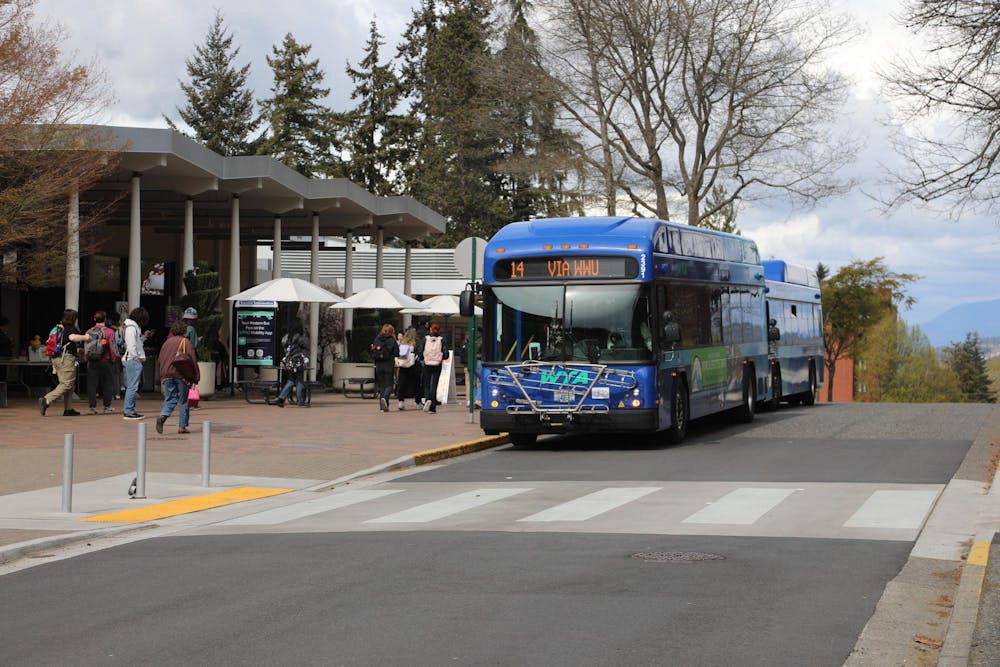
The board of the Whatcom Transit Authority (WTA) unanimously approved a new contract with Western Washington University, ensuring the continuation of the student bus pass for another year.
In a meeting on April 16 at WTA’s office, board members gathered online and in person to vote on a new contract that would cost the university more but keep the student bus pass.
The original one-year contract which expires at the end of September, costs the school approximately $600,000 to maintain the student bus pass. The new year-long contract, which will take place once the former contract expires, will cost the school $700,000 to maintain the student bus pass.
However, previous contracts with WTA and Western required the school to pay upwards of $900,000 for student bus passes prior to the COVID-19 pandemic.
According to Shelby Zimmerman, the director of Transportation Services at Western, the university had renegotiated with WTA to reduce the cost of the student bus pass for the school.
“We had contracts with the WTA previously that were based on the number of individuals enrolled at Western, not actually based off of ridership,” said Zimmerman.
Student enrollment dropped from 16,100 to 15,200 following the 2019 COVID-19 pandemic, but enrollment has since continued to fall. Despite declining enrollment, WTA has requested an increase in contract pricing for Western.
A joint statement made by WTA and Western regarding the student bus pass read, “there will be no increase to what WWU students pay through their Active Transportation Fee.”
Zimmerman clarified that the planned increase to the Active Transportation Fee was scheduled separately and is not tied to the contract.
According to Zimmerman, Western had already arranged a 5% increase to the Active Transportation Fee that students pay each quarter to support transportation services like the Starlight Shuttle and the student bus pass. Students currently pay $33.08 for the 2025-26 school year.
“The rates have to be submitted in the fall of every year. So it had been planned to be implemented for a while now,” he said.
The 5% increase will amount to approximately $1.65 more in quarterly student fees. When multiplied by Western’s student body of 14,700, the total revenue generated from the increase could amount to $24,255.
According to surveys conducted by Western Transportation Services, approximately 85% of Western students report using the bus to get around the city or to get to campus.
Many students reported anxiety surrounding the potential loss of their student bus pass.
“Losing the bus pass would be detrimental to me making it to school,” said August Anderson, a Western student.
Anderson explained he depends on the bus for transport outside of school. He acknowledged that while alternatives like biking exist, taking the bus is much more convenient and safe.
Lauren Frick, a fourth-year student at Western, expressed how the bus was more to them than just a means to get to school.
“I get to see the same people and make friends based on who else is waiting at the bus stop with me every morning,” they said.
Frick explained their passion for public transit is rooted not just in a community-building aspect but also in professional experience as a bus driver for Northern Arizona University (NAU).
“NAU had its own shuttle for students to get around campus. But if you wanted to go downtown you had to take the city bus, but we had a student bus pass for that,” Frick said.
They said it felt like NAU had things squared away with their student bus pass and emphasized their disappointment in the potential loss of the student bus pass at Western.
According to a national survey conducted by the United States Department of Transportation, most Americans view public transportation as a public good — echoing Frick's statements and reinforcing broader national attitudes that frame public transit as essential infrastructure rather than a luxury.
This $100,000 increase in cost for the contract won’t come without budget tightening. While the increase in student transportation fees was not intended for this increase, the additional revenue will help offset the increased contract cost. Zimmerman clarified that the university is not using any outside investors or “external mechanisms” to cover the cost.
“We have had many lengthy, detailed discussions about making sure we will absolutely be able to cover those financial responsibilities,” he said.
Zimmerman reported that there will be no change to existing service to other student transportation options, like the Starlight Shuttle.
However, he expects that future contracts will likely have a bigger fiscal ask associated with them, as well as being a 4 or 5-year contract.
While the agreement preserves the bus pass in the short term, it also signals the growing financial balancing act required to sustain a service that most Western students rely on.
Zimmerman affirms the administration’s commitment to keep buses accessible for students in the future.
Brodey O’Brien (he/him) is a junior at Western, majoring in news/editorial journalism and political science. He is one of The Front reporters responsible for writing about city news. When not writing for The Front, Brodey can be found running around Bellingham, hiking Mount Baker and saving up for gas. You can reach him at brodeyjob.thefront@gmail.com.


