

Each winter, Bellingham residents experiencing housing insecurity are threatened by dangerously low temperatures. The city’s severe weather shelters help the community stay safe and warm, expanding their services every year.
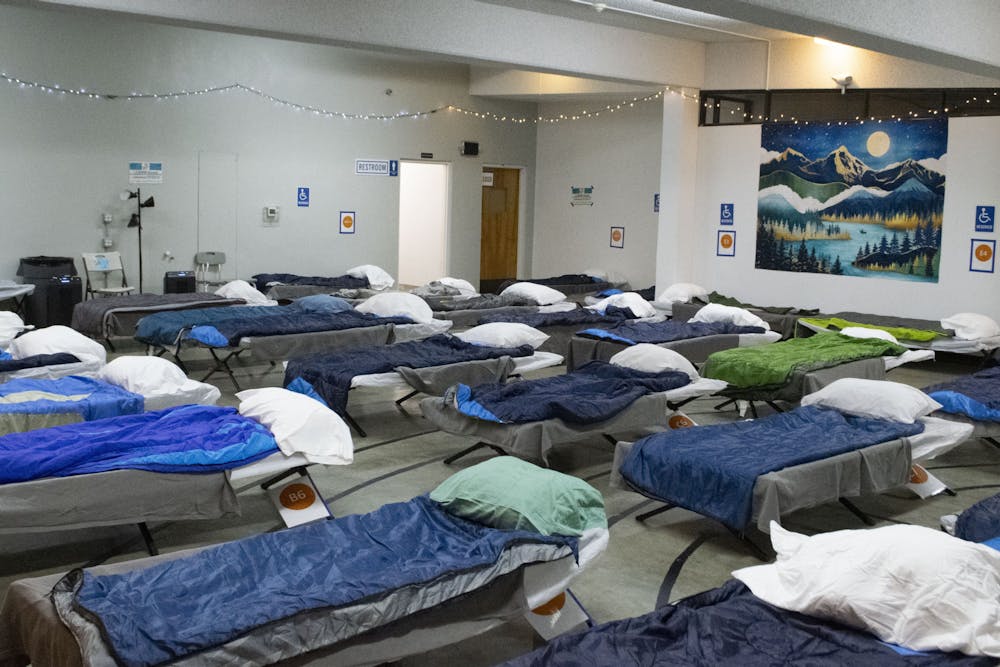
On 925 N. Forest St., Whatcom County Health and Community Services is running a 60-bed shelter exclusively used under severe weather conditions. This is the organization’s second year partnering with Lutheran Community Services Northwest, owners of the building.
The decision to open the shelter relies on a list of guiding assumptions; the shelter generally opens if the temperature reaches an overnight low of 32 degrees Fahrenheit, taking into consideration precipitation and wind chill.
The shelter can open based on a forecast up to 48 hours in advance — the sooner, the better.
Whatcom County Health and Community Services broadcasts whether the shelter is open on shelterstatus.com, where there is an option to sign up for notifications. The County estimates the shelter will be open for 25 to 35 nights this winter season.
“A lot of people are coming in, and they're cold, tired and hungry,” said Marie Junek, communications specialist at Whatcom County Health and Community Services. “We can provide them with a warm place to sleep and warm and nourishing food.”
When the Forest St. shelter is open, the check-in period lasts from 4 p.m. to 8 p.m., and check-out is 8 a.m. the following morning.
Guests at the shelter are guaranteed a bed, dry clothes, nightly care from Whatcom Street Medicine, and hot meals thanks to the building’s kitchen.
If the shelter fills all of its beds, additional people are provided transportation to the nonprofit Lighthouse Mission Ministries, which sets aside 30 of its shelter beds for severe weather intake.
At 1312 F St. in Bellingham, Lighthouse Mission Ministries operates a 70-bed emergency overnight shelter every day, but follows the County’s guidelines on when to open the severe weather beds.
Based on resident feedback, Whatcom County Health and Community Services decided to increase the spacing between shelter beds this year, leading them to remove 10 beds.
Lighthouse responded by adding 10 more beds to their severe weather section, keeping the shelters’ capacity consistent.
“We try to accommodate emergencies and people in crisis as best as we can,” said Alec Howard, Neighborhood Outreach Liaison at Lighthouse Mission Ministries. “If we are at capacity, we always have the ability to provide basic resources and information and direction to people.”
Whatcom County Health and Community Services and Lighthouse’s drop-in shelters are only open to adults 18 and up, but for any families or youth seeking shelter, the City of Bellingham has compiled some local resources.
Compared to past severe weather shelters in Bellingham, today’s offerings are an improvement. Some past shelters have been organized in the parking lot behind City Hall in 2019 and in Civic Field's locker rooms in 2023 and 2024.
“From what I remember, there were places for people to get hot water,” said Von Ochoa, a member of the Housing Advisory Committee of Whatcom County, on a shelter experience from 2019. “But I think the food that was offered was snacks, granola bars, that kind of thing.”
The Forest St. shelter’s funding comes from the state Consolidated Homeless Grant. The County has budgeted $450,000 for the shelter, and if expenses exceed that number, the City has agreed to match up to $100,000 of additional costs.
Last year, the shelter only used $403,000, but the County estimates that this year, it could use up to $525,000.
“If it were up to any of us working in this industry, we'd have an unlimited budget,” said Howard. “Unfortunately, we still live in a society where money is a constraint, so we work within that and do our best to meet the needs of our unhoused population every winter.”
Sophia Jellinghaus (she/he/they) is a reporter on The Front's city life beat. A third-year visual journalism major and Spanish minor, this is their first quarter with The Front. When not tracking down sources or coming up with pitches, they like to relax with a video essay and a tall glass of root beer. You can reach them at sophiajellinghaus.thefront@gmail.com.


