
In early spring of 2025, Bellingham’s birding community realized a new bird species had made its home in a small park on Marine Drive.
A new colony of great blue herons had been established and completed a successful nesting cycle at Little Squalicum Park as of September. The City of Bellingham is collaborating with Hamer Environmental to monitor the new heronry and release a protection plan for the Little Squalicum herons in their 2025 annual report on the Post Point Heron Colony, another protected heronry located near Post Point Lagoon.
“Someone had posted on our Whatcom Birds listserv maybe a year or at least a year ago that they’d seen herons at Squalicum,” said Jamie Donaldson, a member of the Audubon Society and birdwatcher of over 40 years. “I’d always been under the understanding that the only heron nesting site was at Post Point … so when someone posted on Whatcom listserv that they’ve seen a new nesting site at Squalicum, I was so excited.”
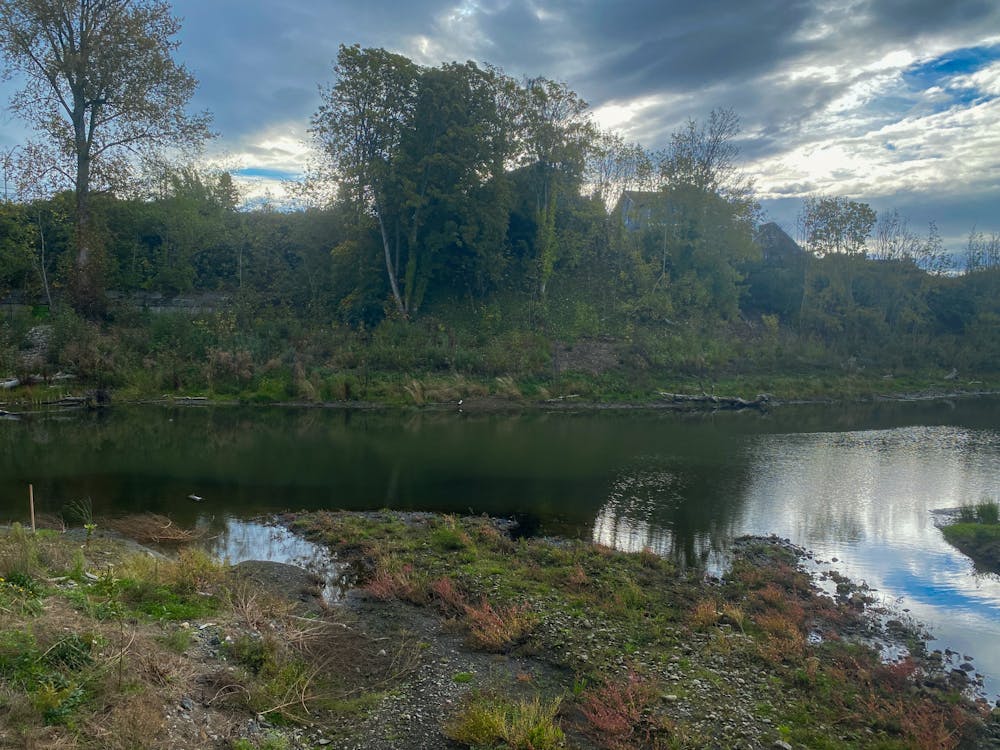
The heronry, currently unoccupied by herons and saving five to 10 nests for the breeding season, can be viewed on Little Squalicum Park’s northern trail, accessible from the Bellingham Technical College entrance. The City of Bellingham’s website advises observers to stay on trails and at least 200 feet away from heron colonies to avoid disturbance.
Analiese Burns, the City of Bellingham’s habitat and restoration manager, said the herons were first reported by Bellingham community members and city staff from January to February 2025, a date aligning with the nesting season of the great blue heron colony near Post Point Lagoon.
“The timing varies slightly year to year, a lot of it depends on weather cycles, but generally, we expect the herons to come into the colony … beginning anytime around Jan. 15. Sometimes that extends into February,” Burns said. “They nest throughout the spring and summer and then generally, all the young have fledged and the colony is no longer being used in that season for nesting around Sept. 1.”
Burns said that the city is currently unable to confirm a connection between the new heronry and the Post Point Heron Colony.
Patricia Otto, a long-time birder and conservationist, and Burns have both confirmed that the Little Squalicum Park colony is no longer present at the nesting site; it is unknown whether they will return for the next nesting season. Otto hopes the colony will return after its success in the 2025 breeding season.
Burns said Hamer Environmental’s monitoring for the 2025 season is ongoing.
“We have not heard the final conclusion of their results of the 2025 season, or what they think might have occurred with the herons over in Little Squalicum,” she said.
Burns confirmed that the City of Bellingham and Hamer Environmental will begin officially monitoring the Little Squalicum heronry in their 2026 annual report. This will determine if action needs to be taken to protect the colony.
Donaldson says that the City of Bellingham purchased private property around the Post Point Heron Colony to extend the protective buffer around the nesting site, and that the same should be done for the Little Squalicum heronry. The City of Bellingham confirms on its website that it bought 1.75 acres of forested property around the Post Point Heron Colony nesting site on March 28, 2022.
“(Great blue herons) are not at the moment an endangered species in Washington, but they are a species of concern, which means that they require human activity to help them thrive,” she said.
The City of Bellingham’s website notes that the Little Squalicum colony is established northeast of the park’s new estuary, constructed in 2024. Estuaries provide an abundant food source and support several breeding populations in the Puget Sound area, according to a 2007 study of great blue herons in Puget Sound by Ann Eissinger.
However, there has not been a confirmed connection between the Little Squalicum Estuary construction and the colony’s arrival.
“It’s an extremely special thing to have a nesting colony of great blue herons, and we should be appreciating it, enjoying it as part of our natural environment,” Otto said. “Great blue herons are a very integral part of our ecosystem, we see them lots standing on the shoreline in the wintertime, out on the fields eating rodents … but to have them nesting right in our community is really special.”
Carden Mercier (he/she) is a City Life reporter for The Front. This quarter is his first publishing for The Front; he is currently a sophomore at Western Washington University seeking a degree for news/editorial journalism. Outside of writing for The Front, he is a hobbyist digital artist and writer and can often be found exploring Bellingham for new spots to eat. He can be contacted at cardenmercier.thefront@gmail.com.