
Some Western students say the school’s emergency housing program has helped them stay enrolled during times of unexpected housing insecurity.
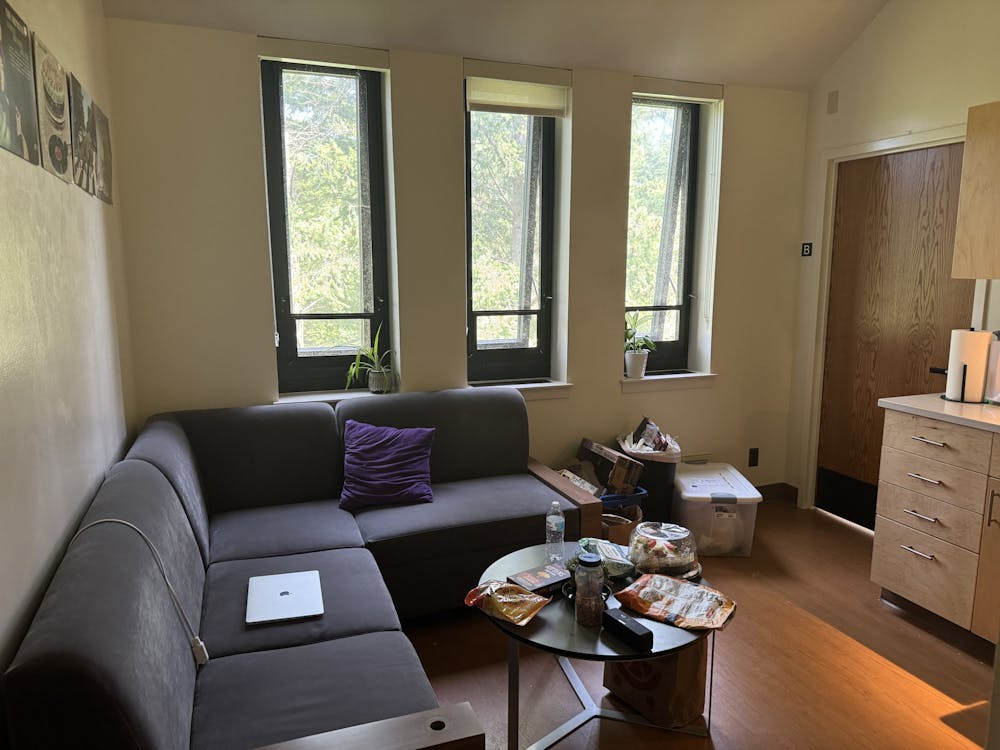
Western’s emergency housing program provides short-term, on-campus accommodations for students experiencing housing insecurity. Rooms are located in Buchanan Towers and are similar to standard residence hall units. To apply, students can visit Gina Ebbeling, the Basic Needs Resource Navigator for the Basic Needs Hub, in Viking Union 420.
Fourth-year Kazuto Kanemoto said he spent two nights sleeping in his car before learning the program existed. As an international student, finding housing between leases during the summer quarter was difficult.
“Someone at the Ethnic Student Center mentioned it, and within a couple of days, I had a room,” Kanemoto said. “Just having a place where I could sleep and lock the door changed everything.”
Kanemoto, who struggled to find a co-signer who was a U.S. citizen in his housing search, utilized the program over two summers.
Angie Yoshino, a current WWU student, moved into emergency housing after a delay with her apartment lease left her without a place to stay. She had been sleeping on friends’ couches, missing assignments and struggling to keep up in her classes before one of her friends, an RA, referred her to the housing office.
“Once I moved in, I could finally breathe,” said Yoshino. “It’s not fancy, but it’s clean and safe. And it gave me space to catch up.”
Like Kanemoto, Yoshino said she didn’t know emergency housing was an option until someone told her about it.
“They don’t advertise it much,” Yoshino said. “I think more students would use it if they just knew.”
Tristan Diers, a current student and recent emergency housing resident, said he was referred to the Basic Needs Hub by Western’s Career Services Center. Diers had planned to return home for the summer, but his housing situation changed unexpectedly.
“I was sleeping on a couch and didn’t even have a key,” Diers said. “One time, we had to leave the door open so I could get back in. It wasn’t safe.”
Diers said he was placed in emergency housing within hours of speaking with the housing team.
“They handed me a keycard that night,” Diers said. “I didn’t even realize how much I needed it until I moved in. Now I can sleep, lock my door and keep my stuff somewhere safe. That kind of stability changes everything.”
Students described the environment as unexpectedly comfortable and supportive. Diers said having access to the campus food pantry and living alongside others in similar situations helped create a sense of community and stability during a stressful time.
“I’d definitely say it’s hidden,” Diers said of the program. “I’ve talked to people who didn’t know where they were going to stay for the summer, and they didn’t even know this was an option.”
All three students agree that while the program offers much-needed support, awareness remains a major issue. Yoshino recommended posters in dorms and information at orientation. Diers added that something as simple as knowing where to go or who to email could help prevent others from falling into housing insecurity.
As summer continues and some students face uncertain housing situations, Western’s emergency housing program is already providing a critical safety net, one keycard at a time.
“I’d tell any student struggling: send the email, make the call,” Diers said. “They’ll work with you. This program is a helping hand when you need it the most.”
Farrel Harten (he/him) is a senior at Western Washington University and a News Editor/Reporter for The Front. His reporting focuses on issues affecting international students and campus community affairs. Outside of journalism, he enjoys traveling, playing soccer, and spending time with dogs. For story tips or inquiries, contact him at farrelharten.thefront@gmail.com.