
Not many universities can say they have a towering evergreen forest just steps away from campus. The Sehome Hill Arboretum is a major element of what makes Western Washington University’s environment unique.
The dense, green forest spans more than 175.5 acres and is home to tens of thousands of tall and lush trees, some of which have existed for hundreds of years, according to the City of Bellingham parks website. But there is more to the arboretum than meets the eye.
“I’ve walked through the arboretum nearly every day since I’ve moved here. There’s a lot to explore,” said Hazel Raschko, a third-year Western student and a frequent visitor to the arboretum.
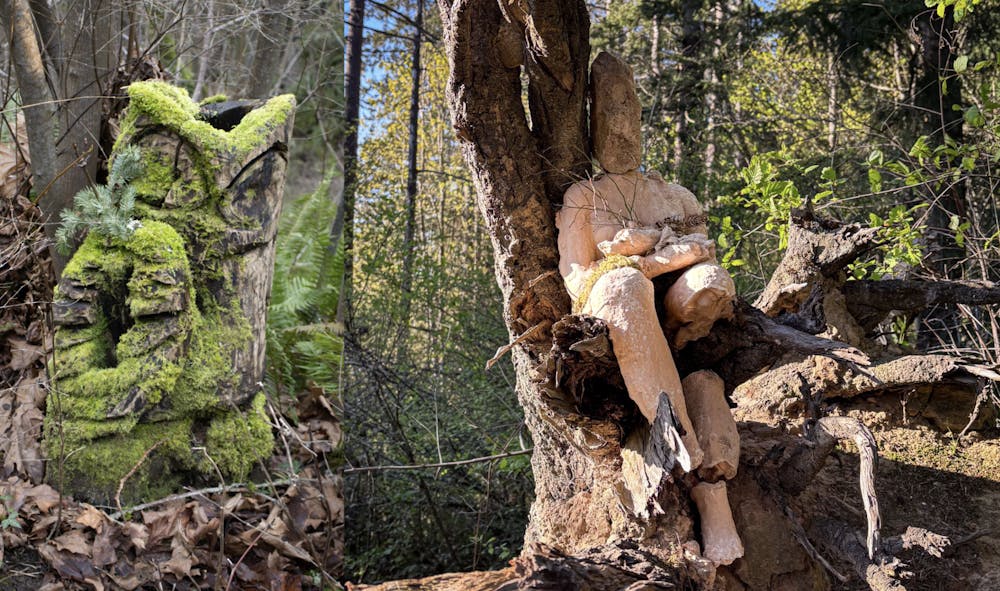
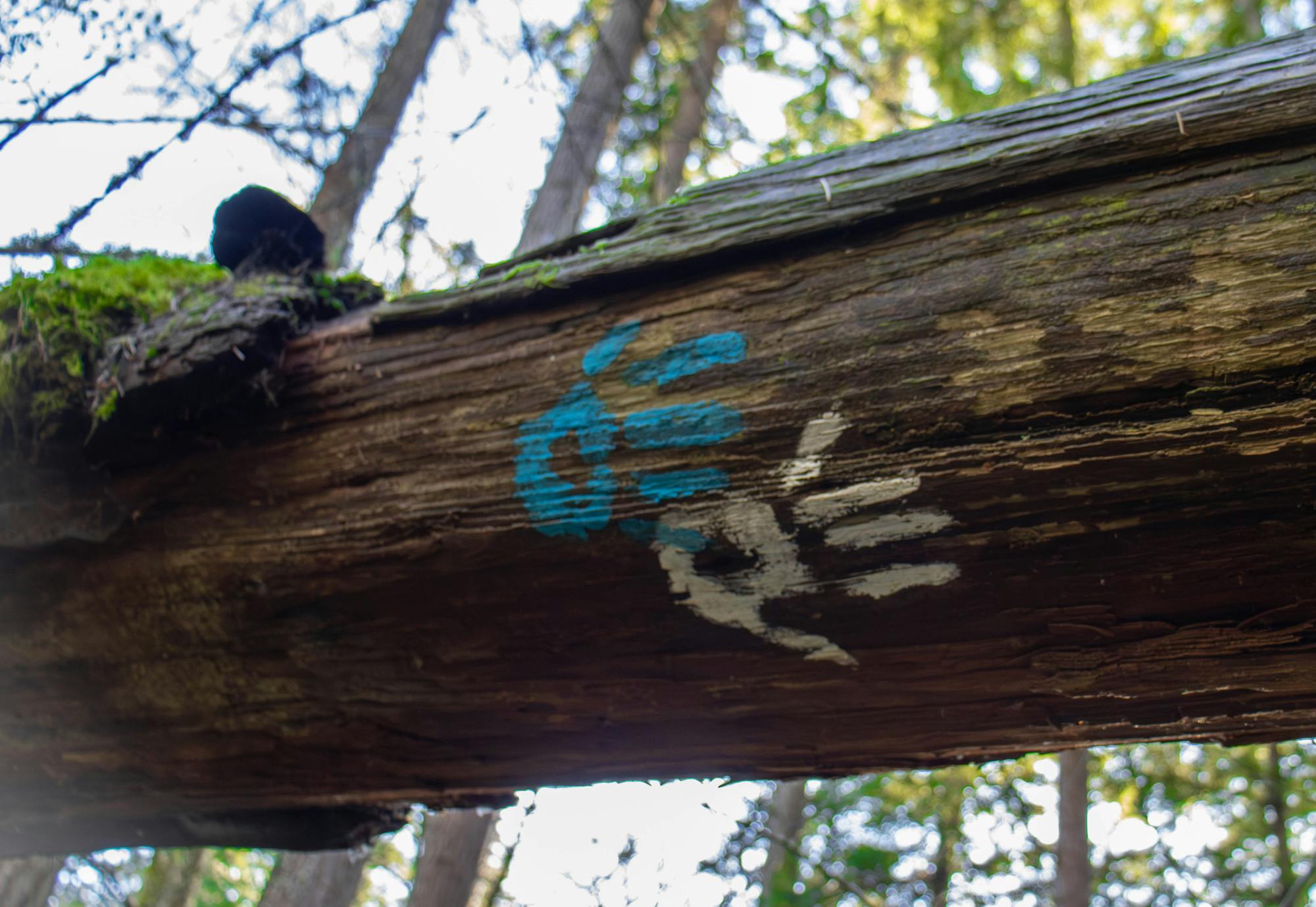
The Sehome Hill Arboretum has undergone many changes during the past century. Not just the construction of new trails, roads, and an observation tower, but small, mysterious objects, sculptures, graffiti, huts and nets have appeared throughout the forest as well.
Their origins remain unknown, but one thing is clear: students past and present have left their mark on the area in their own unique ways.
Many human-added objects in the arboretum are constructed with the natural materials found in the forest. A prime example is the wooden hutlike structures dispersed throughout the arboretum.
Sasha Petrenko, a professor of art and sculpture at Western, said the most eco-friendly installation art practice is “rearranging the natural material that’s already there.” By doing so, no damage to the living plants in the forest would be caused.
“They should have their personal relationship with the forest but also maintain its ecosystem,” she said.
City of Bellingham park officials regulate the park to make sure trails remain safe and accessible and that no damage has been caused to the environment.
Kelsey Thomas, a park representative, was asked if there has been any damage caused by students and if the park staff is responsible for moving art or objects in the park.
“There have not been recent issues of damage in the park,” she said in an email from Jan. 26.
Petrenko does not consider the objects vandalism or littering, but rather a conversation between the visitor and the nature surrounding them.
Olivia Linkous, a second-year student at Western, said she feels “a serene, wordless presence” when she enters the arboretum.
Linkous makes an effort to upkeep the arboretum’s natural environment, but she also contributes to and maintains one of the sights known as a “fairy shrine.”
She described fairy shrines as “accumulations of precious little objects placed as offerings to fairies or nature spirits.”
Students connect with nature — and each other — in the arboretum through created spaces of community and socialization.
There are many spots and landmarks that students frequent, such as the nets or the swings. The net systems are made up of rope or paracord woven together to make a hammock-like surface, usually tied or nailed totree trunks.
These hidden gems are not marked on any map, and many students will not disclose their locations.
“It’s an open secret. All the things in the arboretum aren’t talked about openly, but everyone knows about them in some way,” Raschko said.
The unknown creators of these net spaces have added things like journals for visitors to express themselves and trash bins for them to clean up after themselves once they leave. In order to afford adding to these spaces, the creator also leaves a space for donations.
The nets, in particular, are probably the most seen installations among students because of how many there are. However, these nets have only been in the arboretum for less than 10 years, according to an alumnus’ arboretum exploration vlog. They are one among many structures that have come and gone in the history of the arboretum.
The evolution of these obscurities in the arboretum is representative of the passage of time. Art in the arboretum now will not always be there. There have been art pieces that current students will never know about because they disappeared before they were able to discover them.
“It’s not a monument, it’s a moment,” Petrenko says. “It doesn’t need to last forever.”
Katherine Rogers (she/her) is a reporter on The Front’s campus life beat. This is her first quarter on The Front. She is a second-year visual journalism major. Outside of the newsroom, she does concert photography for local artists. You can reach her at katherinerogers.thefront@gmail.com.