
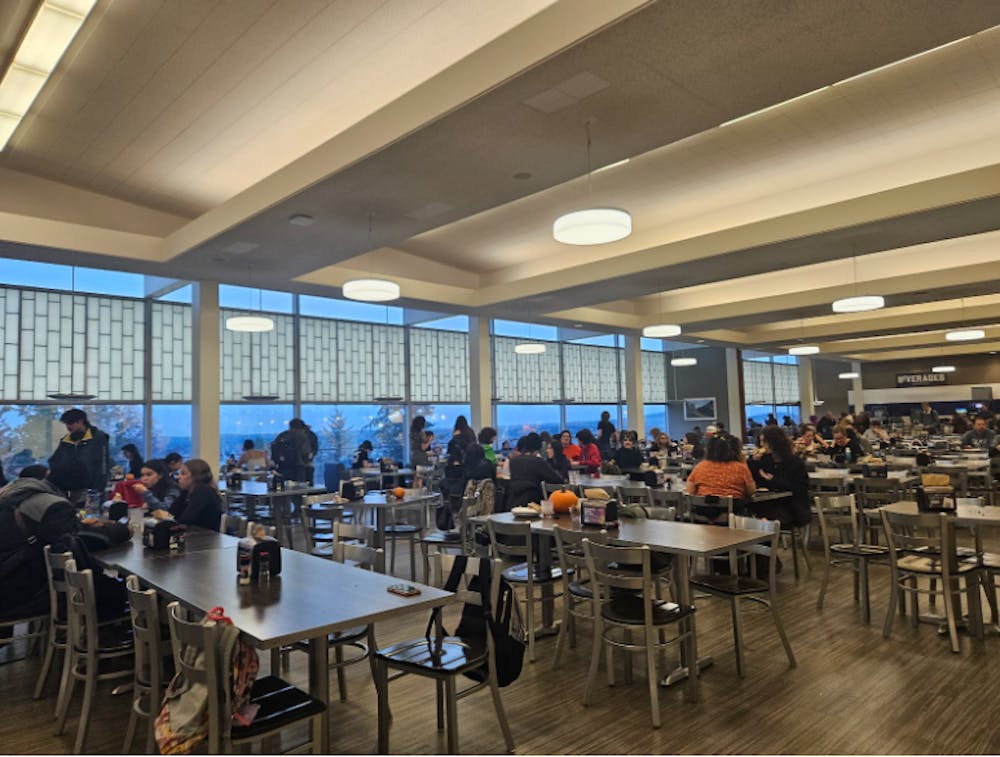
Viking Commons, Ridgeway Commons, and Fairhaven Commons are the three main dining halls operated through Western Washington University. Each offers a variety of menu options, including vegan and gluten-free choices. Thousands of meals are prepared every day thanks to a web of coordination, logistics and planning that goes on behind these busy kitchens.
Recently, Dine On Campus announced a new weekly meal swipe reset policy. Under the change, any unused meal swipes expire at the end of each week instead of rolling over to the next.
The decision marks a shift from the previous system, where students could save unused swipes to use later in the quarter, a change that has sparked mixed reactions among students who rely on meal plans for daily food access.
Ingrid Camones, the director of operations for Dining Services, is at the heart of it all. Her position links logistics, data and the student dining experience.
“As director of operations for Dining Services at Western, I see my role as connecting strategy with the student experience,” Camones said. “A typical day might start with reviewing service data from our dining halls, followed by walking through locations to talk with managers and students. One of my favorite parts of the job is mentoring staff and seeing their ideas improve service in real time.”
Camones added that there’s a lot more happening behind the kitchen doors than most students realize. From sourcing ingredients to analyzing dining patterns, the work is a constant balance between efficiency and responsiveness.
“There’s a lot that happens behind the scenes — from managing deliveries to tracking peak dining times and analyzing menu performance,” she said. “We use data to reduce waste, improve service, and make sure we’re meeting student needs every day. It’s a complex operation, but it’s all in service of a better dining experience.”
Still, managing these dining halls for thousands of students is not without challenges.
“Balancing scale with personalization is always a challenge at a large university,” Camones said. “We meet that by using data to understand student preferences, offering flexible dining options, and staying connected through feedback channels like surveys and tabling events. Our team works closely across departments to ensure consistency in quality while still being able to adapt quickly to student needs.”
According to Gina Ebbeling, the basic needs resource navigator at Western, food insecurity remains an issue for many students — and it’s growing. It has increased from roughly 38% in 2022 to about 45.4% in 2024.
According to Camones, the goal of this change was to ensure students had consistent access to food throughout the quarter.
“We made the switch to weekly resets so students have guaranteed access to meals all quarter long,” she said.
But not all students are happy with the change.
Rosie Walker, a sophomore using the Weekly 14 meal plan, said the update makes budgeting harder.
“I tried to limit my swipes to no more than two or three a day just so I knew I had some for the rest of the quarter,” Walker said. “Since I only get 14 swipes a week, I have to strictly limit myself to two a day unless I know I won’t be on campus over the weekend. I also tend to eat more just to get full use of my swipe.”
Walker added that the new reset system can disproportionately affect students with unique schedules or dietary needs.
“It definitely impacts students like me who have diabetes and need access to food in case of an emergency,” Walker said. “If I don’t have enough swipes during a medical episode, then I’m out of luck.”
She suggested that students should have more flexibility — including the option to roll over swipes or donate unused ones. “It would be great if we could donate our extra swipes to students who don’t have enough,” she said.
Camones emphasized that feedback like this helps Dining Services evolve.
“Through tabling events and programs like First Year Eats, we’ve been able to gather feedback and help students make the most of their plans,” she said. “These conversations have helped us fine-tune our messaging and identify ways to keep improving.”
As Western’s dining team adjusts to the new policy, one thing is clear: balancing food access, flexibility, and affordability will remain a central part of campus life.
Mishele Ross (she/her) is Junior at Western, majoring in News/Editorial Journalism. When she is not hunting down a source or hiding out in the library writing a story for The Front, you can find her listening to music, bowling, or playing a round of golf. You can reach her at misheleross.thefront@gmail.com.