
Women have always been underrepresented in film. Since 1929, only five women directors have been nominated for the Academy Award for best director, according to a study done in 2020. While representation has increased since then, the number of women directors is shockingly inferior to that of male directors, continuing the cycle of women being under-recognized.
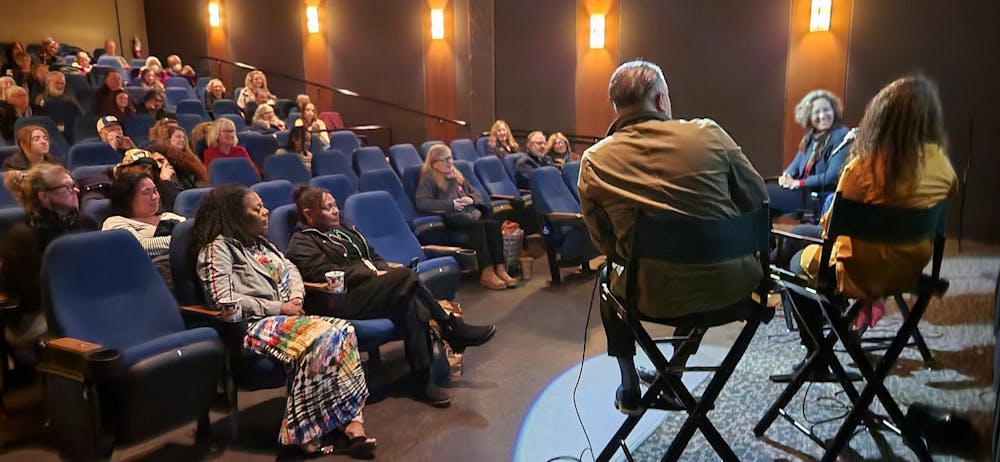
Since 2017, the Cascadia International Women’s Film Festival has worked to give women in the film industry, specifically directors, the opportunity to combat this. Every spring, the festival brings in women from around the world, giving them a platform and a space where they can be supported. Sustaining local festivals like these contributes to a vital sector of the industry: women. It is one small step to push for equal representation.
This year, Cascadia International Women’s Film Festival celebrates its 10th annual multi-day festival. Showing around 35 films spanning all genres from women around the world, it is one of the few festivals in the nation to show solely women’s films and the stories they tell.
Cheryl Crooks, executive director of the festival, has spent the past 10 years advocating for women in the industry.
“It is important that a woman is in the director’s chair because when she is, often there are many more women employed to work on the film, on set or behind the scenes,” Crooks said. “Women need to be more visible.”
Amy Adler, one of the directors featured at the Cascadia International Women’s Film Festival, speaks on the same subject: women are often not in the forefront when they should be.
“I think it’s important for people to think about hiring women for all roles on film crews. A lot of times you'll see films that are by women, with women directors, women producers, but then there will be a male film composer or male editor,” Adler said. “Or a film will be about women and it'll be directed by a man. Nothing against men but I think that there's a lot of room for hiring women in the film industry and giving women the opportunities that men have always gotten more easily.”
A study done by San Diego State University's Center for the Study of Women in Television and Film found that in 2024, 13% of directors in the 250 top-grossing films were women, which is 3% less than the previous year.
“It creates an awareness that there is this inequity that exists and by showcasing these women’s films, we provide a platform for their films to be seen by audiences who need to see them,” Crooks said. “Women directors are out there and they’re really good.”
Due to women accounting for so little of the directors in the film industry, platforms such as Cascadia International Women’s Film Festival are essential to their representation.
“I just think that it's really important to tell stories that foreground women’s voices and show different kinds of relationships that are outside usual mainstream subject matter,” Adler said.
Mchyla Evans, the volunteer coordinator at Pickford Film Center, taps into the experience films are meant to give, no matter the gender of the person giving that perspective.
“Film, the most visible and engaged-with art form of our modern era, is one of the best avenues to have that voice heard in a way that might expand people's empathy for the experiences of women. I genuinely believe the world becomes a better and more fair place when we all expand our capacity to empathize with one another,” Evans said. “That's the magic of movies; through watching them, we can build our capacity for empathy for people unlike ourselves. Like any under-represented demographic of humans, women's voices in film matter because their voice matters, full stop.”
Events like Cascadia International Women’s Film Festival should be much more popular and supported. After centuries of oppression within the film industry, women should be represented by now. Engage with their art in any way that you can because their voices deserve to be heard.
Rowan Braeckel (she/her) is a third-year communication studies major, news/editorial minor and an opinions reporter for The Front this quarter. When she's not writing for The Front you can find her listening to music, at home with her snake, or spending time with friends. You can reach her at Rowanbraeckel.thefront@gmail.com.