

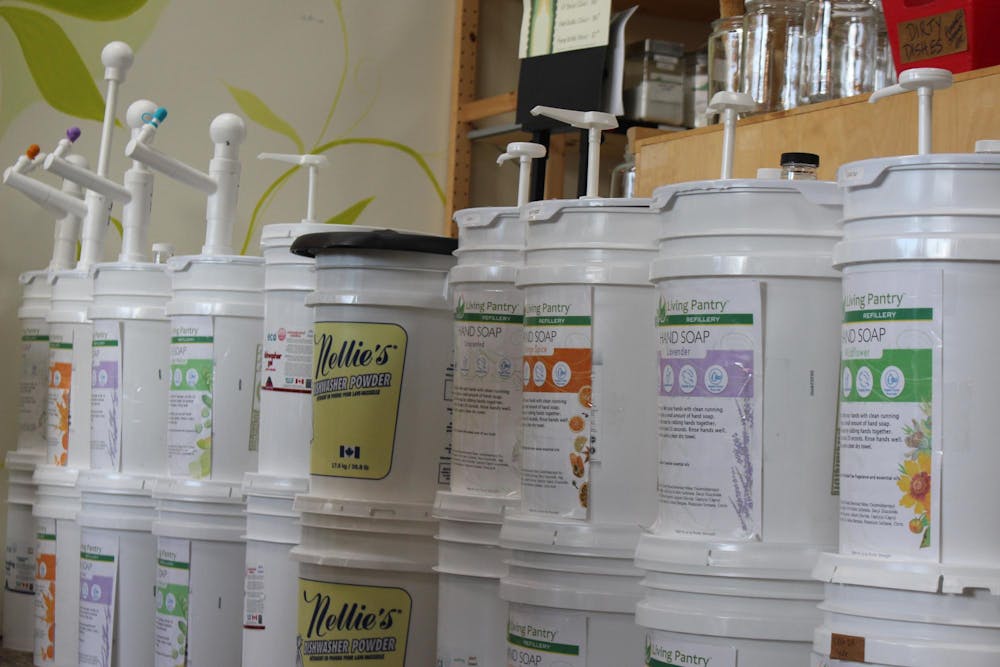
Due to climate change and growing consumer consciousness about the impact individuals and purchasing power can have, sustainability is something that people have been turning towards now more than ever. Alternative eco-friendly products typically come with a high price tag, making it seem unfeasible. Individuals with lower incomes need access to environmentally conscious products as much as the next person.
Living Pantry, one of Bellingham's low-impact ethical stores, allows customers to bring in their own containers and refill products to the exact amount that they need without stretching their budget. By making products more accessible in amounts that customers need, Living Pantry reduces packaging waste.
Shawna Morris, co-owner of Living Pantry, speaks on finding a way to begin incorporating sustainability into the everyday.
“A lot of the hesitation disappears once they realize these changes can fit naturally into their everyday routines,” Morris said. “Sustainability becomes much more manageable when it’s approached step by step instead of trying to change everything overnight.”
While it can be overwhelming to find ways to incorporate eco-friendly changes into your everyday life, more importantly, it is crucial to find affordable ways of doing this.
“Sustainability doesn’t have to look luxurious,” Morris said. “Often the most sustainable choices are simply using what you already have, reducing waste and making mindful purchases.”
A common misconception of sustainability is that it involves buying new products to replace old, unsustainable products. However, the real act of being environmentally friendly comes from what you already have.
Dora Vaughan, a former Western student who prioritizes living sustainably on a budget, is now working as the academic programs coordinator for the Sustainability Engagement Institute at Western, working to make green living more accessible to students using her personal experiences.
“We know that sustainable alternatives can be more expensive,” Vaughan said. “We don’t talk about alternatives enough to purchasing. Ultimately, you don’t have to purchase things in order to be sustainable.”
Using what you have at home is a great way to start your sustainability journey, but at some point, when your old products give out, it’s important to replace them with eco-friendly choices. Vaughan speaks about navigating products that claim to be sustainable and have higher prices.
“We are familiar with greenwashing. People are using sustainability or green alternatives as a strategy for marketing,” Vaughan said. “I think we get caught up in the social norms of consumerism and capitalism. Sustainability is all about how you challenge consumerism.”
Overconsumption can be a large part of unsustainable lifestyles. Products are constantly being thrown at us, many of them not made to last long, which causes us to buy more. This cycle continues over and over, resulting in practices that further the culture of overconsumption.
Brandi Hutton, Towards Zero Waste program manager at Sustainable Connections, emphasized the importance of intentional purchasing.
“We are sold everywhere we look, we don’t need as much as we consume,” Hutton said. “Deflect some of that messaging and recognize that we don’t need as much as we’re told.”
Sustainability isn’t just about using what you have and buying sustainably when you need something. It's about being able to recognize actions and purchases in our everyday life that make it more environmentally conscious. It’s important to recognize what will last longer and minimize frequent repurchases.
RE Store Director Jason Wild offers some tools to start living more sustainably in small ways. A lot of the most meaningful actions come from changing your thought process.
“Push back against helplessness, whether you think about the problem in an economic sense or an environmental sense, it’s very easy to feel like the problems are too big,” Wild said. “Shift reframing into controlling what we can control, removing the shame and guilt aspect of it.”
Sustainability is much more feasible than it may seem, and much of it starts with a change of mindset. Being environmentally friendly and conscious can be affordable to everyone, as long as you know where to look.
Rowan Braeckel (she/her) is a third-year communication studies major, news/editorial minor and an opinions reporter for The Front this quarter. When she's not writing for The Front you can find her listening to music, at home with her snake, or spending time with friends. You can reach her at Rowanbraeckel.thefront@gmail.com.


