

Officially established in 1991, Western Washington University’s Ethnic Student Center has spent over three decades being a safe space for BIPOC students and clubs, but budget cuts are straining the center.
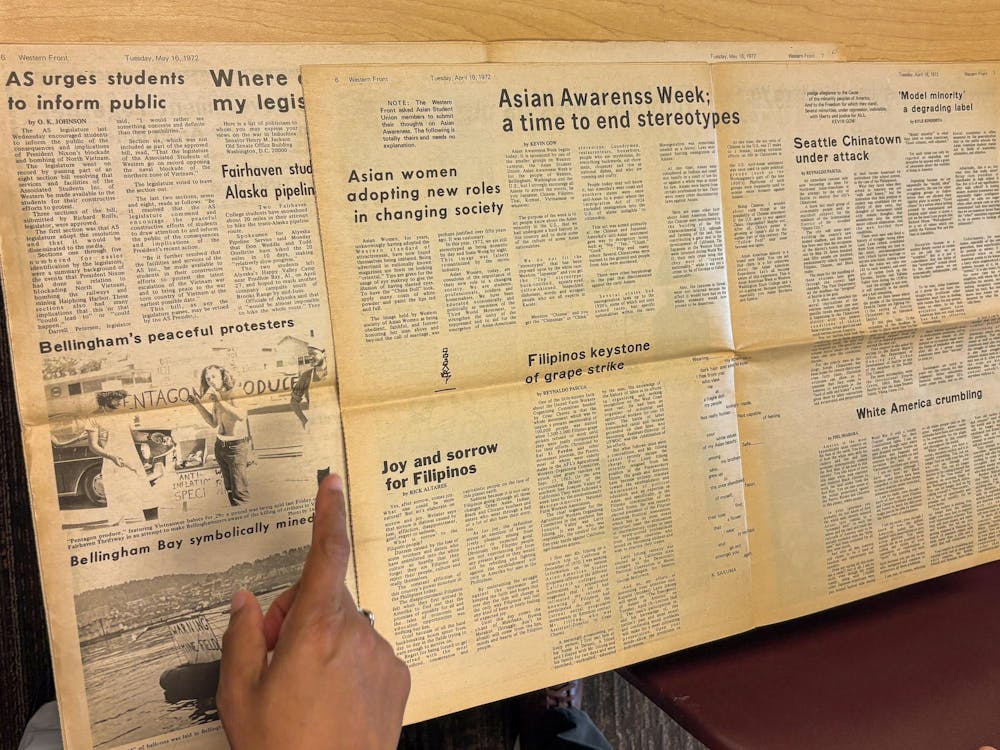
Since its inception, the ESC has worked alongside the Office of Multicultural Student Services to provide room for students to study, curate and run events, and provide resources to clubs. The seeds of its creation date back to the ‘60s and ‘70s, when BIPOC student clubs across Western first started working to establish a common space for themselves.
The ESC had its grand opening on May 21, 1991 and was located on the fourth floor of the Viking Union. The first ESC included the Black Student Coalition, Native American Student Union, Movimiento Estudiantil Chicanx de Aztlán, as well as an Asian American and Pacific Islander club and International club that have since disbanded or branched off into different and more specific clubs.
According to the ESC history page, this alone helped increase the number of BIPOC students enrolled tenfold, from the nine that enrolled between 1990 and 1991, to 142 students enrolled between 1992 and 1993.
The ESC continued to expand its operations over time, working alongside Associated Students and the Residence Hall Association to hold larger events and gather more funding for operations.
As newer renovations came to the VU in 2018, a new and official ESC space was created on the 7th floor, where it resides today.
Now, the ESC continues its work as a resource for students, but not without a few roadblocks.
“I’ve worked here for three years now, and every year has been different,” said Cole Farhat, ESC advocacy and engagement coordinator.
Administrative and funding changes on both the local and national level have placed a toll on many of the programs and resources that the ESC works to provide. Budget and staff cuts in 2025 removed nearly 80 working positions, 36 of which were vacant.
“We've gone through a lot of staffing changes in the past few years. We had staff and we lost them with budget cuts,” Farhat said. “This whole year, we've had no professional staff to help support us.”
Many of the resources and information that the ESC has access to are only accessible by professional staff, which are non-student positions. With no professional staff, the ESC is completely barred from those administrative privileges.
The ESC is largely student-run, and it helps many ethnic student clubs navigate event logistics and funding, something that has become increasingly difficult if not impossible with the lack of professional staff to advise them.
The ESC currently has three student retention specialists helping manage the more than 20 different ethnic student clubs on campus. With these retention specialists taking on the work of professional staff members, Farhat worries that students and non-ESC staff will have to take on even more work to keep the ESC operational.
Diya Hayre, a board member of the South Asian Student Association, has been feeling the strain as a student and club leader. Without professional staff, the responsibility of fundraising and event planning fall almost solely on students.
“Budget cuts and layoffs don't allow ESC clubs to be operating at max capacity in a sustainable way,” Hayre said.
Tara Perry, a professor in the department of communication and a Western alumna, remembers the ESC at its inception. Perry was heavily involved with the ESC as an undergraduate and has watched the ESC grow since returning to Western as a professor.
She hopes the challenges that the ESC has faced does not discourage students from fighting for the continued support and function of spaces for students of color. “Students have always been the activists doing the work,” Perry said.
For Nivedita Srinivasan and Aishwarya Duraisami, both SASA board members, the ESC is an invaluable part of their club.
“The environment's been very supportive and I see a lot of solidarity from the other ESC clubs,” Srinivasan said. “I'm really grateful for the support we have, especially from staff.”
Srinivasan and Duraisami both reiterated the value of having space for BIPOC students to come together, especially in a predominantly white institution like Western. Clubs like SASA would be near impossible to run with students alone.
“Different students collaborating with each other is very nice to have, especially in times like this,” Duraisami said.
Despite the difficulties, Farhat holds out hope.
“We have so many ethnic student clubs, they deserve to get support in their endeavors,” he said. “The ESC, the professional staff here and Multicultural Student Services have helped me feel like I actually belong at Western.”
Marina Sasaki (she/her) is a current second-year and reporter at The Front. She loves reading, writing and all kinds of art. If she's not cooped up working on projects, she's hanging out with friends and adventuring. You can reach her at marina.thefront@gmail.com.