
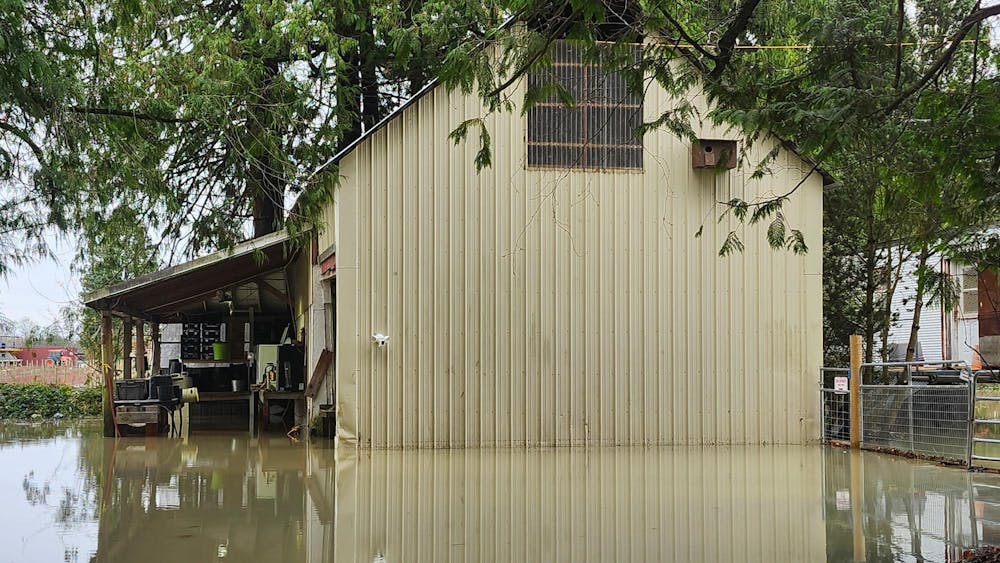
Along the Nooksack River, countless farms and homes faced severe short and long-term damage after mass flooding the second week of December.
The extent remains uncertain, but according to the Washington Department of Agriculture, an estimated 13,587.9 acres of crop fields face potential damage in Whatcom County.
Amid the devastation, community efforts have been mobilized to bring support.
Since 2000, Bellingham’s Community Food Co-op has offered an annual Farm Fund to support the agricultural community in and serving Whatcom County. The Co-op is working to lower the financial burden farmers are facing by offering a flood recovery-focused grant through their Farm Fund.
As of Jan. 28, the flood recovery fund has raised over $85,000, a little over half of which has come from customer donations made online or through the PIN pad at checkout. The latter option has been a new addition to the Co-op as of 2025, when shoppers raised over $250,000 for the Bellingham Food Bank amidst SNAP cuts. The other half of the flood recovery funding has come from donations through the Whatcom Community Foundation.
“What’s amazing about the Farm Fund is that we can give it pretty nimbly and get funds to farms that need it as quickly as possible,” said Jade Vantreese, a member of the Farm Fund committee. “But some of that federal funding, like FEMA, can take years.”
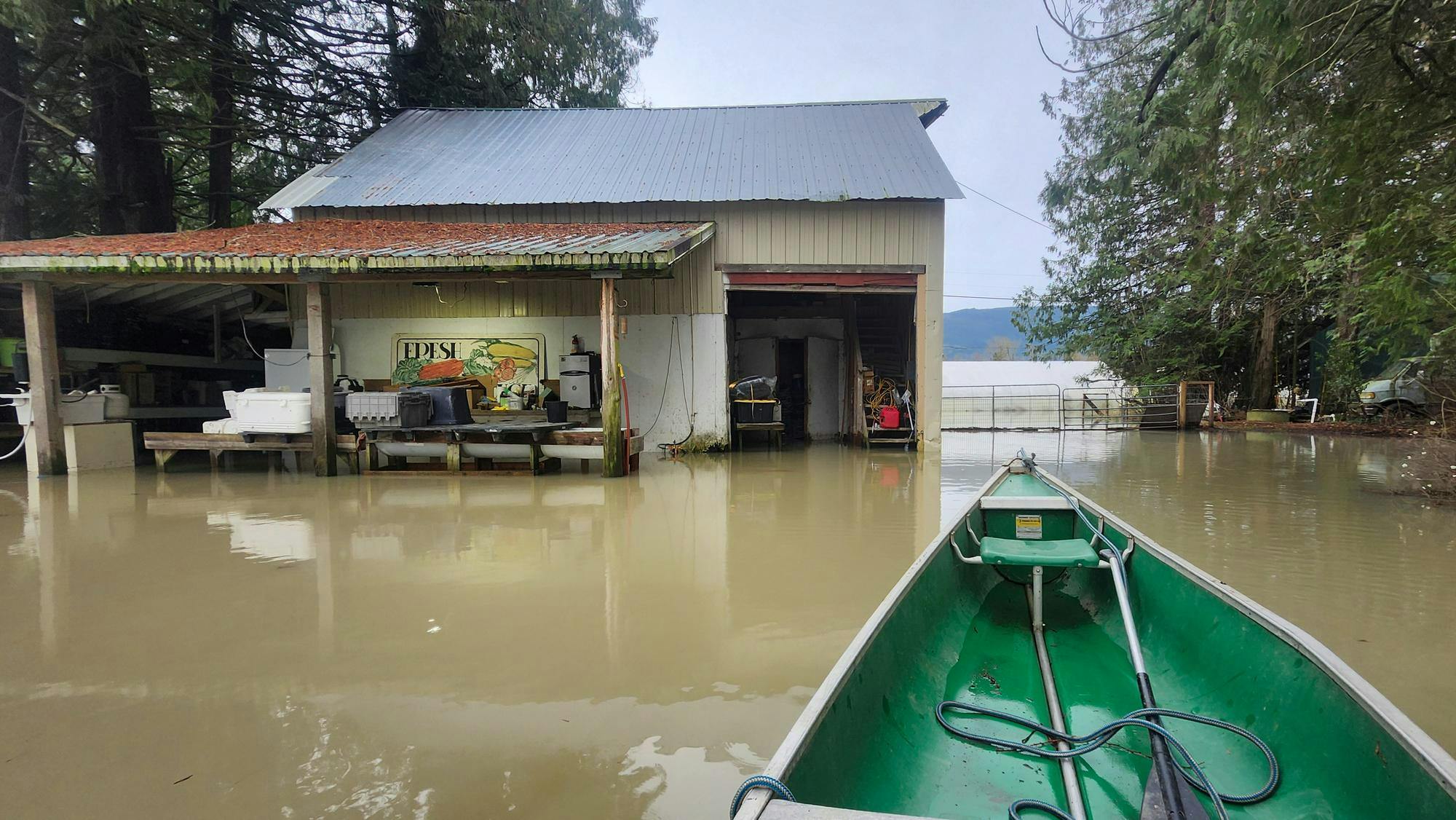
This is far from the first time Whatcom’s farming community’s livelihood has met these challenges. This is the second 100-year flood Whatcom has faced in the past five years. A 100-year flood refers to the one-in-one-hundred chance of a flood of such severity occurring in a given year.
While the flow of the flooding was different this time around, some farms were impacted in both 2021, the first 100-year flood, and 2025.
Wanderwood Farm in Everson received funding from the Co-op to go toward flood-related damage in 2021, and has applied for funding this year as well.
Although they were farming at a different location when hit in 2021, Colin Fischer of Wanderwood Farm knew the farmers who operated the land they now farm on and was in the process of purchasing it when the past flooding occurred. He was able to assess how the land was damaged in 2021 and made a map of the higher spots that stayed dry.
“We used that map to build our greenhouses out in the field,” they said. “We do a lot of winter growing, so it's important to have stuff be as flood-safe as possible. But this time around, areas that were safe during that flood, got water.”
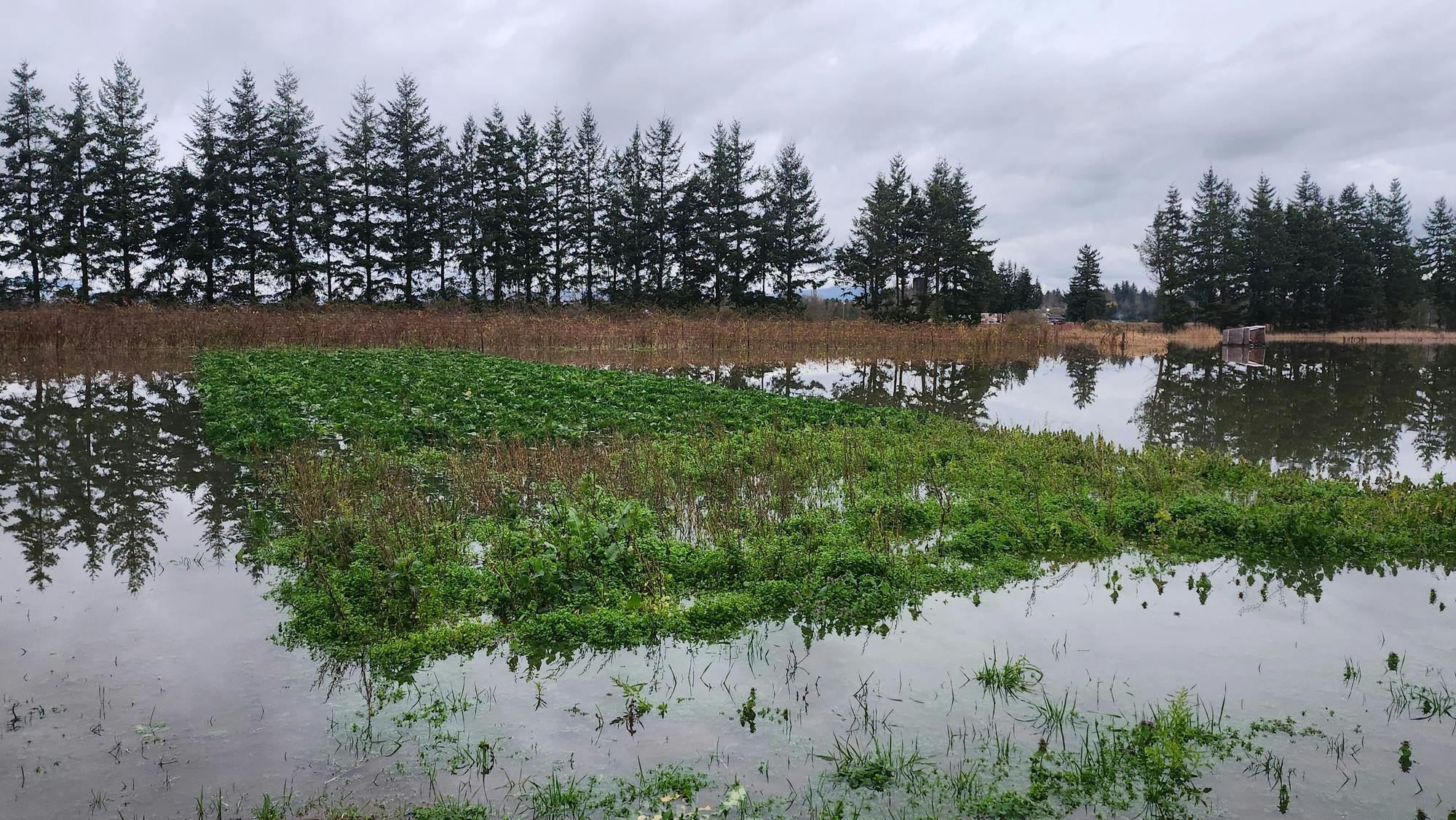
Many farms are now currently facing crop loss due to floodwater contamination, erosion of farmland, loss of seeds, structural damage of greenhouses and barns, equipment loss and more.
"Our low spots become inundated with sediment in these big floods, so you probably don't want to plant anything in those spots ever again, in terms of agricultural crops – it's probably forever a no-go zone,” said Fischer. “It didn't used to be like that on this property. I'd say that the increased flooding has changed the face of what's possible to farm on our property.”
Skuter Fontaine, owner and operator of Terra Verde Farm in Everson with his wife, Amy, compared the 2021 floods to a battering ram. The impact they faced in 2021 ranged from destroying tractors to making part of the land they lease unsuitable for certain crops to thrive to this day.
“This is our busy season, so when flowers or the greenhouses get trashed––we're right in the middle of our ‘summertime,’” he said. “If we lose a planting, that's money that's not going to come back.”
This past December, when their farm was hit, so was their home.
Water flooded their crawl space and seeped into their living room, ruining their flooring and heating, less than two weeks before Christmas.
While the Fontaines have flood insurance, not all farms do, and they have yet to receive the money. Albeit, Gov. Ferguson has requested $21.3 million in Federal Emergency Management Agency (FEMA) assistance, it has not been approved yet. This federal funding could go toward individuals and farms in Chelan, Grays Harbor, King, Lewis, Pacific, Pierce, Skagit, Snohomish, Thurston and Whatcom counties, as well as 15 Tribal nations.
“The people who work to feed our state and country will continue to feel this event long after floodwaters recede,” Samira Guirguis, public information officer with the Washington Department of Agriculture, wrote in an email. “The need for additional federal Public Assistance and Individual Assistance funding reflects the mounting burden on agricultural communities, where environmental damage, infrastructure failure and economic disruption compound the speed and effectiveness of immediate and long-term recovery.”
Wanderwood Farm is selling market cards as a way for patrons to support them to get ahead of the season after being set back. Similarly, Terra Verde has a GoFundMe set up to help them come back from the losses they are facing.
Wanderwood, like many other farms, spent days before the floods preparing and moving as much equipment as possible to higher ground as the river gauges increased in an attempt to lessen the devastation.
“Farmers can prepare as much as humanly possible based on the past, but this is a force of nature. The folks that were impacted badly this time, there is nothing else they could have done differently to not be impacted,” said Cat Sieh, director of the Twin Sisters Mobile Market.
With federal funding nowhere to be seen, the community has stepped up to fill in the gaps.
Sieh conducted outreach with farms ahead of and after the flooding, mobilizing work parties for repair and even organizing meal trains for impacted families.
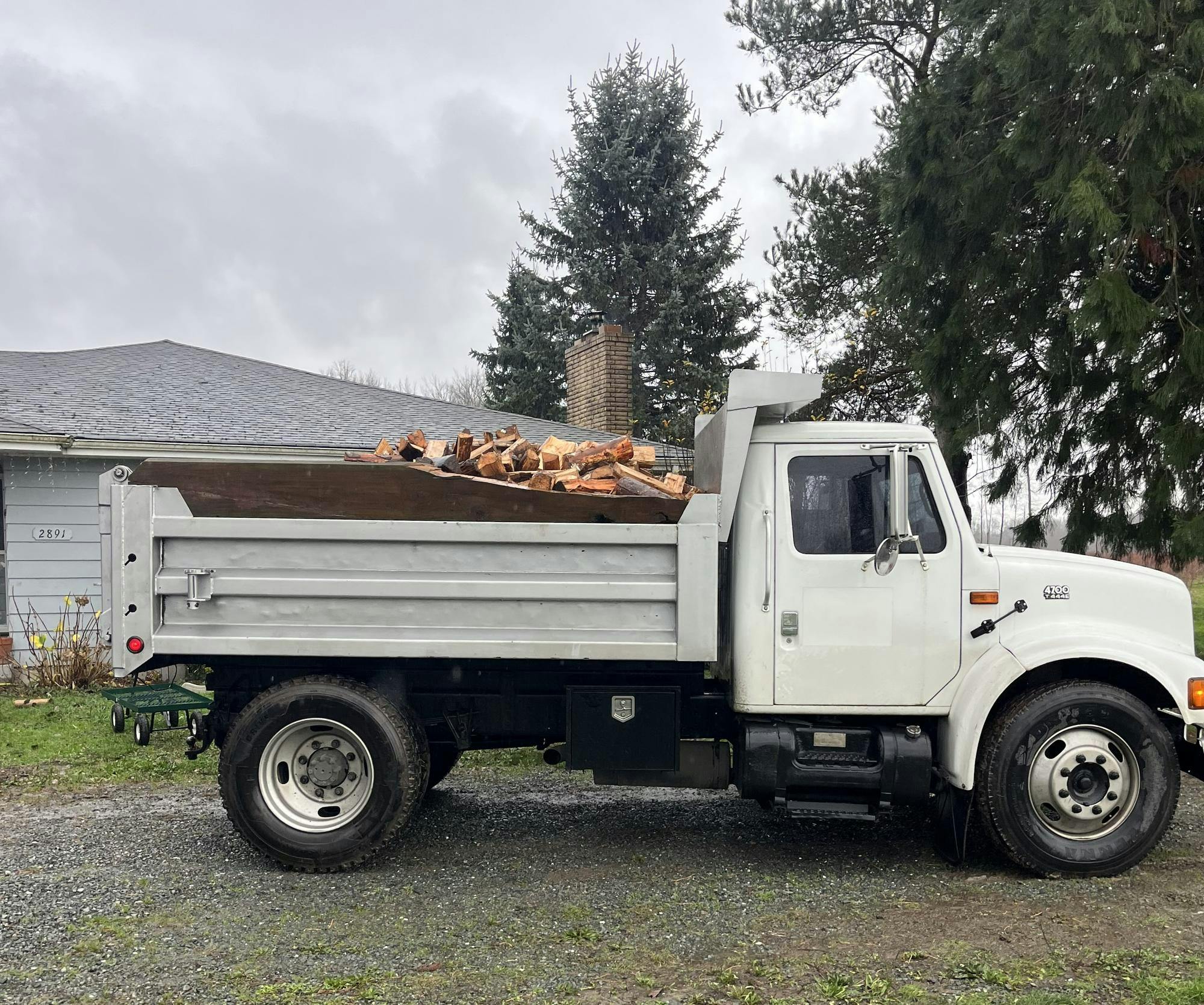
When the Fontaine’s home heating went out, Sieh sent them firewood, as well as signed them up for a meal train, producing what Fontaine called some of the best meals he’d ever had.
“For someone to just drop off a cord-and-a-half of firewood when it's cold out and you have kids, I mean, it's like magic,” he said.
Funds like the Co-op’s or the Seattle Neighborhood Farmer’s Market’s Good Farmer Fund help farmers account for lost market income due to crop loss, as well as infrastructure repairs, flood-resilience projects and more.
Sieh recommends supporting farms by purchasing directly from them, pre-ordering CSAs, purchasing gift cards and donating if possible.
“I would love to see this outpouring of support continue on beyond the flood years,” she said. “The culture of small farming is about resilience, but it’s also about interdependence. We rely on each other, in times like this more than ever.”
Applications for the Co-op Farm Fund close on Feb. 8, but donations will continue to be accepted online.
Kenna Peterson (she/her) is a city news reporter for The Front this quarter. She is a fourth-year news/editorial journalism major and when she isn't working on a story, she can be found baking bagels, making collages and hanging out with her cat, Rigatoni. You can reach her at kennapeterson.thefront@gmail.com.