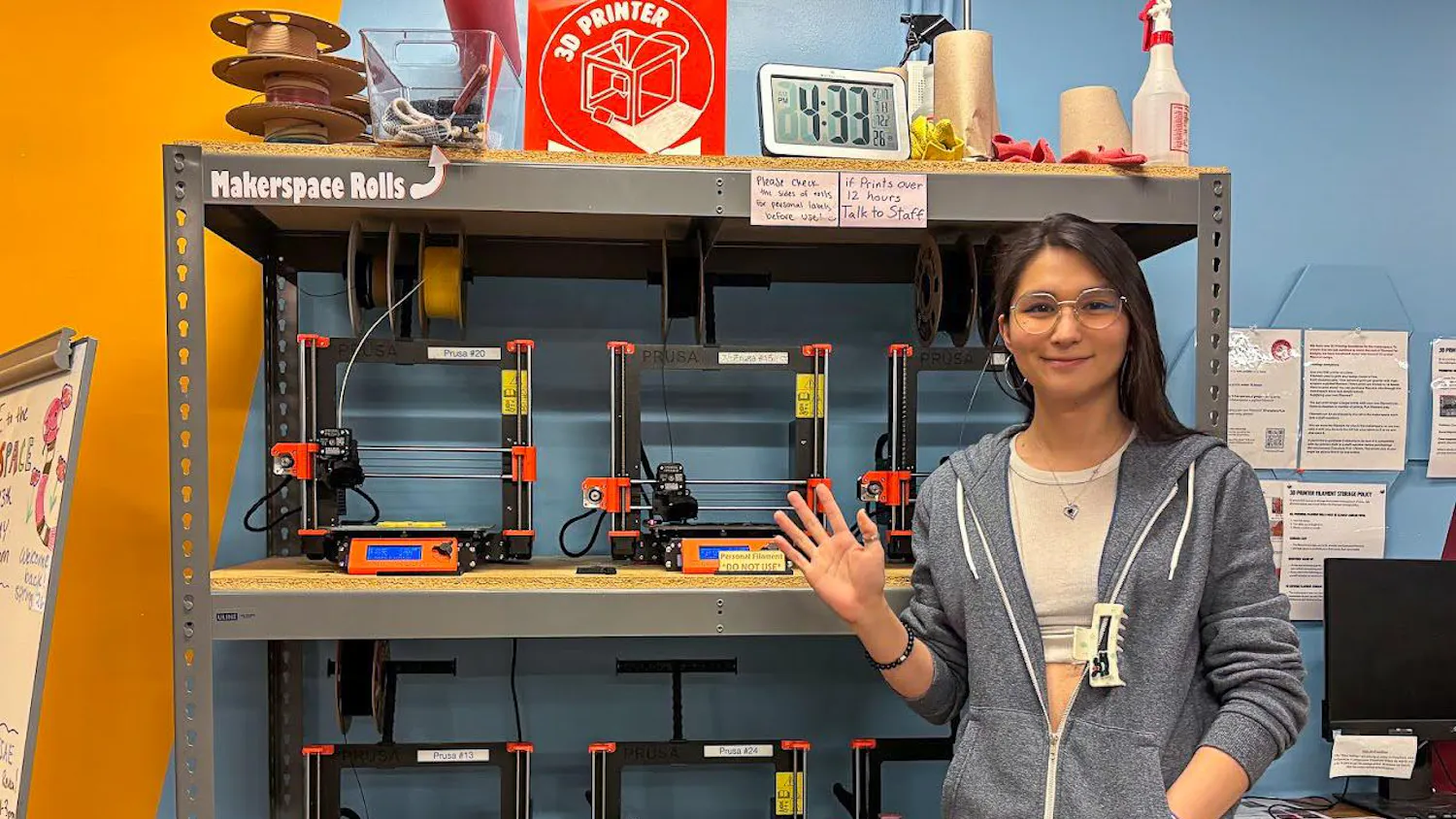

Matrit Coe believes the writing for the Woodring Peer Mentoring program had been on the wall for a while.
“We were basically wrapping up being peer mentors and getting ready to apply for next year,” said Coe, a former Woodring peer mentor, responsible for “providing informed support and guidance” to students.
Just a few weeks before the end of the 2024-25 term, Coe and her colleagues — who were, according to Western Washington University’s website, once responsible for assisting Woodring students in navigating student life — were informed of the program’s dissolution.
“We had a suspicion — since there (were) a lot of programs being cut — that we were getting cut anyway,” Coe said.
According to Coe, the cuts to the program affected mentees’ interactions with their mentors. Mentors could no longer take mentees out to eat as often, and budgetary constraints made it difficult for mentors to provide healthy food options at Western-catered events.
Mentors who once worked 40 hours a week were now assigned roughly 16 hours every two weeks, making life stressful for those depending on their paycheck.
Budget cuts have been a part of Western’s academic life recently. Twenty positions were eliminated in June, including the entire administrative division of Student Affairs, with most student services continuing under the Office of the Provost. At the time of the layoffs, Cascadia Daily News reported that nearly 100 positions had been eliminated at Western since last fall.
An open letter signed by roughly 300 people — including Western staffers and students — was delivered to cabinet members in early November. The letter voiced concerns about the layoffs and questioned the administration’s intent to address the deficit properly, given the salary raises granted to top Western executives in August.
Some of these executives were present at a university budget forum held on Nov. 12. The administration responded to an inquiry about the timing of the Board of Trustees’ decision to approve the executives’ raises, stating that salary freezes cannot properly address budget shortfalls.
“Western and the Board have taken a compensation policy that says we cannot build a sustainable future for the university by deferring compensation increases year over year,” said Faye Gallant, Western’s associate vice president of strategy, management and budget. “What ends up happening is, in a couple of years, you come back, and you go to fill that position, and no one will take it because you're completely out of line with the market.”
In the end, according to Coe, it is not just the employees who were affected by the administration’s decisions, but students as well.
“A lot of staff in general areas [students] go to... it seems like they're so busy, or they're so caught up with whatever they're doing,” Coe said, pointing out that a freshman may find nobody available to help them.
“There’s no sense of warmth (that makes a student feel comfortable asking) ‘Hey, I'm confused on this,’” Coe lamented.
Carlos Braga (he/him) is a campus news reporter for The Front this quarter. In addition to his work at The Front, Carlos also does journalistic work for Bellingham’s KMRE-FM and WWU’s The Rage magazine. You can reach him at carlosbraga.thefront@gmail.com.