

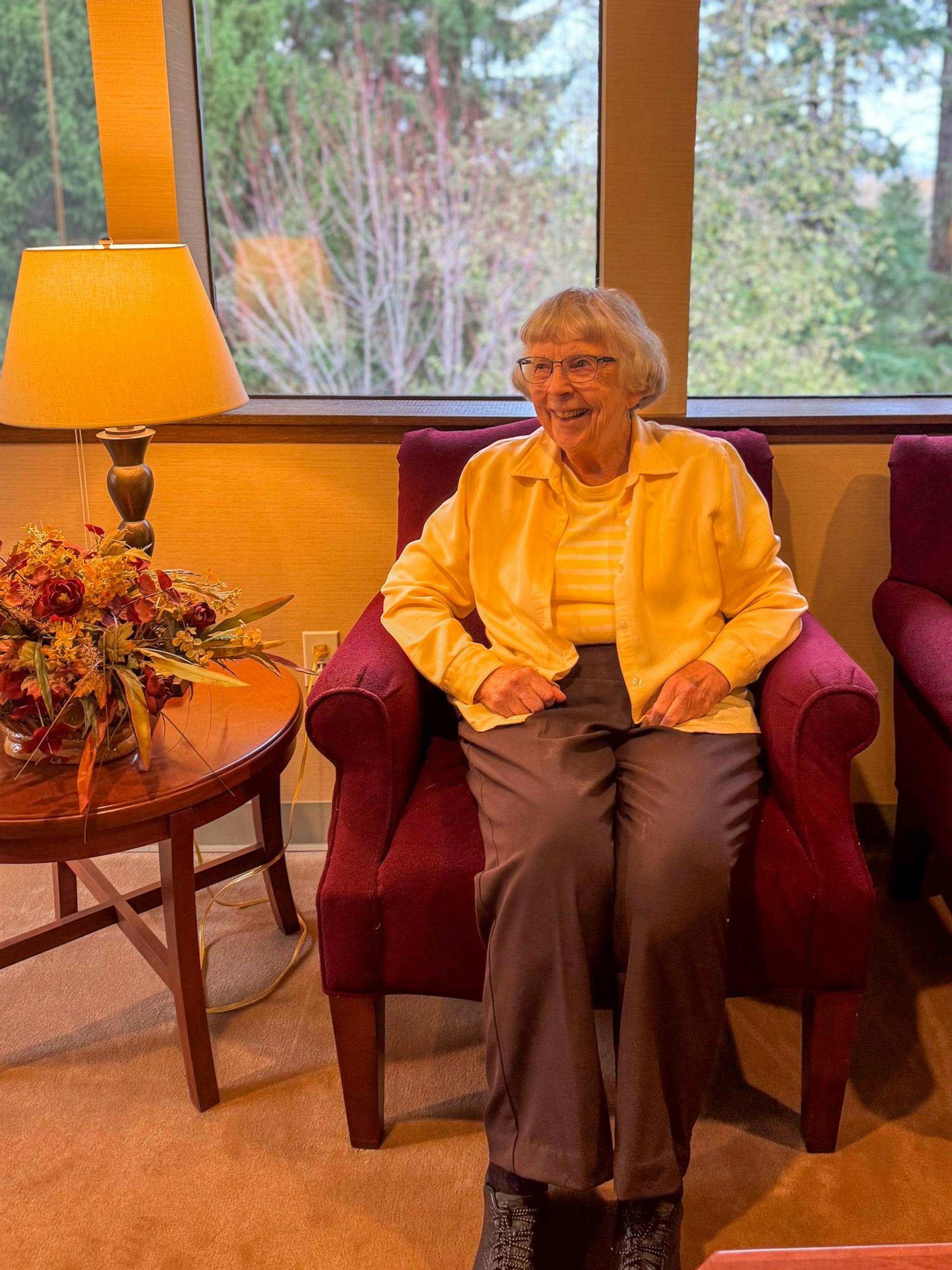
Joanne Rasmussen grew up during the Great Depression, raised a family and spent her career as an elementary school librarian. Now 101, she has lived through more than a century of political change and has taken part in activism at different points in her life. Today, she’s the most senior member of a protest group at The Willows retirement community.
The group, Seniors Community Action, was founded by Karen Irving, now in her 70s, whose activism began in her teens and has continued throughout her life. Between 30 and 50 residents take part in the group, some by rallying on the streets or attending group meetings, and others by following the weekly email and paper updates Irving sends.
The Front spoke to Rasmussen about her life, her activism and why she continues to protest – with additional context from Irving. Their answers have been edited for clarity and brevity.
Q: Have you known each other for long?
Karen: We all live together. But actually interacting with Joanne, probably since we started the Seniors Community Action group, we get to see each other more often.
Joanne: I used to see you birding.
Karen: Yeah (chuckles), everybody sees me walking around looking up.
Q: Did you start Seniors Community Action together?
Karen: No, I did, not long after the election in ‘24. You could feel the tension building, and it was pretty scary. I was hoping to connect with other people. So, I just asked a few people if they wanted to do a group or a meeting, so we could be together and decide maybe to take some action.
Joanne: A lot of people don’t think it’s right to talk politics here.
Karen: That’s kind of the rule of the building because we have people who are progressive to Trump supporters. We all have to live here together, so we don’t want to be in political fights with each other. But they get to see us and see our group, and sometimes see our flyers that go up on the residents’ bulletin board.
Q: Joanne, can you tell me a bit about where you grew up and what life was like for you?
Joanne: I grew up in Seattle. I was five years old in 1929, and I grew up in the Depression. My father was unemployed, or underemployed, for probably 10 years – it's not good to see someone go through that.
Q: What early experiences or moments shaped your sense of civic duty or justice?
Joanne: My parents. They were both very interested in everything that was going on. They were active in their precinct; there used to be neighborhood precincts. They would gather in the house, like eight or ten people. Also, my mother worked for Warren Magnuson, he was a senator [for] the state of Washington, as a secretary. So, it was around me.
Q: You’ve lived through many major moments in American history. Are there any that stand out as especially meaningful or defining for you?
Joanne: President Roosevelt. He meant a lot because he brought in some regulations and changes during the Depression. But the most dramatic one was an invasion of the Congress by Trump's friends.
Q: What was it about Roosevelt that made him so meaningful to you?
Joanne: Because my family had lost everything during the Depression and he tried to make some changes that helped. He was something as long as he was in power, of course, I was just a kid, but I felt comfortable.
Q: And how did January 6, 2021 compare to the other moments you lived through?
Joanne: January 6 was so shocking. There’s just no comparison. I never thought anything like that would happen. I always thought of the Capitol as being something special where so much goes on, so many decisions are made – so many terrible decisions, so many good decisions – that to think that anyone would do that, walk in, sit down at the senator’s desk, chair, go through their papers, there’s no comparing.
Q: What made you decide to participate again now?
Joanne: Because of what’s happened. Fear of the change in our government, not just fear, but afraid of what they’re trying to do.
Q: You mentioned that after becoming a widow, you moved here to be closer to family. How long have you lived in the Bellingham area?
Joanne: Ten years. Two years, I lived downtown at The Leopold. I spent one winter in Arizona, and when I came back from that trip, I moved here (to The Willows). I grew up in Seattle, but I spent 33 years in San Jose, California, then 22 years in Vancouver, Washington.
Q: Did you do much activism through the different places you lived?
Joanne: I was interested. But I don’t know, I was working and had kids, I didn’t do much. Worked at the polls at different times and sometimes worked for candidates – very local representatives or City Council or something like that. During the Vietnam War, I was living in San Jose, and I used to go to San Francisco and protest by marching in the peace parade. And when I lived in Vancouver, during the Iraq and Afghanistan (wars), there were peace parades that I marched in.
Q: What does the group focus on?
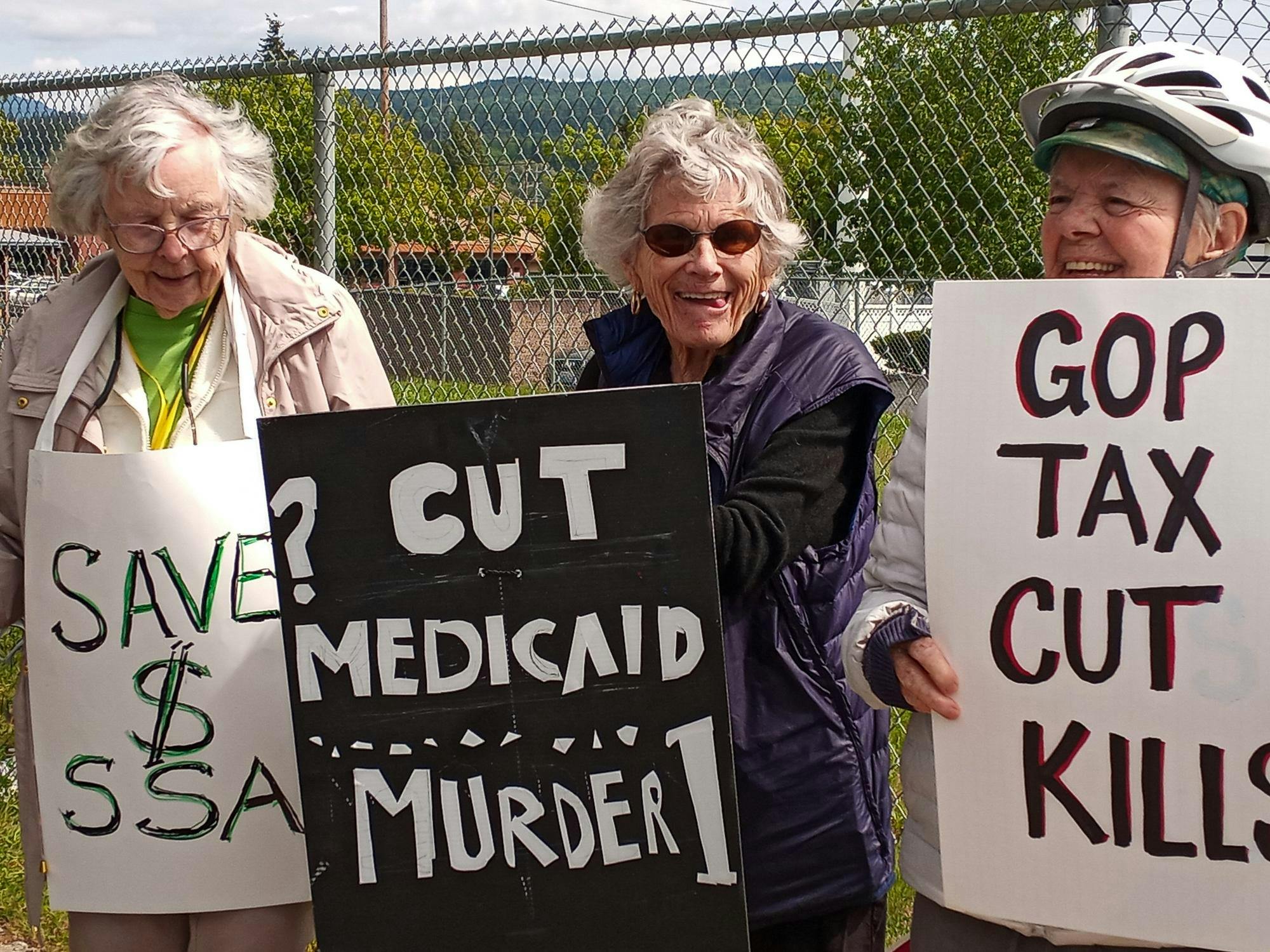
Joanne: Trying to protest and let everybody know that we’re (here) and not agreeing with what’s going on. And hoping they’ll join us, or become more interested in what’s going on.
Q: Can you describe what exactly feels different or urgent enough to bring you out demonstrating now?
Joanne: (Peace parades were) a protest against the policies. And so, what we’re doing today is much more serious even than that. We’re protesting what the president is doing to the country. He’s erratic. We don’t know what’s going to happen next, and it’s scary.
Q: Karen, you mentioned earlier that some people left the group out of fear. Can you explain what happened?
Karen: When Trump started doing his gathering the immigrants thing, there are several people in the building that are immigrants, and almost all [left the group] because it was so terrifying. I mean, he was just creating that level of terror right from the start, and it even affects very privileged people like us.
Q: Joanne, when you go out and protest with Seniors Community Action, what does that experience feel like for you?
Joanne: I feel like I’m doing something. Not much that I can do, but I’m doing something.
Q: Do you ever get discouraged by what is happening politically, or are you able to stay hopeful?
Joanne: I’m hopeful now, aren’t you? Hopeful now that maybe things are beginning to change and people are aware. And I think it’s great what’s happening in Chicago and Washington, D.C. – the people that are standing up.
Q: What do you hope people understand when they see someone still speaking up at your age?
Joanne: I’m hoping they realize that older people are involved and interested in what’s going on. And wanting to take part even though it’s probably not going to be such a big thing in our lives, it’s certainly going to be a big issue in their lives. I hope they realize that we’re willing to stand up, I guess and hope they will too.
Q: What would you say to people who think they’re too old or too busy to make a difference?
Joanne: I don’t know. That’s too bad, I guess. You can always make a difference.
Janessa Bates (she/her) is a city news writer for The Front this fall quarter. She is currently studying visual journalism and political science at Western. Outside of the newsroom, she co-leads a club called WWU Photo Video Club, enjoys reading and loves to picnic with her dachshund. You can reach her at janessa.thefront@gmail.com.