
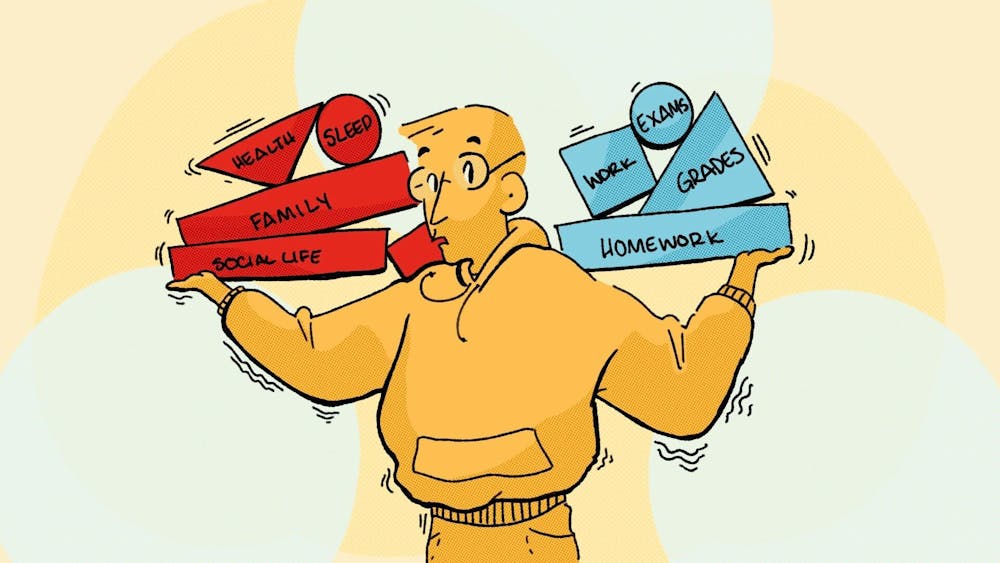
As the sun sets earlier and assignments pile up, Western Washington University students may be feeling the familiar weight of the end of the quarter.
Between papers, exams and pressure to keep up, many are feeling burnt out or are walking the line between productive stress and burnout. Social activity, sleep, exercise and campus resources are all good methods for struggling students.
Bekah Thompson, a therapist at the Western Counseling and Wellness Center, said anxiety often spikes mid to late quarter.
“This seems to be the time of the quarter when students feel like, ‘Oh, I've gotten behind, I was doing really good,’ and about the middle of the quarter it feels like they've gotten behind,” Thompson said.
Fourth-year environmental science student Rachel Corichi said weeks five through eight of the quarter mark a turning point.
“Midterms do mark another step. I'm like, ‘Oh, I should have some things figured out right now that I do not have figured out.’ I'd say it definitely spikes my stress level around this time,” Corichi said.
Mila Hoeft, a second-year Western student, attributes physical activity, eating well and plenty of time with friends as what gets her through the stress of the nearing end of the quarter.
“At this time of the quarter, the stress is on studying, keeping on top of my grades and stuff, but then also finding balance and taking care of myself. Like, I still want to have some free time, I still want to hang out with people,” said Hoeft.
At Fairhaven College, professor Scot Nichols teaches a class called “The Science of Stress and the Art of Play.” He said many students are not just battling academic pressure, but seasonal exhaustion as well.
“They're being challenged by the sun going down, the rain coming and the lack of vitamin D coming into their bodies. The exhaustion, the hard work, a lot of students either get really sick this time of year, or they just get so exhausted,” Nichols said.
Nichols said that in a culture that values productivity above all else, students often ignore their limits.
“When you override your need for sleep to be busy, you're inevitably going to get yourself sick, Nichols said, emphasizing the importance of living a balanced lifestyle.
Thompson said stress has a bell curve effect, motivating us to complete our work at low levels, but it can become paralyzing if it rises too high.
“Learn to find when you're getting to that point and slow down and take a break. Often, people are more productive if they've taken a break than they would be if they tried to push through,” Thompson said.
Thompson also recommended small breaks and social time as stress relief for overwhelmed students.
Nichols teaches his students that “play” or social connection is a natural form of stress relief. Students struggling near the end of the quarter may find relief in talking to others or engaging in recreational activities, even when it feels like there's no time to do so.
For students who are seeking more relief, Thompson warned against using substances such as cannabis or alcohol to unwind, which can disrupt sleep and worsen anxiety. Instead, she pointed students towards the TIPP method, four skills that students can use as needed:
T: Temperature, cooling the body slows the heart rate and reduces stress.
I: Intense exercise, burning off excess energy releases endorphins and calms the body.
P: Paced breathing, holding breaths, then inhaling and exhaling slowly, lowers blood pressure and heart rate.
P: Progressive muscle relaxation, tensing and releasing muscles triggers the body’s relaxation response.
Many students don't realize they can reach out for help before things spiral. If social activity, good sleep and other techniques aren't helping, the Counseling and Wellness Center offers one-on-one sessions where students can receive support.
To schedule an appointment, call the front desk at 360-650-3164 or go online and schedule a phone consultation or single-session consultation. More sessions can then be scheduled if the student needs them.
“You're not alone, and there are probably a lot of the people you know who are also having a hard time at this time of the quarter,” Thompson said.
Willow Jacobson (she/her) is a campus life reporter for The Front this quarter. She is a second-year marketing major and public relations minor. When she's not working on a story she likes to read or watch movies. You can reach her at willow.thefront@gmail.com.