
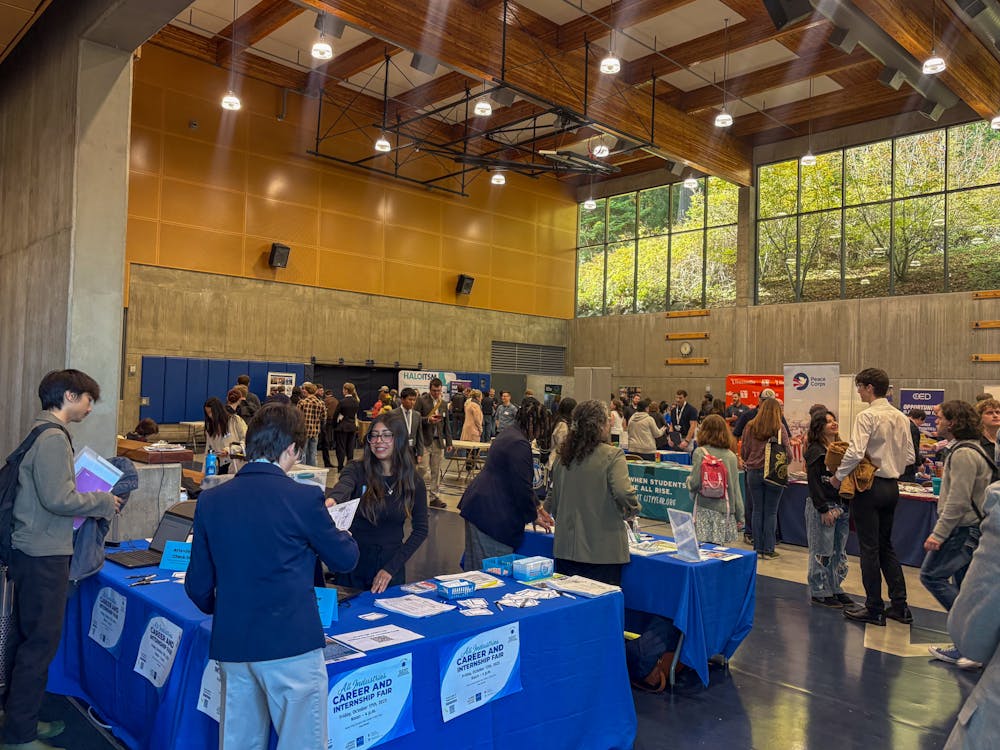
The annual career fair at Western Washington University kicked off on Oct. 17, allowing students the opportunity to connect with future employers.
Though outcomes vary significantly depending on major and expectations, Career Services Center Director Mindy Pelton said the purpose of the event is to help Western students and alumni build connections with professionals, discovering potential internships and jobs.
“Our fairs are open to all students — regardless of class level or major — as well as all alumni. Attendees can meet representatives from a wide range of industries, including financial services, technology, education, nonprofits, and more,” Pelton said in an emailed statement.
According to Western Washington University’s Career Services Center website, the fairs are designed to provide a low-pressure, supportive space where students, including those with visible or non-apparent disabilities, can practice professional communication, learn about different organizations and explore potential career paths.
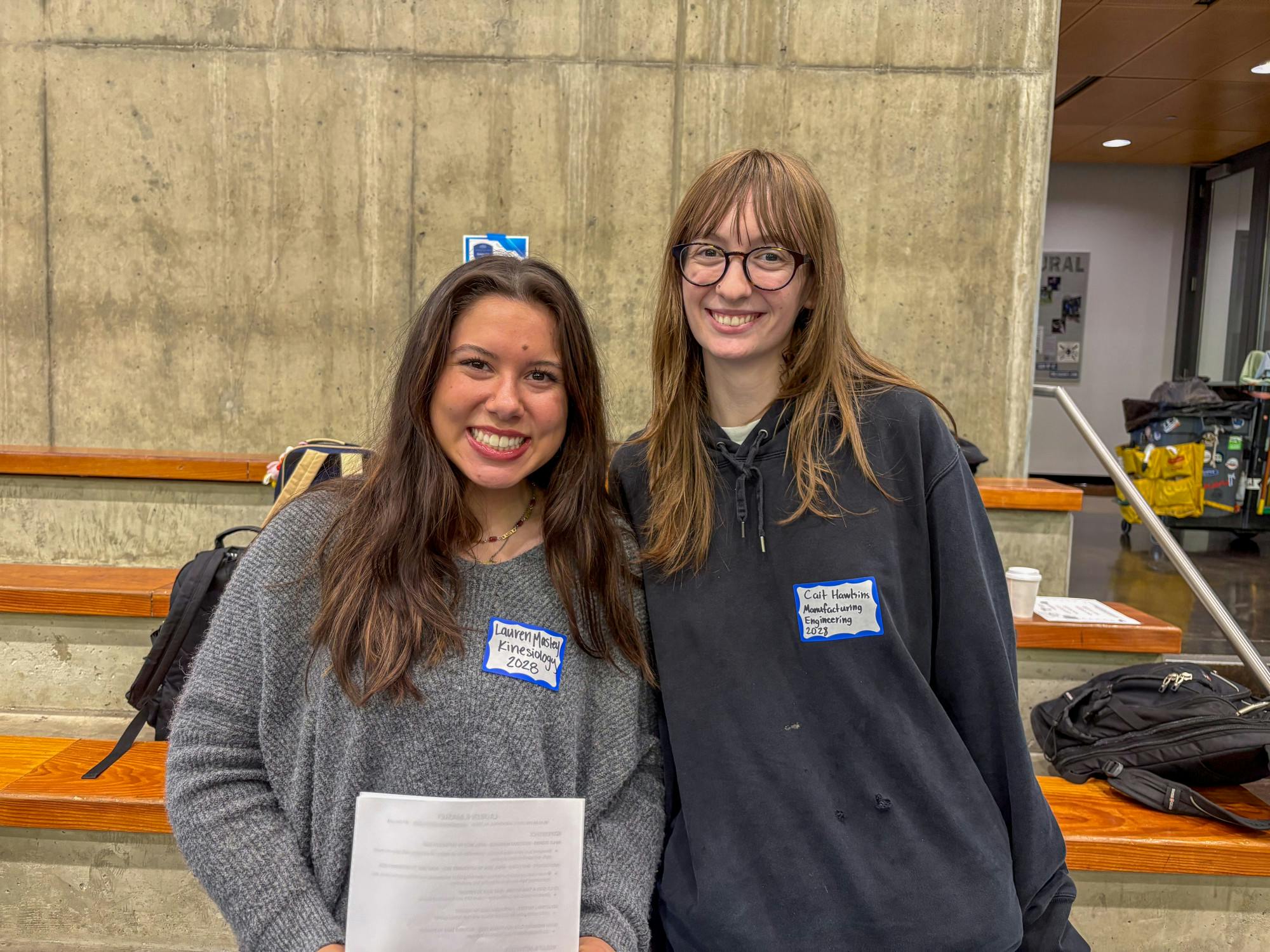
For some majors that attended the fair that took place on Friday, Oct. 17, the outcome was satisfactory. “There are quite a few employers for manufacturing engineering, I’m looking for mostly internship jobs,” said sophomore manufacturing engineering student Cait Hawkins, citing exhibitors such as Boeing and Janicki industries.
“This is my first career fair. I’m not necessarily looking for a job, but I do want to know what is in my future.” Hawkins said. “I’d tell other students to research the companies ahead of time, bring a resume, and dress professionally.”
Western sends out Canvas messages to all students regarding the career fair, however, many of those students believe they do not correlate with these fairs hosted on campus, leaving them feeling overlooked.
“From the pamphlet thing, it doesn’t look like there’s much for my major, but I’m still interested to see what people have to say. It’s very business-directed,” Kinesiology major Lauren Masley said.
She questioned why she received an invitation when few relevant internships were present. Masley added she received the career fair message through a Canvas page she doesn’t remember joining, and wished it included details about which employers would attend.
Employers who attended found value, but also reinforced the focus on certain majors. “We’ve had a lot of interesting candidates; our experience was very positive,” said Bryant Camenzind, a local representative for Sherwin-Williams paints.
“Students should just come to the fairs prepared with some questions about our opportunities and be prepared to talk a little bit about themselves and how they could be a good member for our team,” Camenzind said.
The mixed reaction from students reflects broader national trends. According to the National Association of Colleges and Employers (NACE), more than half of students surveyed said they had attended a career fair in the past 12 months; among them, more than 45% received an interview offer, and about one-quarter received job offers.
Yet a tighter hiring market for new college graduates and rising calls for skills, rather than purely credential-based hiring, are complicating outcomes.
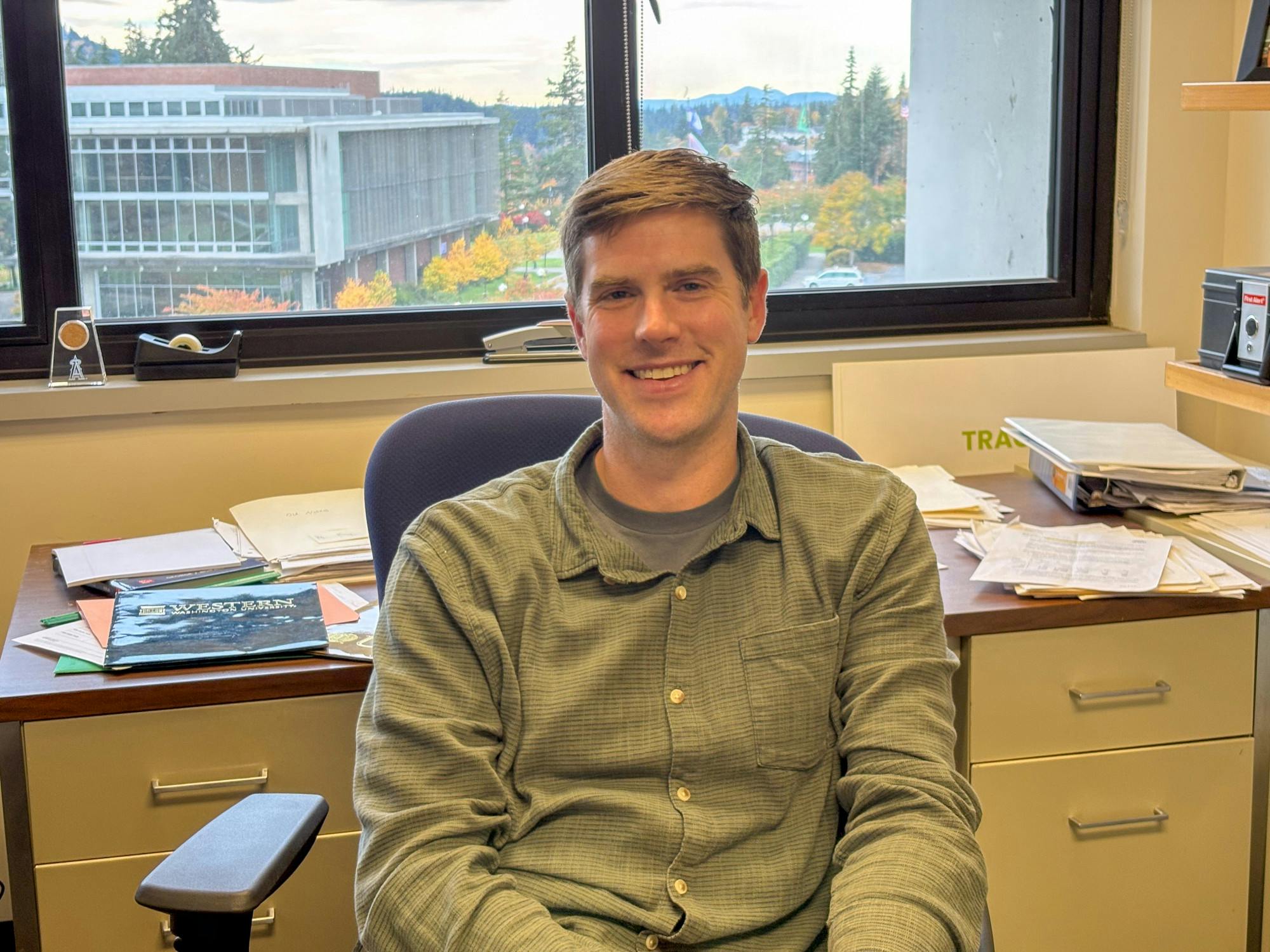
Associate professor in the department of Economics and Director for the Center for Economics and Financial Education, Adam Wright, said, “The unemployment rate for new grads is as high as 10% which is a very high number. New grads are not just competing with new graduates; they have to compete with other people who have maybe lost their jobs or been laid off,” Wright said.
In a job market landscape where students must deliberate choices like location, hybrid work, and stability, the value of career fairs remains real but unevenly realized.
“Learning how to be presentable still really matters, as well as knowing how to talk and connect with people. You get your name out there so that people get to know your face,” Wright said.
Mabaindu Mbawa (she/her) is a senior at Western, majoring in Journalism (News Editorial) and minoring in Political Science. Outside of reporting, she enjoys writing poetry, storytelling, styling, and taking photos. You can reach her at mbawam.thefront@gmail.com