
Western Washington University’s Japanese Student Association (JSA) will host its first heritage dinner in nearly a decade on May 18. The event will include food, live performances and a mochi-pounding demonstration.
Momo Mott, the president of the JSA, said she is excited for the event — which had not taken place for some time due to funding issues.
“I feel like there's kind of pressure since it's been so long since we've had a heritage night,” Mott said. “All the students here, they've never seen JSA have a heritage night.”
Charla Anne Larson, JSA public relations officer, said when she came to Western, she saw all the other clubs having a heritage dinner but not the JSA.
Heritage events increase visibility for certain cultural communities, said Emi Foulk Bushelle, an associate professor of East Asian studies at Western.
“It allows the opportunity for people to share their special interests, their culture, their backgrounds,” Bushelle said. “What they consider to be elements that they celebrate in that cultural heritage, but also trials and tribulations that they, their families or their ancestors have gone through.”
Mark Okinaka, a faculty member at Western, will be the keynote speaker for the event. He will speak about his father and grandfather, who were interned in a Japanese internment camp during World War II.
“Our keynote speaker is going to speak about Japanese internment, and that's kind of why there is a lack of Japanese American culture compared to other Asian diaspora here,” Mott said. “People didn't go back to their homes. They just got a one-way ticket to anywhere. They had to rebuild their lives, and they really just wanted to hide.”
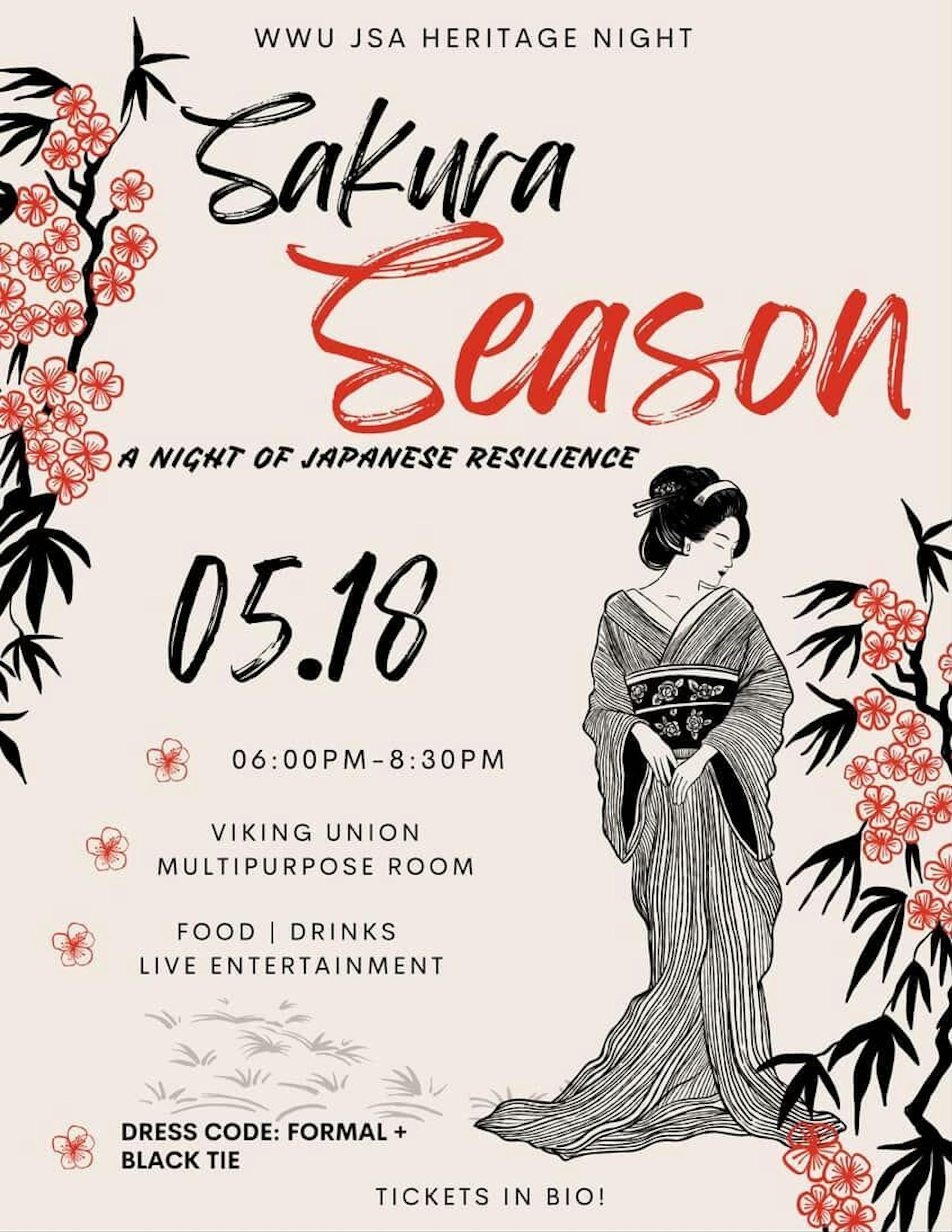
A poster for the Japanese Heritage Dinner on Sunday May 18, in the Viking Union Multi-Purpose Room at Western Washington University. The theme of the event will be Japanese resilience, with events showcasing cultural heritage and identity. // Poster courtesy of WWU JSA
Mott said it's important to understand the context of Bellingham’s past to understand why the heritage dinner is so important. In June of 1942, President Roosevelt signed an executive order authorizing the internment of American citizens of Japanese ancestry across the West Coast. At the time, at least 33 Bellingham residents with Japanese ancestry, some of whom operated local businesses.
Yusuke Okazaki, the associate director of intercultural services at Whatcom Community College, said that as a first-generation Japanese immigrant, being able to celebrate any aspect of Japanese culture is a big deal.
“I have two young kids. Any opportunity for them to see themselves in their roots and culture, reflected and represented by other people in a positive way, I think it's really important,” Okazaki said.
Larson said her Japanese family members have always been taught to hide their heritage.
“It's really important to acknowledge that we haven't had a space for so long, and I think this, to me, is at least reclaiming that space,” Larson said. “I'm really honored to bring my mom to the dinner because then I can show her we don't have to hide who we are. We can be proud of being awesome and being Asian.”
Mott said it's important for her to celebrate her heritage because in the past, she was put down for it and received racist remarks. She said she was mocked for her Japanese first name, which made her wish for an American name.
“I'm very proud that my mom gave me a Japanese name, and I feel very in touch with my heritage,” Mott said. “To be able to have a platform to celebrate it in a nice positive environment instead [of] in a discriminatory way is really important.”
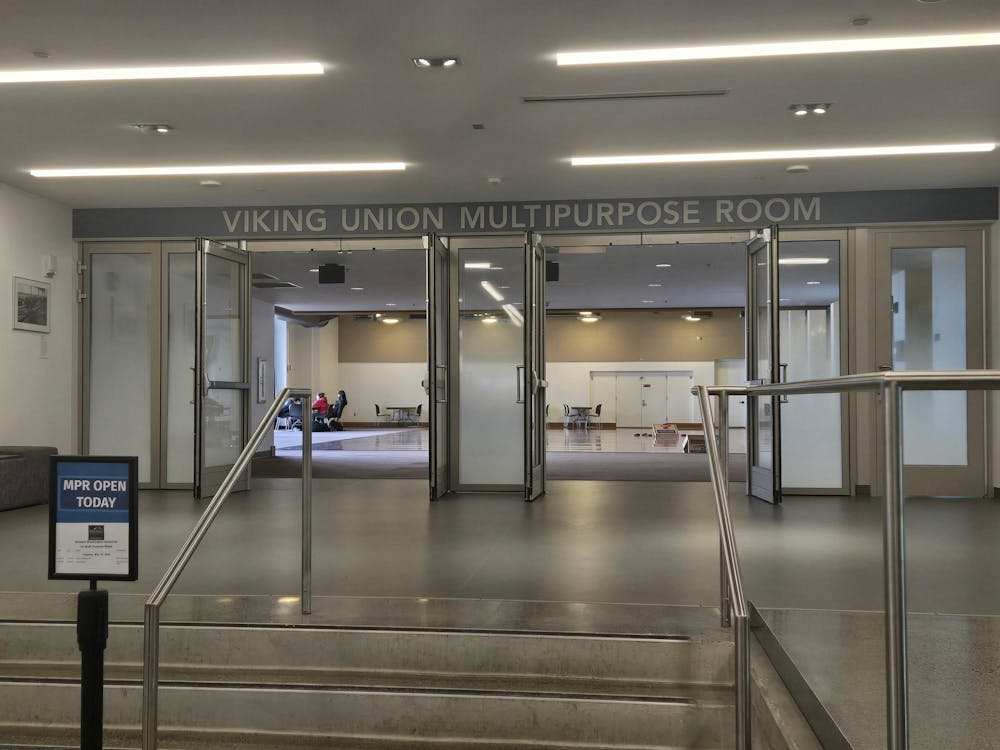
The dinner will take place from 6-8:30 p.m. in the Viking Union Multi-Purpose Room, with a formal dress code. The general admission is $15, and 12 with a Western ID. The theme of the night is Japanese resilience.
Amy Salinas Westmoreland, the director of Multicultural Student Services at Western, said so many diverse identities come to the heritage spaces.
“I think they're incredibly important, especially right now, especially as we see a lot of hostilities geared towards diversity, equity and inclusion. Especially as we see a lot of different identities being attacked and dehumanized,” Westmoreland said. “Right now is a time where we need to re-center joy and find community.”
Adah Bassok (she/her) is a city news reporter for The Front this fall quarter. She was previously a campus life reporter for The Front, and she is a news and editorial journalism major at Western. Outside of the newsroom, you can find her reading and exploring the outdoors. You can reach her at adahbassok.thefront@gmail.com.