

Editors note: This article has been updated since publication to include accurate information regarding the number of students who were accepted for the spring quarter Marine Mammal Ecology Lab.
For two decades, students in Western Washington University’s Marine Mammal Ecology Lab (MMEL) have observed and analyzed harbor seals in the Salish Sea. Alejandro Acevedo-Gutiérrez, who holds a doctorate in wildlife and fisheries sciences, is an advisor and mentor to them.
In a March announcement, the American Association for the Advancement of Science (AAAS) awarded Acevedo-Gutiérrez an honorary fellowship for his work in the biological sciences and involvement in the Science, Math and Technology Education (SMATE) program.
“It’s certainly an honor to be recognized for this work. It’s also humbling because you realize that it’s not you in a bubble doing all these things,” Acevedo-Gutiérrez said.
Before he arrived at Western over 20 years ago, Acevedo-Gutiérrez said there was no faculty with marine mammal expertise. This quarter, his lab accepted 25 of the 73 students who applied, increasing the lab's membership to 55 students.
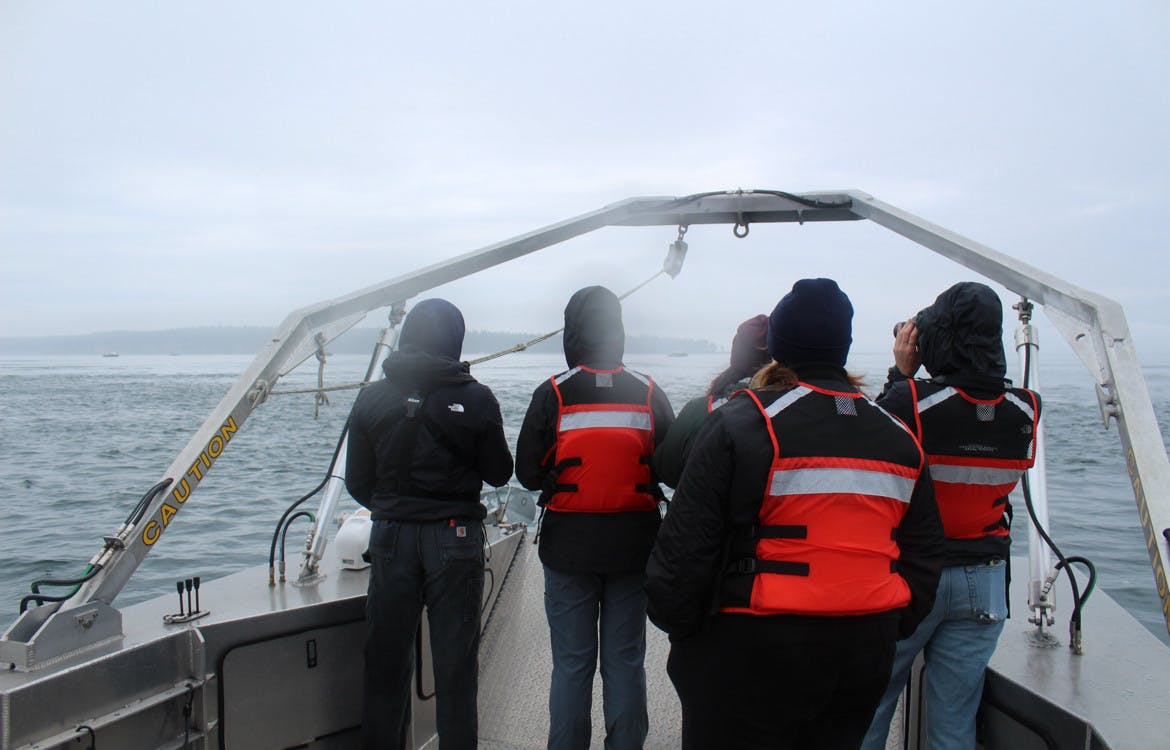
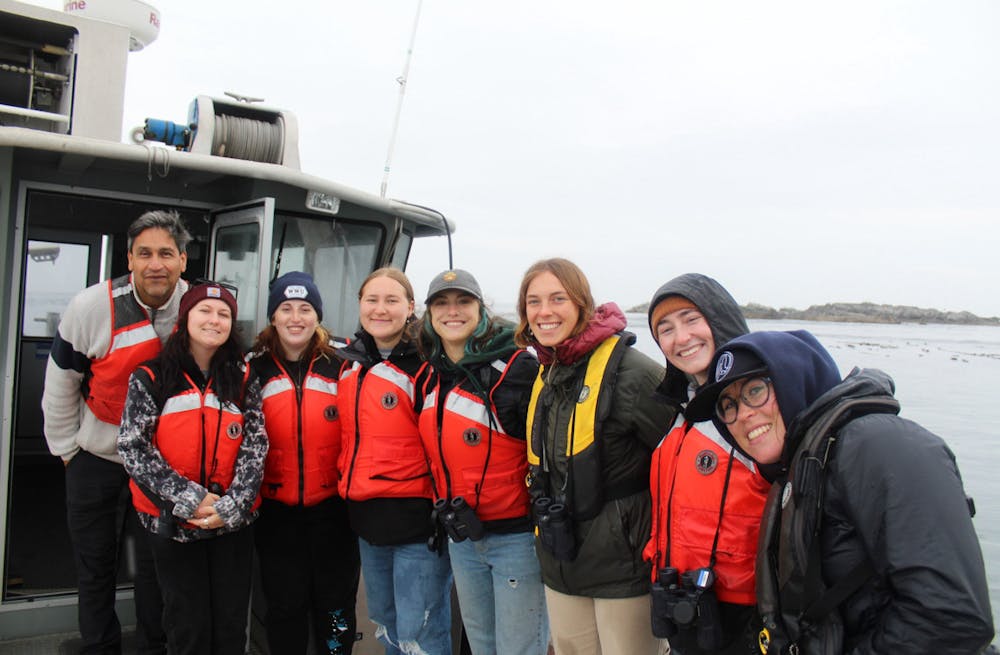
(Left to Right) Marine Mammal Ecology Lab students Maren Duffy, Haley Recob, Victoria Vinecke, Celia Kornblum and Julia Lochner wait on a boat in the San Juan Islands, in Wash. on Aug. 23, 2024, on the lookout for marine life. MMEL’s research largely entails documenting and understanding interactions between harbor seals and humans. // Photo courtesy of the Marine Mammal Ecology Lab
Biology Department Chair Lynn Pillitteri, who holds a doctorate in plant genetics, said the department is “thrilled” that Acevedo-Gutiérrez and his lab’s work have been nationally recognized.
“What has consistently stood out about Dr. Acevedo-Gutiérrez’s work is his dedication and ability to include large numbers of students and community members in authentic research,” Pillitteri said in an email. “Equally impressive is his mentorship; students are not just assisting but actively contributing to high-caliber research that impacts our local communities.”
Undergraduate lab managers each lead a research project of their own, which they typically propose themselves. They do one or two hour-long observations a week.
These students also direct the three ongoing MMEL projects and work closely with professor Dietmar Schwarz’s molecular lab.
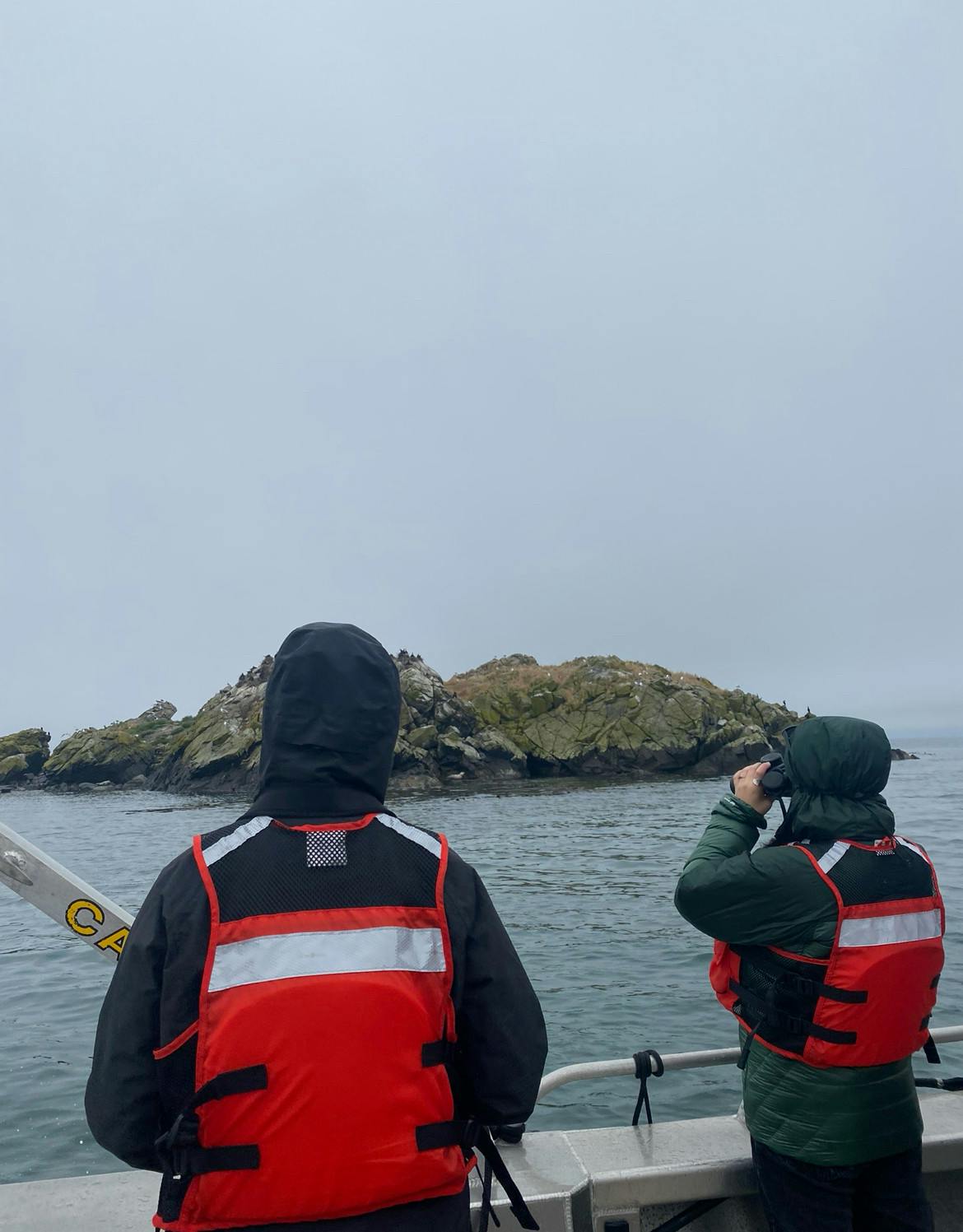
Haley Recob (left) and Victoria Vinecke (right) observe harbor seals resting at a haul-out site on the San Juan Islands, in Wash. on Aug. 23, 2024. Marine Mammal Ecology Lab undergraduate researchers like Recob and Vinecke do smaller-scale fieldwork for the lab’s long term projects at least once a week. // Photo courtesy of the Marine Mammal Ecology Lab
Zoe Hosford is a graduate teaching assistant in the biology department. Outside of teaching a Biology 101 lab each quarter, Hosford uses data from The Whale Museum, based in Friday Harbor and the Washington Department of Fish and Wildlife to analyze trends and contribute to research within the MMEL.
As the spearhead for Hosford’s research, Acevedo-Gutiérrez acts as a bridge between resources.
“Using [Acevedo-Gutiérrez’s] generous network, we’re grateful to have so many people who are willing to share and collaborate and contribute their data with us,” Hosford said.
A study published in Marine Mammal Science in 2024 analyzes developments in Washington’s harbor seal populations. According to the study, the broad diet and nonmigratory lifestyle of harbor seals may contribute to their ability to increase in population size in various circumstances.
The nonmigratory nature of harbor seals means generations of students get the chance to contribute to MMEL’s ever-growing bank of research.
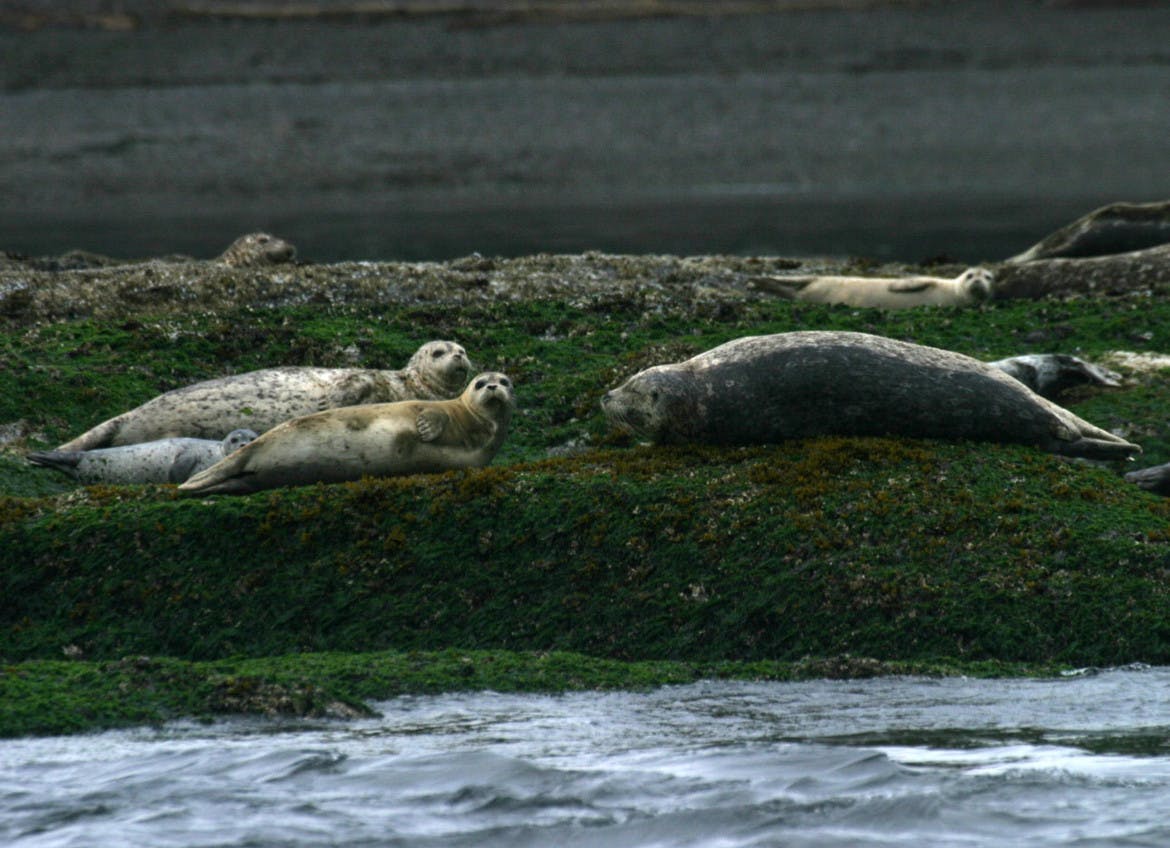
Harbor seals rest at a haul-out site on the San Juan Islands, in Wash. on Aug. 23, 2024. The three seals meet eyes with those on the boat. // Photo courtesy of the Marine Mammal Ecology Lab
MMEL is also an opportunity for many undergraduate students to publish work in a scientific journal.
“I think it’s great for them to get this opportunity during their undergrad experience, during the school year, because that doesn’t happen anywhere,” Hosford said.
Students from MMEL will present their research this Saturday at the convention for the Northwest Student Chapter of the Society for Marine Mammalogy (NWSSMM).
Only time will tell what the results of the MMEL’s harbor seal research will yield. For now, the lab’s student blogs will keep us updated.
Josh Hernandez (he/they) is a campus news reporter for The Front this quarter. He is a third-year journalism news/ed major. Outside of journalism, his other interests include literature, geography, and music history. You can reach him at joshhernandez.thefront@gmail.com.


