

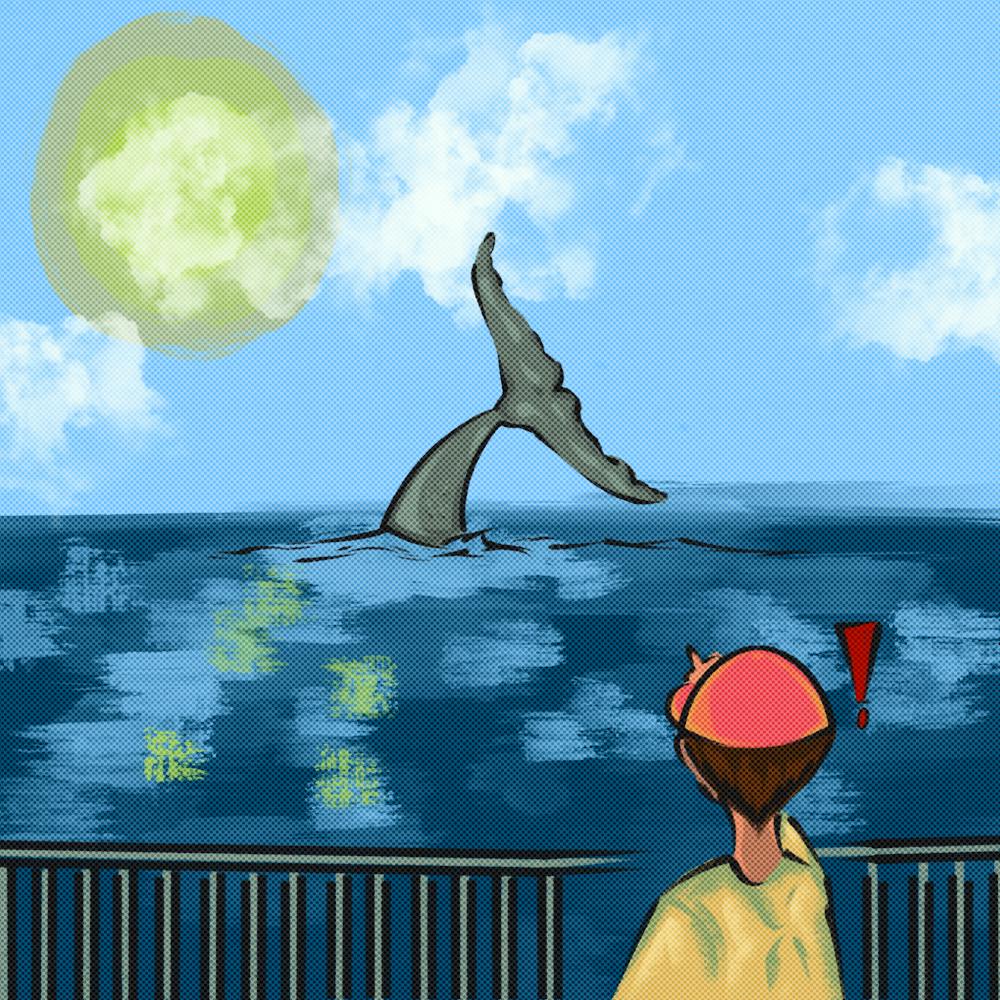
Spring has arrived in Whatcom County, and with it, our region’s largest migratory animals have come to grace the briny blue of Bellingham Bay: whales.
April and May mark the beginning of whale watching season in the Salish Sea. From humpbacks to orcas, ocean-goers will have better luck spotting whales from now until September.
“April and May is usually when peak sightings of whales usually begin and continue through the summer,” said Tracie Merrill, the education director for The Whale Museum in Friday Harbor. “That is because you have gray whales and humpback whales migrating to the cooler waters of Alaska for the summer months but also resident orcas feeding off of Chinook locally. Of course, though, transients and residents can be seen year round.”
With the migratory season for gray and humpback whales in full swing, San Juan Cruises, a Bellingham-based cruise business that leads whale watching tours, recently resumed their operating season.
In preparation for a day out on the water, the San Juan Cruise staff monitors any reports of whale activity in the San Juan islands using a spotting network organized by the Pacific Whale Watch Association. The PWWA shares the location of whales using a private radio network and an app.
“Typically, before our boat leaves the dock we have a good understanding of where the whales are, or might be that day,” said Robert Boroughs, general manager at San Juan Cruises.
While watching whales from the water offers a closer experience, watching from the shore is also an option.
Merlot Bingham, a Western Washington University fourth year marine and coastal sciences major and beginner whale watcher, recommended watching from Deception Pass and Skyline Marina in Anacortes.
If whales still elude you, Bingham suggested trying your hand at seeing porpoises instead.
“The porpoises that live in and around the Salish Sea are super cool and more likely to be easily spotted if someone’s not having luck with spotting whales. Specifically, Washington Park is an excellent place to post up on the cliffside facing Burrows Pass or Burrows Island to spot harbor porpoises,” said Bingham.
Among the species of whales and porpoises that make the Salish Sea their stomping grounds, the transient orcas and humpback whales’ populations have skyrocketed in the past few years while resident orcas are stagnant, if not in decline, said Merrill.
“Southern residents primarily eat salmon, and dwindling salmon numbers along with many other environmental challenges is threatening them with extinction over the coming decades,” Boroughs said. “Because of these threats, whale watching of these whales is prohibited in the hope that by giving them extra space they can find more food.”
New this year, boaters in Washington State are prohibited from coming within 1,000 yards of the southern resident orcas.
While whale watchers must avoid the resident whale pods, those interested should also review the Be Whale Wise guidelines before hitting the waves.
“This is the whales’ territory and home, and you should treat it the way you’d want your own home to be treated,” Bingham said.
In order to ensure the safety of the whales, San Juan Cruises follows federal and state guidelines. They pump out their holding tanks at the dock and remove all trash and recycling safely from the boats when they are in port, Boroughs said.
PWWA members also often work in partnership with local law enforcement agencies to report unsafe activity around whales by private boaters,Boroughs said.
To support research and conservation efforts, Merrill recommended residents near the Salish Sea report sightings when they see whales.
The Whale Museum uses all profits made from merchandise and their Adopt an Orca program to support research and education efforts to ensure future generations can protect and love the whales, too.
“It's pretty amazing to see whales behaving in the wild. Just the scale alone is something that will shock you. The Gray and Humpback Whales can be up to 50 feet in length and weigh up to 40 tons. Seeing one of them breach and throw itself completely out of the water is absolutely incredible,” Boroughs said.
According to Bingham, whale watching can be for anyone; all it takes is patience, a love of the outdoors and no small measure of luck.
Brenna Witchey (she/her) is a city life reporter for The Front this quarter. She is a third-year news/editorial pre-major and English minor. When she’s not working on a story, she likes practicing yoga, reading and going to the gym. You can reach her at brennawitchey.thefront@gmail.com.