
Why are wisdom teeth problematic and painful, oftentimes needing oral surgery to have them removed? Western Washington University professors may have found evidence that could support a piece of the puzzle.
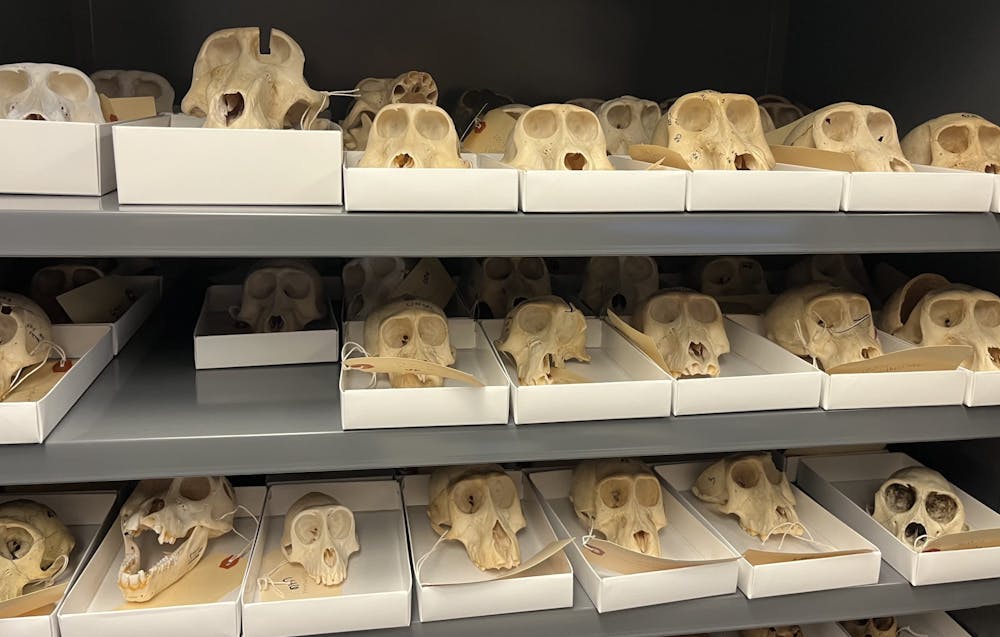
Working at museums in Africa, Europe, Asia and the United States, Associate Professor Tesla Monson and Assistant Professor Marianne Brasil completed research related to the facial structures of a group of primates — including baboons and their closest relatives.
Brasil and Monson have been working together on projects for over a decade. On April 15, 2025, they published their research on the facial structure of primates and how this relates to modern human teeth.
The pair collected all kinds of measurements from monkey skeletons to capture the shape of the monkeys’ heads.
“These types of projects are really fun to work on because they grow out of just something we’re curious about,” Brasil said.
Brasil and Monson were invited to contribute their research to a special issue of the journal Frontiers in Ecology and Evolution.
The baboon skeletons they were looking at had comparatively long faces. Scientific consensus varies about what having a long face does for their teeth.
Humans, by contrast, have flat faces that evolved over the past five million years. Around the same time, human wisdom teeth have gotten really small. In the scientific community, questions remain about why this is.
“Our work showed that baboons’ long faces are correlated with their long third molars, which we call wisdom teeth in humans,” Monson said.
Monson said the data they collected led to the question: Are the smaller wisdom teeth that are seen on humans related to their flatter faces?
This is a line of evidence that supports the theory that humans having small and often problematic wisdom teeth is related to the evolutionary flattening of the face. However, it is just a single line of evidence, and there is much more research for experts in other areas to conduct, said Monson.
“We call this comparative evidence because it’s further out on the family tree, but primates share these fundamental genetic and developmental pathways,” Monson said. “So by looking at how they work in other animals, it gives us a sense of what to look for in humans.”

3D models of jaws, bones and artifacts lie in the Primate Evolution and Osteology Lab at Western Washington University in Bellingham Wash. on April 28, 2025. 3D modeling is often used in the anthropology department’s research. // Photo by George Cox
Dental Assistant Tina Gilbert, who works at Simpson and Coyner Family Dentistry in Gig Harbor, talked about wisdom teeth and why they sometimes need to be removed.
Gilbert said it is not always mandatory for people to have their wisdom teeth removed. She regularly works with older patients who still have all of their wisdom teeth. However, they do need to be removed if they grow in wrong.
“If a wisdom tooth has partially erupted, meaning come out of the gums partway, it’s usually recommended to have it extracted,” Gilbert said. “This is because it can be quite difficult to clean. Food can easily get lodged in between the tooth and gums which could cause infection.”
Brasil said when conducting research like this, she and Monson review each other's work before sending it out to be peer reviewed. They do this so they can address any major gaps that may emerge when reviewers look it over. They review each others’ work depending on who was the lead author in the study.
Monson was the lead author in this specific study. Brasil said her part in the research was helping build the data set the research relies upon.
Brasil and Monson didn’t do this research alone; they worked with their labs in Western’s anthropology department. Monson runs the Primate Evolution Lab, and Brasil runs the Paleo Anthropology Lab.
In the labs, students work with data as well as real monkey skeletons, giving them osteology and forensic experience.
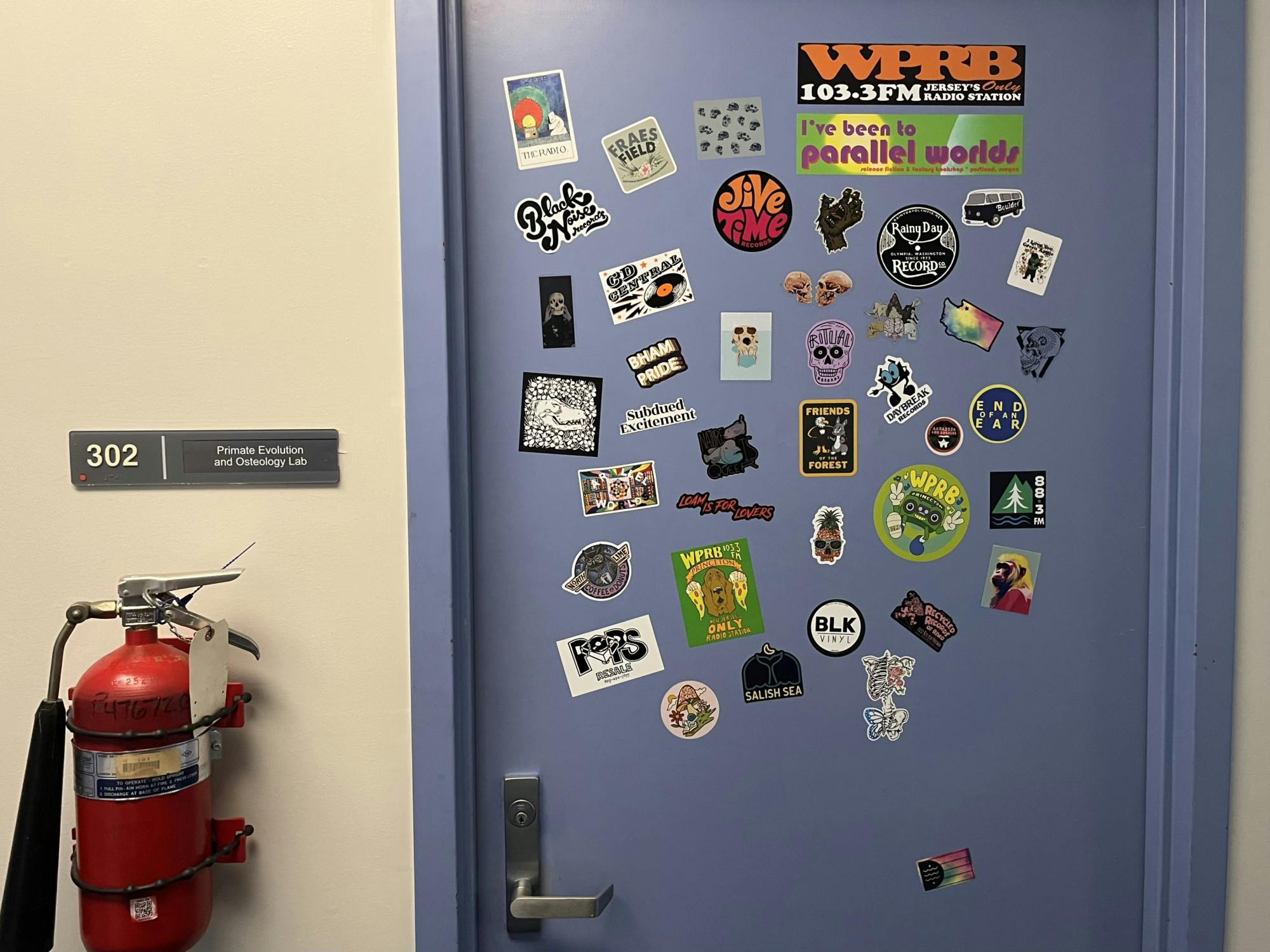
The Primate Evolution and Osteology Lab door rests shut, on the third floor of Arntzen Hall at Western Washington University in Bellingham Wash. on May 2, 2025. Associate Professor Tesla Monson and Western students conducted research in this lab for the primate wisdom teeth study. // Photo by George Cox
Monson and Brasil’s research gives people who work in genetics a place to look. Their research will help other scientists target genes of interest, said Monson.
“So it’s just one big collaborative effort where ideally you get everybody from every field coming to the same conclusion with their data,” Monson said.
George Cox (he/him) is a campus news reporter for The Front this quarter. He is a third-year public relations pre-major. When he’s not reporting, you can find him enjoying coffee, playing basketball, or going on a hike. You can reach him at georgecox.thefront@gmail.com.