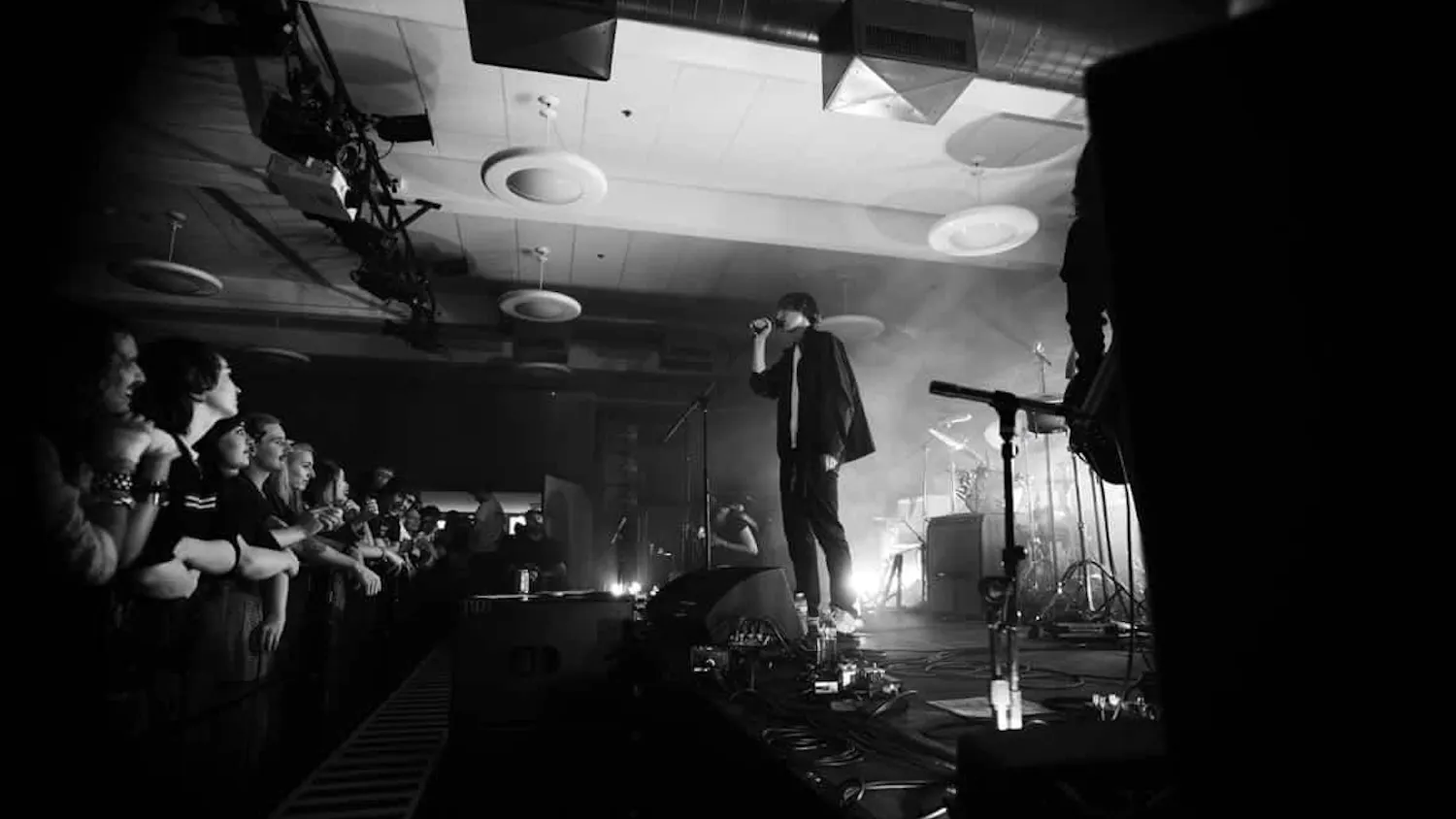


Western Washington University is set to host the 30th Annual Political Science Association Conference (PSA), an event allowing students to share their latest research about or related to political science.
The conference will take place on Tuesday, May 13, on Arntzen Hall floor four and will have multiple sub-events from 8:30 a.m.-5 p.m.
Rudy Alamillo is an assistant professor in the political science department. He said the conference is open to everyone, not just political science students.
The conference is modeled after professional conferences in order to allow students to present their own research, said Amir Abedi, the head of Western’s political science department.
Abedi has been at Western since 2003. He said he has been involved with the PSA conference for most of that time. In previous years, he has been assigned to panels and he has always encouraged his students to submit their work to the conference.
Luke Tupper is one of those students. Last winter, he took a class Abedi taught called the Politics of Soccer.
Tupper’s research focused on the changes in youth development academies in soccer. These are institutions run by soccer teams where players usually between ages 8 and 19 can go to train. The best academy players will go on to play soccer professionally.
Tupper’s research looked at three of the world's top team’s youth academies, Manchester United, FC Barcelona and AFC Ajax, and what they did with their academy graduates.
Tupper’s paper included a hypothesis about the nationalities of youth players in top academy’s.
“I hypothesized that the makeup of the nationalities of people who graduated from these youth academies over the last 20 to 30 years has grown more diverse,” Tupper said. “There were more foreign citizens.”

Students and faculty present at Panel 10 during the 2015 PSA Conference at Western Washington University in Bellingham Wash., on May 5, 2015. Attendees of this years’ conference can listen to students speak about the Comparative Politics of Soccer and Topics in U.S. Politics. // Photo courtesy of WWU’s Political Science Department
Students who submit work are sorted into panels, where they are given the opportunity to present their findings . A committee of three faculty members sorts students into panels which are sorted by subject matter. The committee also decides what papers are accepted and which students present at the conference.
The faculty committee works with the PSA, one of Western’s political science clubs. Faculty members on this year’s PSA committee are Assistant Professor Alamillo and Professors Todd Donovan and Debra Salazar.
There will be multiple panels at this year’s conference. You can find the schedule at the end of the article..
In previous years, the event featured specialty panels. Specialty panels usually comprise people who can share their experiences. For example, in past years, there have been panels by students who served as legislative interns to talk about their experience at the internship.
Once all the panels are decided, the committee will look for faculty members who have expertise in those areas and assign faculty to the panels accordingly. The faculty members who are selected will act as moderators for their specific panel.
The event agenda will have panels in the morning and afternoon. There will also be a lunch break before concluding with the Gordon Sandison Memorial Lecture.
This year’s Sandison lecturer is Washington State’s Supreme Court Justice Raquel Montoya-Lewis. “Justice Montoya-Lewis will describe how a variety of federal Indian Law policies towards tribes have impacted generations of Indigenous people, including her own family,” according to a poster regarding the Sandison lecture.
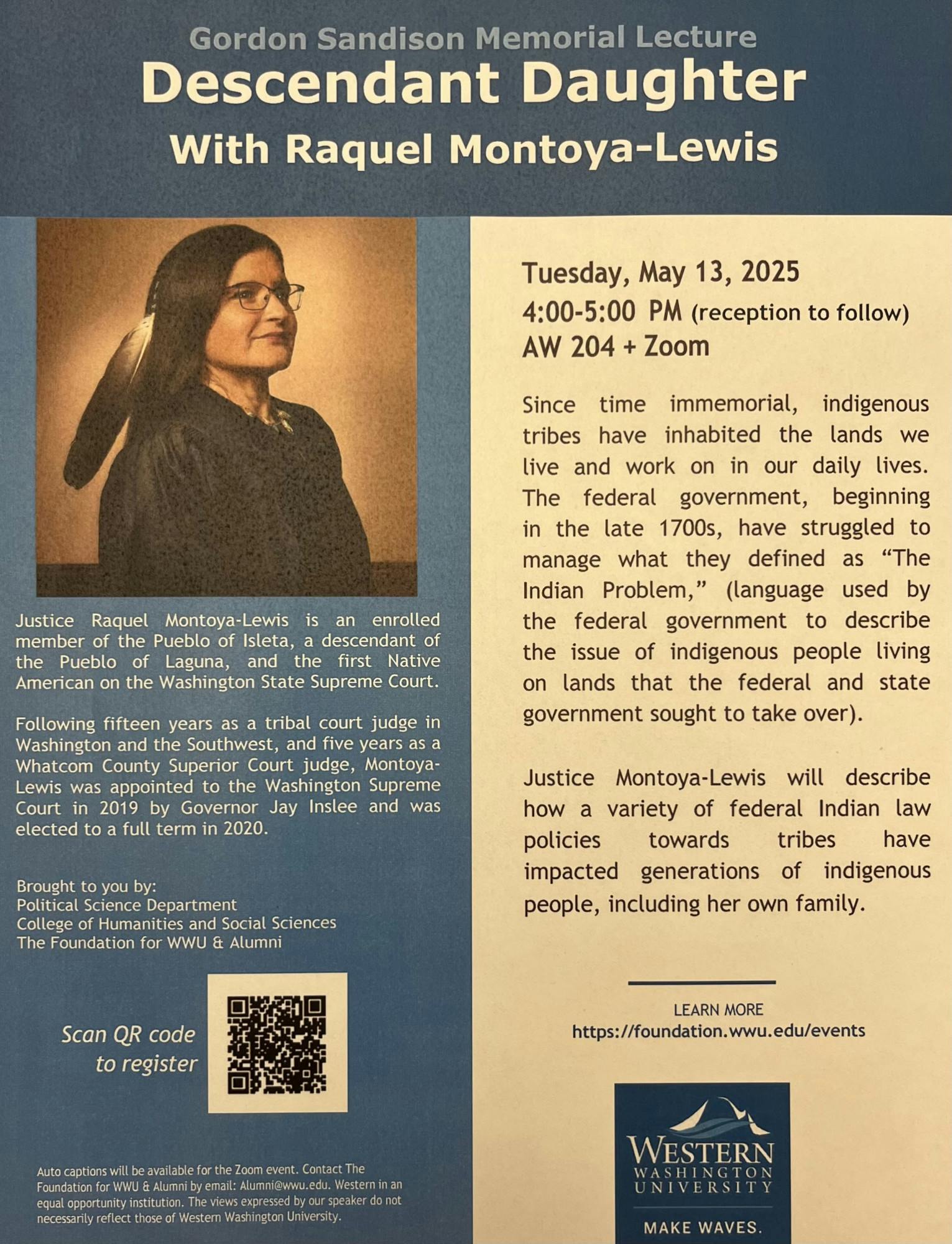
A poster on April 30, 2025 advertising this year’s Gordon Sandison Memorial Lecture at Western Washington University in Bellingham, Wash. This year’s speaker is Washington State Supreme Court Justice Raquel Montoya-Lewis. // Photo by George Cox
After the Sandison lecture, there will be a reception where students, faculty and the lecturer can mingle and discuss the events of the day.
The Hoover Prize is also up for grabs — an award for work deemed exceptional by the faculty members assigned to panels. The award is not given every year. If the faculty decides there is no real standout, the award is not given. In 2018 it was awarded to two students. The award includes $250 to be used towards the winner's education.
“A lot of our students look to grad school as something they want to do in the future,” Alamillo said. “One of the main things [graduate schools] look for is independent research skills … so this gives students an opportunity to hone those skills and get feedback.”
Alamillo hopes conference attendees will be inspired to conduct their own research and submit work to future PSA conferences.
“It’s nice for students to see they are producers of knowledge. They’re not just consumers of knowledge,” said Abedi.
Panel Schedule (All located on Arntzen Hall floor four):
The Comparative Politics of Soccer and Topics in U.S. Politics
8:30-10 a.m.
Environmental Politics in a Post-Truth World and Public Opinion, Voting and Elections 10:15-11:45 a.m.
Comparative Public Policy and the Transformation of Liberal Democracy
1:05-2:15 p.m.
Comparative Politics and Policy in Southeast Asia
2:20-3:45 p.m.

Students present at Panel 11 during the 2015 PSA Conference at Western Washington University in Bellingham Wash., on May 5, 2015. Attendees can view a panel like this at this year’s conference discussing things such as Environmental Politics in a Post-Truth World and Public Opinion, Voting and Elections. // Photo courtesy of WWU’s Political Science Department
George Cox (he/him) is a campus news reporter for The Front this quarter. He is a third-year public relations pre-major. When he’s not reporting, you can find him enjoying coffee, playing basketball, or going on a hike. You can reach him at georgecox.thefront@gmail.com.