
Tuition cuts in the works for next year
By The Front | April 10Republicans in the state Senate are proposing a bill that could possibly lower college tuition by 25 percent at state universities and colleges.
Republicans in the state Senate are proposing a bill that could possibly lower college tuition by 25 percent at state universities and colleges.
Bellingham residents and tourists alike may soon find another attraction within the city of subdued excitement — the world’s largest human hamster wheel.
Students can expect a new restaurant on campus as a part of the Sam Carver Gymnasium renovation proposed in this year’s budget.
From Olympia, Governor Jay Inslee joined Western students and statewide universities in a virtual conference about climate change and a proposal for action Tuesday, April 7.
After plans to build a new student-oriented apartment complex next to the Lakeway Fred Meyer were called off in 2014, a new developer has taken the reigns to begin construction.
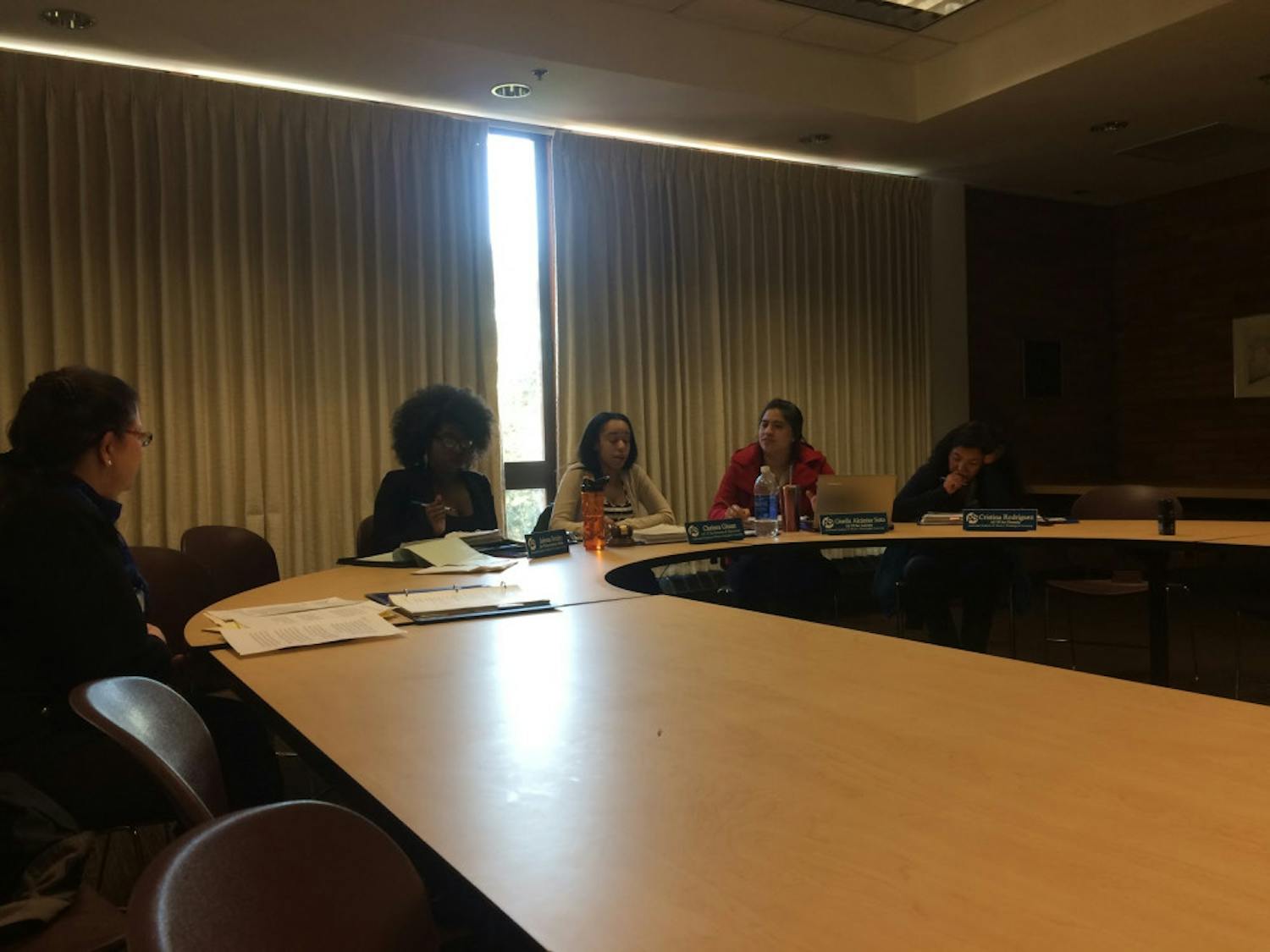
The first spring quarter meeting of the Associated Students Board of Directors highlighted potential projects from across campus.
The department of Administrative Computing Services (ADMCS) at Western hired Janice Kijak to be its new director. Kijak replaces former director Bob Schneider who retired in December 2014.
A recent national survey conducted by “Money Matters on Campus,” found college students frequently take out large loans yet feel less prepared with financial decisions and administration.
Western Washington University’s Reel World Film Series kicked off it’s spring lineup Wednesday, April 8, at the Viking Union with a screening of Iranian artist Shiran Neshat’s feature film debut, “Women Without Men.” The historical drama is a story about four women’s intertwining paths during the chaotic days of Iran’s 1953 U.S.-backed coup d’etat and is based off of a novel of the same name by Shahrnush Parsipur. “Women Without Men” touches on issues of gender roles, female independence, politics, sexuality, religion and freedom. It uses surrealist imagery of water and trees as well as graphic scenes of violence and conflict to help viewers get in touch with the characters and experiences they went through during the tumultuous times of Iran’s 1953 coup. The centerpiece of the story is a gated orchard on the outskirts of Tehran where all four women eventually end up through various means. The orchard plays the role of a rural sanctuary amid the chaos of the city which helps the women find their own unique notions of freedom, but that is ultimately unable to remain peaceful under the tremendous weight of all the events taking place around it. Due to it’s political nature, the film is banned in Iran and has been nominated for and won numerous awards. It won best cinematography and production design at the Austrian Film Award in 2011 and best foreign film by or about women at the Women Film Critics Circle awards in 2010. Western freshman Lydia Lee said “I’ve never really seen anything like it before. I wasn’t really expecting it to be that powerful. It was very emotional too, even not being involved in that culture.” Lydia also said that she hopes to attend more Reel World film screenings after seeing how much her perspective was opened and that she was disappointed more students did not show up. The Reel World Film Series is in its first year and is a monthly event held by the Western Center for International Studies. The series’ mission statement is “to raise awareness about other cultures and about global issues,” according to their website. Vicki Hamblin, executive director of the Center for International Studies, said Reel World chooses from submissions by faculty members and student groups that bring unique points of view from outside the United States that American Students may not typically hear. “All the films that we choose tend to be films have something that may be surprising to U.S. audiences and that will increase their knowledge base and help them empathize with other cultures and help them see other perspectives as opposed to just U.S. perspectives, especially in cinema,” Hamblin said. “Women Without Men” was submitted for Reel World by Western art professor Pierre Gour, who chose the piece due to it’s ability to show a perspective on Iran that is rarely seen due its strained relationship with the U.S. “This is certainly an introduction to another culture,” Gour said. “The more you know about another country, the less intimidating it is. So what I think is important, especially with Sharin Neshad, is introducing us to completely different Iran that I wasn’t aware of.” The Reel World Film Series’ next installment will take place at 7 p.m.Wednesday, May 6, at Old Main Theatre. The featured film is “Remote Control,” a piece by Mongolian director Byamba Sakhya. Remote Control tells the tale of Tsogoo, a rural teenage runaway who becomes infatuated with the female resident of skyscraper penthouse. As with all Reel World Film Series screenings, “Remote Control” has free admission and is open to anyone in the Bellingham community, not just Western Students. For more information visit http://international.wwu.edu/reelworld/.
Professor Spencer Anthony-Cahill, a final candidate for the Honors Program Director position, discussed expanding science offerings for honors students and the importance of ethnic and racial diversity in the program before a small group of students and faculty on Tuesday, April 7. Anthony-Cahill, a distinguished professor of chemistry and serving Faculty Senate President, is one of four final candidates applying for the Western Washington University Honors Program Director position that will be vacated by the retirement of current director George Mariz. As honors director one of Anthony-Cahill’s top priorities would be increasing student diversity in the program. “I think there is an argument made that the liberal arts model of higher education is one associated with privilege,” Anthony-Cahill said. “My vision for the program includes achieving greater racial and ethnic diversity.” According to Anthony-Cahill, simply providing access to the honors program is not enough. Faculty must be proactive in ensuring the success of all students. He said he looks forward to exploring different methods of encouraging diversity in the program, though he draws the line at admissions lowering standards. Another of Anthony-Cahill’s chief interests is improving honors graduation rates. “I was shocked to learn that only 60 percent of the students who enter honors graduate with honors,” Anthony-Cahill said. “I’ve talked to student’s who’ve left the program and I’ve talked to students who are still in and mostly the feedback I’m getting is that the selection of courses in the upper division simply don’t match up well with their programs.” Though Anthony-Cahill envisions an honors program where all departments can engage and contribute, he feels that honors science and math courses are lacking and that the program is failing that 35 to 40 percent of the program’s student body who are pursuing science, technology, engineering and math majors. “I want to acknowledge that this is a bias that I have,” Anthony-Cahill said, “My bias is that we could do more to increase the number of science offerings in the honors program.” For honors students Anna Magidson and Eli Sohl, Anthony-Cahill’s presentation hit many of the right notes. “I really did like his ideas about adding more sciences into the honors program,” Magidson said. “A lot of my friends go into the [science, technology, engineering and mathematics] majors and a lot of them do end up dropping out of the program.” Sohl, a math and computer science double major, agreed that the program would benefit from some growth but was concerned about losing sight of what makes the honors program special. “I love the classes that honors currently offers but I think there’s room to expand,” Sohl said. “I think it’s important also that we don’t lose focus in that expansion. The core of honors is that – if you stay with it – you’re going to read a lot of really great books and you’re going to learn a lot of things that you wouldn’t learn anywhere else really.”
The word “book” may seem stale or boring to some, but to Sandra Kroupa, books are everything but that. In fact, the books she accumulated over the 47 years as a book arts and rare book collector are nothing like traditional books. The books she brought in to display at Wilson Library’s Special Collections room all stood apart from each other. Many of the books didn’t appear to be books at all, but rather appeared to be more aesthetically artistic, yet stayed compelling in the writings. Kroupa said in her presentation on Tuesday, April 7, that the artists’ books can do a myriad of things, from changing your mood to making you feel certain ways. Each book in Kroupa’s collection is a unique masterpiece artistically created by many authors and artists around the world. Kroupa said she seeks to acquire books that will fit in her collection rather than adding books that she found to be good. A few of the different types of books Kroupa showed included books written on individual matches in a matchbook, books that looked like accordions, books that could be played like a board game, political playing-card books, Holocaust-feeling books and even books that looked like like various objects, like a box of white crayons. Conner Celli, sophomore, said he expected a presentation on old books from the 1600’s, but what he saw wasn’t even close. “I was surprised by how unique these books were and how interactive they were,” Celli said. “There’s more to a book than I assumed and there’s more than one way to create a book. It’s not just paper and a cover, it’s put it on a match and pull off a match and create a book.” Grace Sutherland, sophomore, said she was prepared to not care about Kroupa’s collection, but actually found it interesting. “In this day and age, with everything being digitized, there’s something about a physical book that can’t be replicated with a digital version,” Sutherland said. “I think especially with these books, there’s really no other way to do it except for just seeing [the book] in person, in its physical form.” Sutherland said she was also surprised to see the unique collection and even recommends checking out the books. “I didn’t even know these art books were a thing before this class, so I think [the collection] is really important because it’s a whole other way to think about books,” Sutherland said.
This year marked a record number of students applying to Western for next year, with significant increases in applications from first-generation college students and students of color.
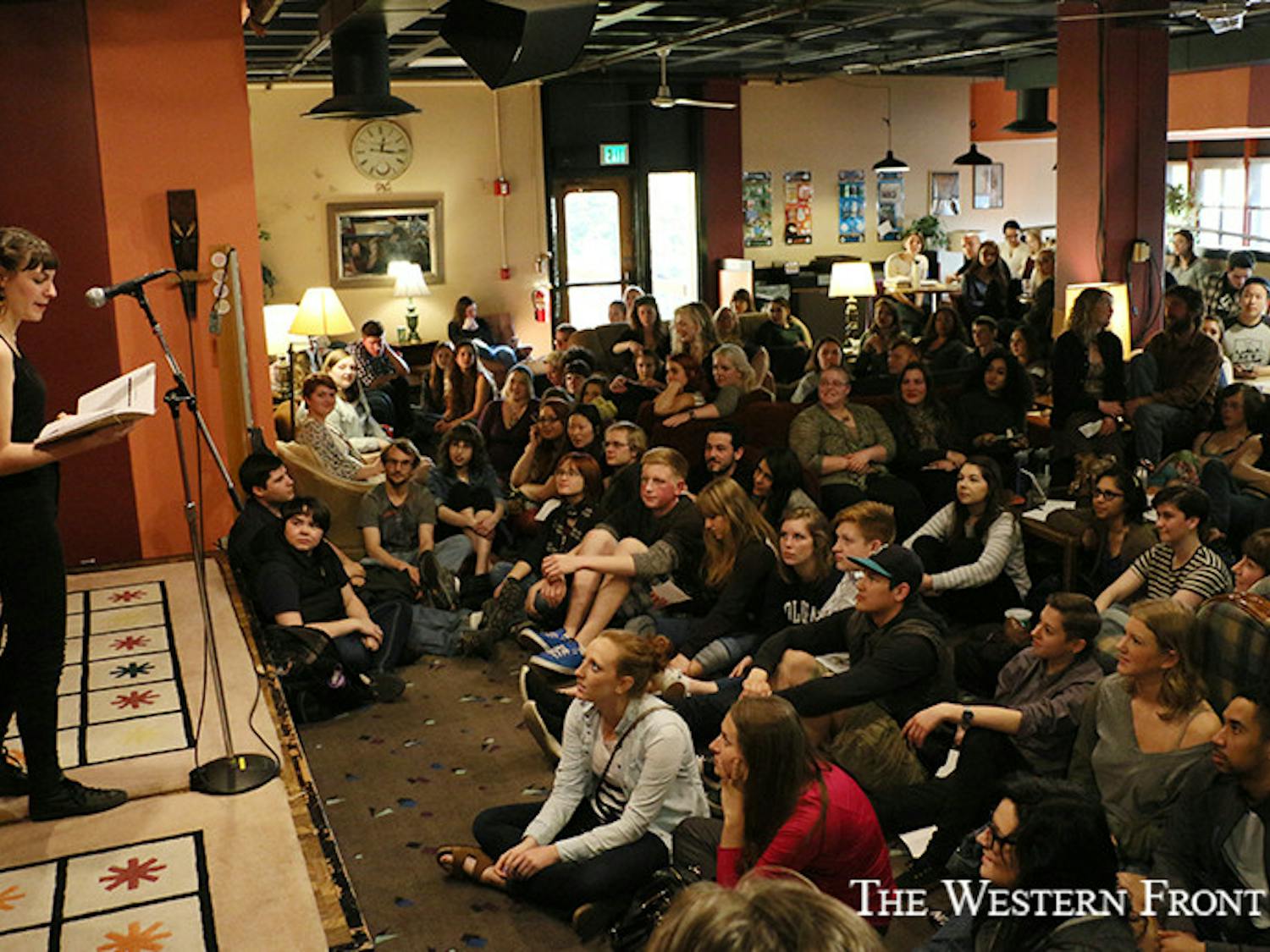
Although the lights were dim, it was still possible to see the mass of bodies that filled Honey Moon Mead & Cider to capacity. Members of the Bellingham community came to a fundraising event to support Film is Truth, a locally owned video rental store.
Candidates for the new director of Western’s Honors Program will showcase their goals and answer student questions in a series of open forums.
Harsh laws burdening immigrants in the U.S. and the issue of mass incarceration is on the agenda for Silky Shah, co-director of Detention Watch Network, this week at the Fairhaven College World Issues Forum.
Sexual assault procedures and resources on Western's campus are under inspection as new measures proposed by the Washington State Legislature would enhance the existing resources for sexual assault victims on campus but also implement a task force to prevent campus sexual violence.
To mark the beginning of the Bellingham Farmers Market’s 24th annual spring season, Mayor Kelli Linville conducted the traditional opening day cabbage toss in front of Depot Market Square.