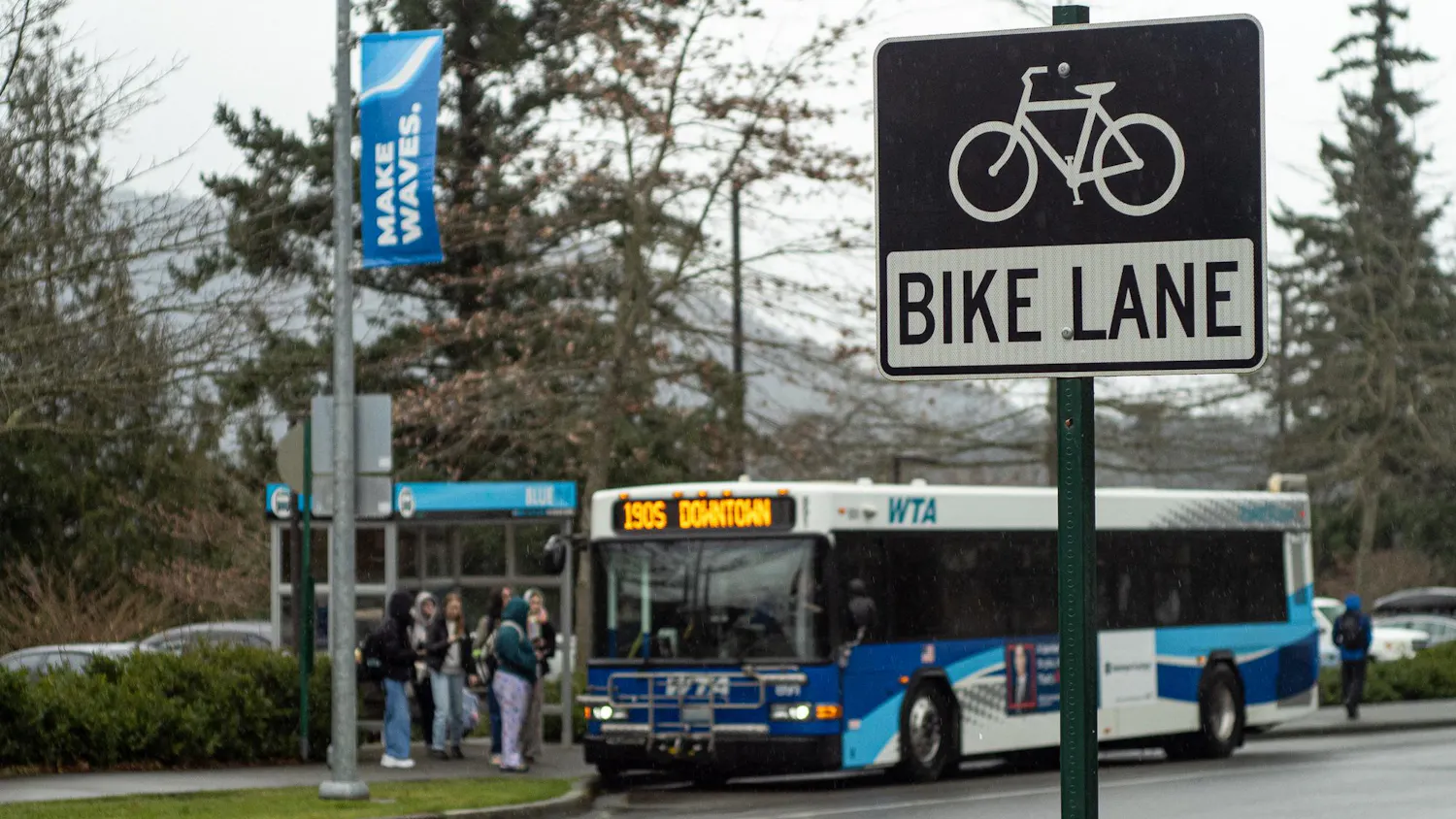

As transit fares are set to rise in the fall of 2026, Western Washington University student advocates and local officials are debating how public transit can be funded through existing tax revenues, rather than requiring additional financial contributions from the community.
Whatcom Transportation Authority (WTA) has recently decided to terminate its contract with Western Washington University that provides students with unlimited bus passes, as well as double bus fares from $1 to $2 per ride taking effect in September 2026.
Students for Climate Action, a Western student group, has spent nearly a year advocating for expanded and more accessible transit service. Kaia Olson, a member of the group, said their efforts have focused on a city ordinance featuring all-door boarding, designated bus lanes and faster service.
“We’re proposing parking excise tax per parking spot, as well as a car tab fee when you buy your yearly tabs,” Olson said. “Between those two things, it looks like it would more than cover the loss of revenue from collecting fares, as well as provide funding for bus expansion and service improvements.”
Olson said the issue extends beyond students. During public hearings on the fare increase, she said advocates saw how strongly the changes affected older adults and paratransit riders.
“One thing we really realized at the public hearing was that it’s a lot of vulnerable older people who are facing these issues as well,” Olson said. “It’s important to bridge campus and the community.”
Students for Climate Action has met with multiple city officials in recent weeks, including members of Bellingham City Council and the mayor’s office. Olson described those meetings as largely cooperative.
“There’s an understanding that WTA does need to be funded,” Olson said. “There are just different ideas of how we should go about doing that.”
Western officials say the university has limited authority over WTA’s fare decisions but is actively negotiating a new student transit contract. Andrea Reiter, Western’s associate director of active transportation, said Western accounts for about 40% of WTA’s ridership, giving it some leverage in negotiations.
Western is also exploring whether student and employee transit contracts should be separated, Reiter said, but emphasized that decisions about fare-free transit rest with WTA’s Board of Directors.
“Western has no legal or political sway in WTA going fare-free,” Reiter said. “That decision is up to WTA’s board.”
Reiter added that Western cannot implement parking taxes or vehicle tab fees on its own, noting those tools would require action by the city or county. She said bi-weekly contract meetings with WTA are scheduled through July 2026, with hopes for meaningful progress by spring quarter 2026.
Michael Lilliquist, WTA board and city council member who voted to increase fares, questioned whether the alternative funding proposals are viable under current law. He said state law limits transit agencies’ revenue options primarily to sales tax and fare collection.
“To make these other sources of revenue possible, the state legislature would need to change the law,” Lilliquist said.
He also raised concerns about the long-term reliability of parking taxes and car tab fees, arguing that successful transit ridership could reduce those revenue sources over time. According to Lilliquist, WTA already receives about $40 million annually from local sales tax, covering roughly 80% of its operating budget, while fare revenue brings in about $1.6 million.
“Bus fare is already very cheap compared to the cost to provide bus service,” he said.
Lilliquist emphasized that WTA faces rising costs, particularly for paratransit and rural services, which are among the agency’s most expensive operations.
“If WTA could afford to keep fares low or drop them to zero, we probably would have done so already,” he said.
As negotiations continue between WTA and Western, student advocates say they will keep pushing for solutions that expand service without placing a heavier burden on low-income and vulnerable riders.
“No one wants the issue to escalate to any sort of protest,” Olson said, “but the community is pretty fired up about this, and with good reason.”
Karsin Hutchins is a 3rd year studying PR at Western. She is currently reporting for the campus news beat on The Front. Outside of school, she can be found working with kids at the CDC on campus, hiking outside or at the beach. You can reach her at karsinhutchins.thefront@gmail.com.