

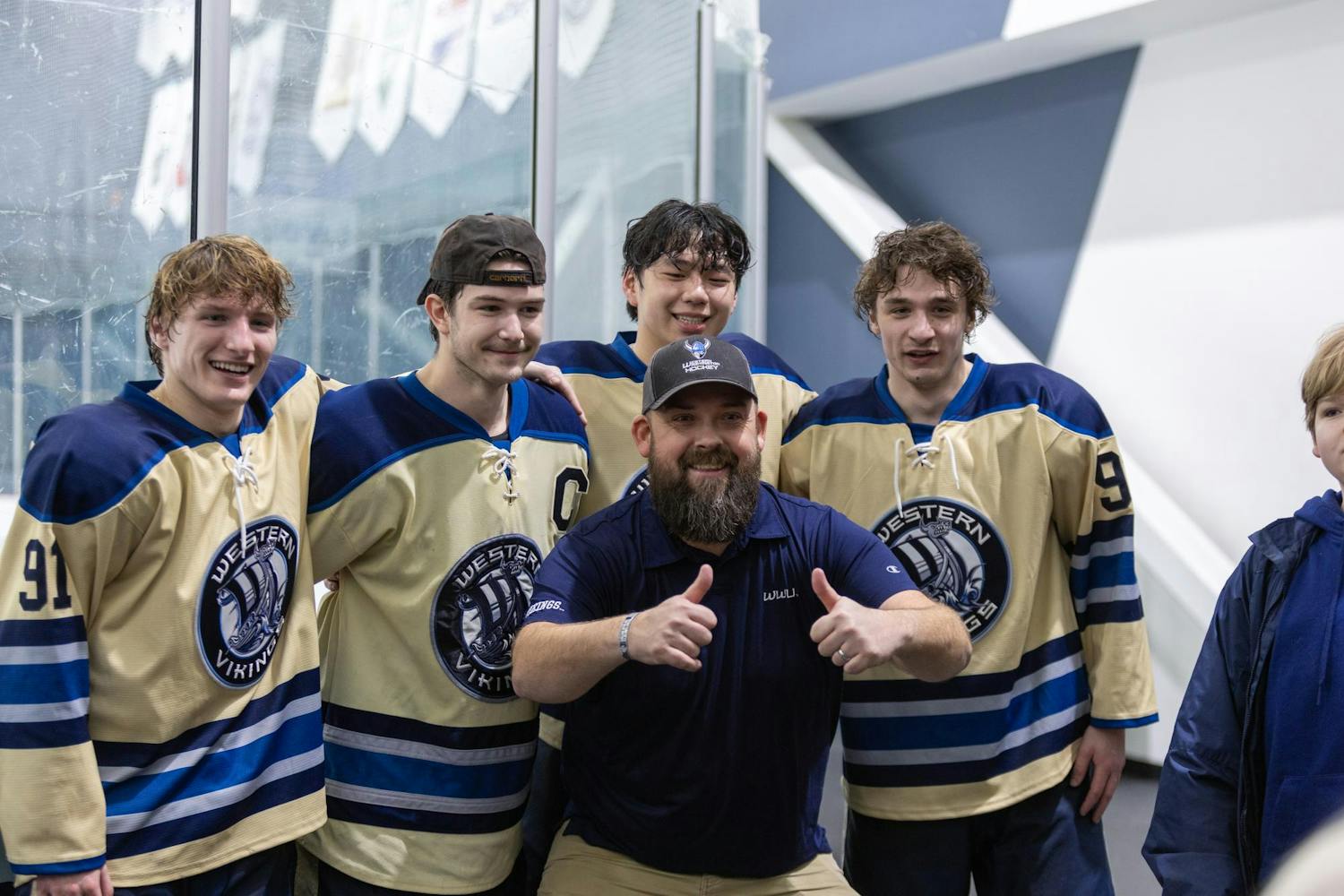
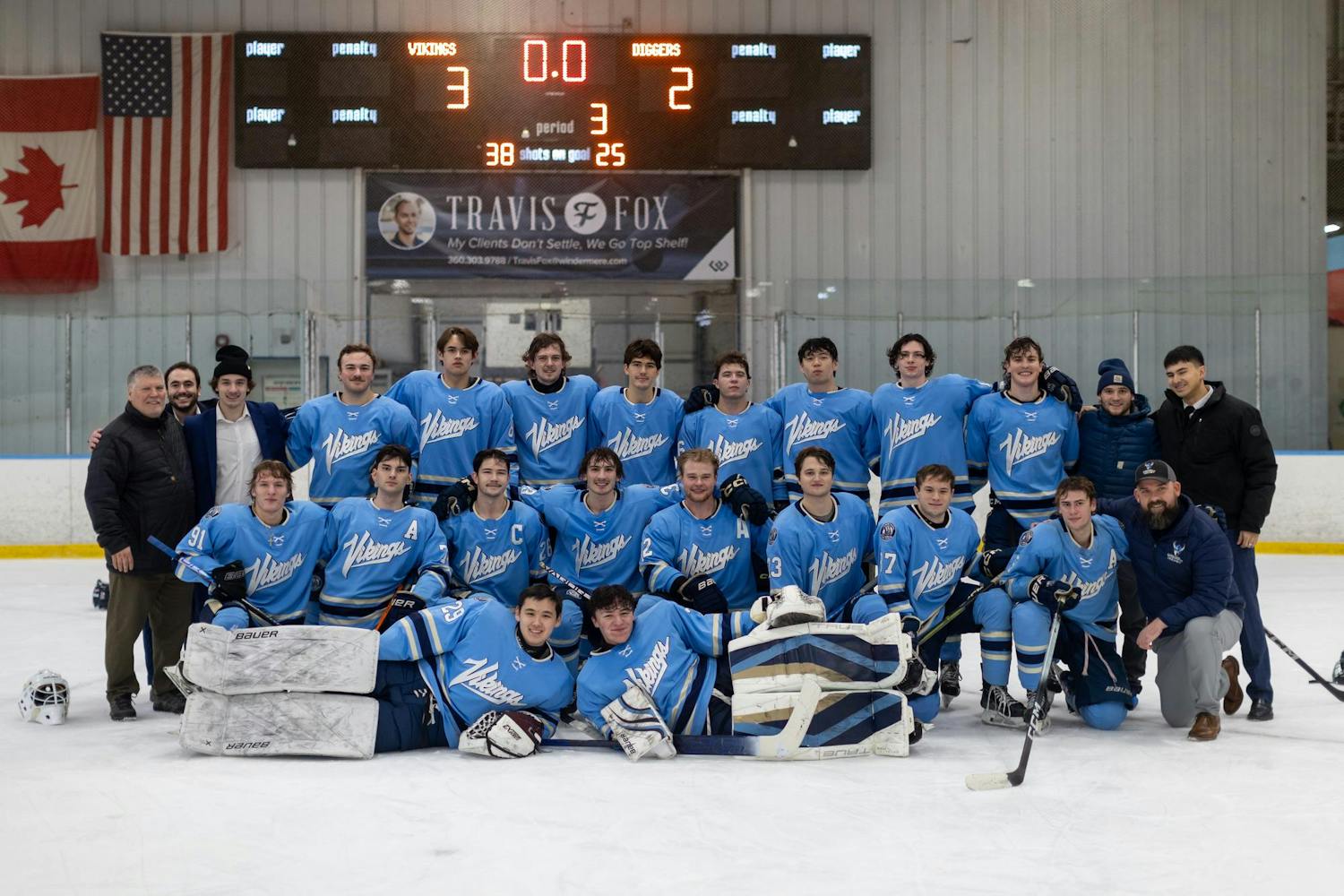
Adam Segaar has spent the last six years as the head coach of Western Washington University’s ice hockey team, despite having no prior hockey or coaching experience. He took over the team in 2020 on a whim, following a friend's recommendation, which posed challenges because the team had lost its identity due to the pandemic.
On May 11, 2026, Segaar spoke with The Front about how he built Western ice hockey’s culture into what it currently is.
Q: Coming into the team, they weren't in a super great place. What kind of culture did you want to build going into that?
A: I have a motto, it goes, “Vikings, we fight, not by might, not by power, but by heart,” and I wanted guys to understand that. There's more you can do personally and physically than you actually know. That mentality of guys being proud of each other, trusting each other, it's really big on a team. You have to take all these guys that have all these barriers and knock them down.
Q: How would you describe the difference in the identity of the team culturally, then to now?
A: I kept repeating, “We need to find our identity,” and the players would say, “We need to find our identity. Are we going to be this kind of team or that kind of team?” And now we know it. I've read a lot of coaches' books and journals and all these different things, and one of the things that they always kept saying is the guys have to buy into the culture. Every guy that we have on our team now, it's the culture, that's what we care about more. We care about playing for each other more than our points. Winning is fun, everybody loves it. But at the same time, we know that if we're not winning the right way, we're just gonna end back up on the bottom again.
Q: When building that culture, do you think that's built more on the ice or off?
A: It is both. On the ice, I like to see guys (who), when they'll show up at practice, they're at practice. They're not tearing each other apart from making mistakes. They're like, “Okay, we gotta work on this.” They're sitting and talking with each other. Even if it's a brand new guy, talking with senior players and picking up and wanting to know about them, and really (wanting) to be immersed in them. Then when we're off the ice, one of the things is, I talk to them. I call them all the time. I find that when the player exits the phone and wants to check in, that you find that you have a guy that is really dedicated and a guy that is listening, and that's helped out a lot.
Q: How do you see the culture take place with your players off the ice, with you not there?
A: They're always going to school events together. They're down at the beach together. Yesterday, they all got up in the morning and did the Red Bull run. The seniors, they get a rookie and they have got to take care of the rookie. It's like they actually take care of them with how the school works, they set them up (with) how practices are going to affect them and how (their school) workload will affect them. They really take care of each other.
Q: What do you think your players respond to best from your coaching style?
A: I can really meet a player, like Tyler Chapman, (a) really passionate player. He gets really worked up, and I'm like, “Chappy, hey, just take a breath. Calm down, like, don't overthink this.” I can really relate and was able to calm players down, lock them back in. I’m able to read and watch a game and manage a game. Being able to manage your players in the game, it really helps dictate the pace and control of the puck and everything.
Q: What is the number one lesson you want players to take away from the team?
A: I have a phrase, “I don't care if I die and have a million dollars in my bank account, I care if I have a million people show up at my funeral.” I want guys to want to change the world. I don't get paid to do this. I want just to be able to have a million people show up at my funeral and that's what I care about. I want guys to have that passion.
Q: If you could describe the team culture in one word, how would you describe it?
A: Hungry. We're hungry.
Q: How do you think that'll take form next year?
A: Everybody, get your tickets. Come to the games, buckle in and be ready for the ride. That's all I’ve got to say. Because I’ve got to tell you, if everything works out how it's supposed to right now, the guys that are supposed to come, I am ready to be the best team on the West Coast. I am ready. We are right there. Nobody (is) competing against us.
Chayton Engelson (he/him) is a sports and recreation senior reporter for The Front. He is in his second year at Western and is majoring in news/editorial journalism with a minor in film studies. When he isn’t covering stories, he is usually doing community theater or watching movies. You can reach him at chaytonengelson.thefront@gmail.com.


