

Thrifting has been around for over 150 years, at least the modern idea of it. The Salvation Army launched its ‘Salvation Brigade’ in 1897 to gather used items and sell them to those in need. Since then, secondhand buying has grown immensely, becoming extremely popular and almost trendy in the age of social media.
However, thrifting, which was originally advertised as a sustainable and affordable way to get necessities, has now become a new form of consumerism.
Originally, thrift stores existed to support those who could not afford higher-end clothing and the prices that come with it. Mariah Gerard, store manager of Y’s Buys, spoke about the access to items as secondhand shopping gains popularity.
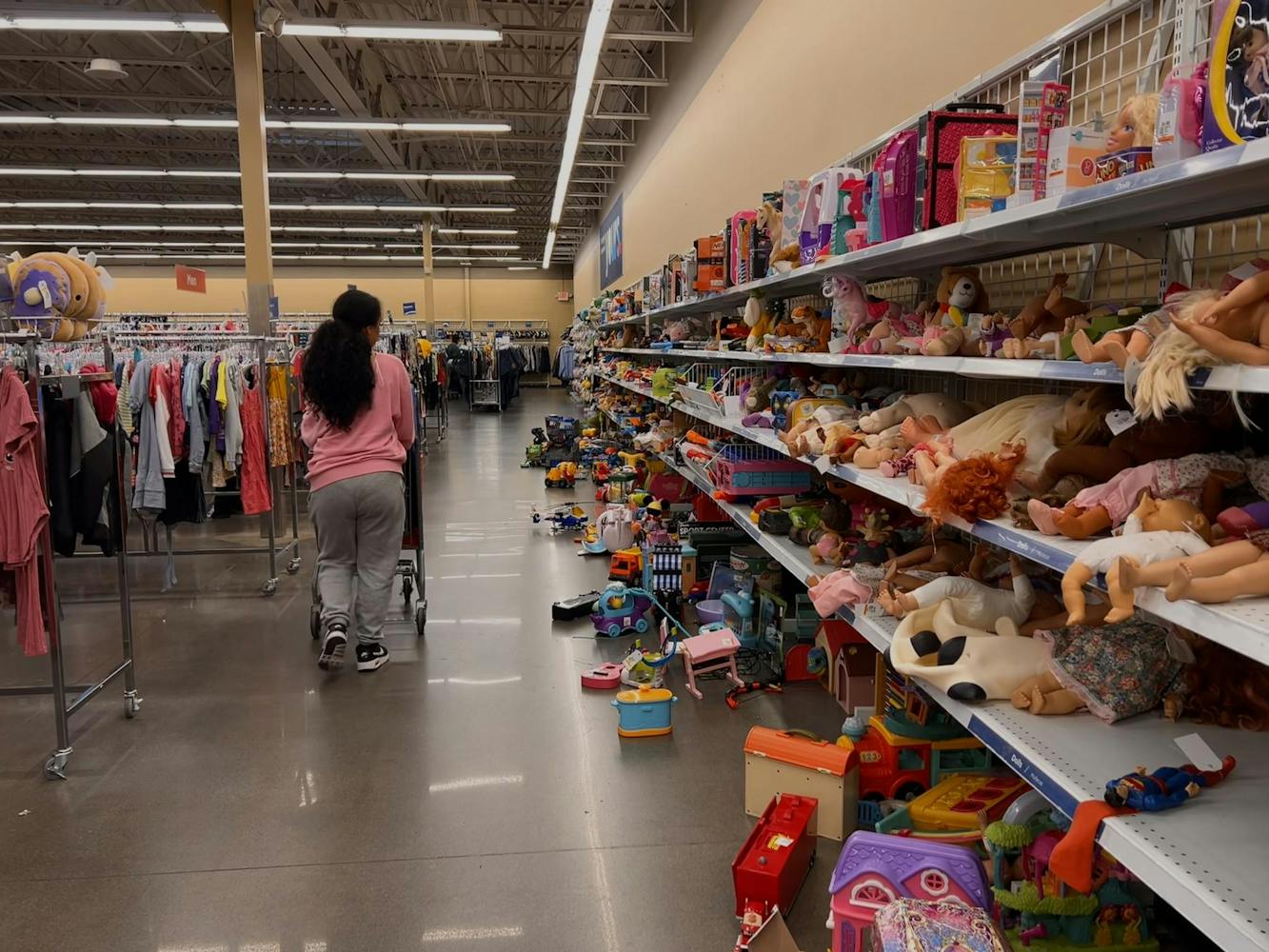
“Many shops, even large chains, are pricing items closer to or sometimes higher than traditional retail. At the same time, there’s been a shift toward highly curated ‘quality-only’ secondhand spaces that prioritize specific aesthetics, natural fibers and higher price points,” Gerard said. “There’s nothing inherently wrong with that, but it does change access.”
The idea of consumption is often disregarded in relation to thrifting since it’s considered sustainable. Ultimately, what is truly sustainable is buying secondhand when possible and only under circumstances when you need something. Not buying loads of stuff because it’s cheap.
“Thrifting becomes consumerism when it stops replacing purchases and starts adding to them. If someone buys five items because they’re cheap or trendy, items they wouldn’t have bought new, that’s still overconsumption. The environmental benefit comes from buying less overall, not just buying secondhand,” said Tejvir Sekhon, a marketing professor at WWU.
He continued to explain how people can consider consumption in all aspects and how it’s hard to stray away from actions we’re used to.
“Thrifting reveals something deeper about modern consumption: we’re very good at changing how we buy but much slower at changing how much we buy. The real shift isn’t from new to secondhand, but it’s from more to enough,” Sekhon said.
If you spend time on social media platforms such as TikTok, Instagram and Youtube, you will likely come across videos outlining thrifting ‘hauls’. These hauls often consist of loads of clothing bought at secondhand stores, which the creator uses to justify the amount of clothing purchased. While coming across as cheap and sustainable, these hauls are the same as any other.
Cece Jones, a political science student at WWU, has been thrifting since a young age and has felt the impact of social media in secondhand stores.
“Social media has become pervasive in every single area of our world; you just consume this sort of content more and more,” Jones said. “It has become consumerism. In myself, I feel the thrill of the hunt. I’ve gotten a lot better at knowing when I like something enough to buy it and wear it. I am better at seeing when something is worth getting.”
Since thrifting has become popular on social media, many individuals who spend time on these apps have flocked to secondhand stores, buying items in a haze because they are cheap and unique, only to get home and never touch the purchase again. Cat Armstrong Soule, a professor at WWU who researches consumerism, talked about the rise of thrifting and its implications.
“The invention of social media and then third-party intermediaries that connected resellers to buyers of course has revolutionized thrifting. Not to mention it’s trendy and increasing not just from ease but also from sustainability,” Soule said. “It’s increasing hand in hand along with ‘regular’ or firsthand consumption; all this secondhand consumption isn’t necessarily displacing firsthand purchases, it may be somewhat but it’s also just part of the overall increase in spending on categories like clothing.”
With thrifting and the internet comes an influx of apps and websites to buy used items. While this increases the reach that secondhand shopping has, it also increases buying for the novelty of finding something specific or rare and purchasing it just to be able to own it.
“Another issue with secondhand consumption is scarcity, the fact that the items you come across are most often 'one of a kind,’” Soule said. “People are more likely to buy it quickly or impulsively before it’s gone vs. stopping and thinking about if it’s really needed.”
Knowing your limit is vital to responsibly buying at secondhand stores. Low prices and distinctive items may cloud a shopper’s judgment, leading to unnecessary purchases. Make rational decisions, based on needs instead of wants and keep in mind how to keep thrifting accessible and sustainable for everyone.
Rowan Braeckel (she/her) is a third-year communication studies major, news/editorial minor and an opinions reporter for The Front this quarter. When she's not writing for The Front you can find her listening to music, at home with her snake, or spending time with friends. You can reach her at Rowanbraeckel.thefront@gmail.com.