
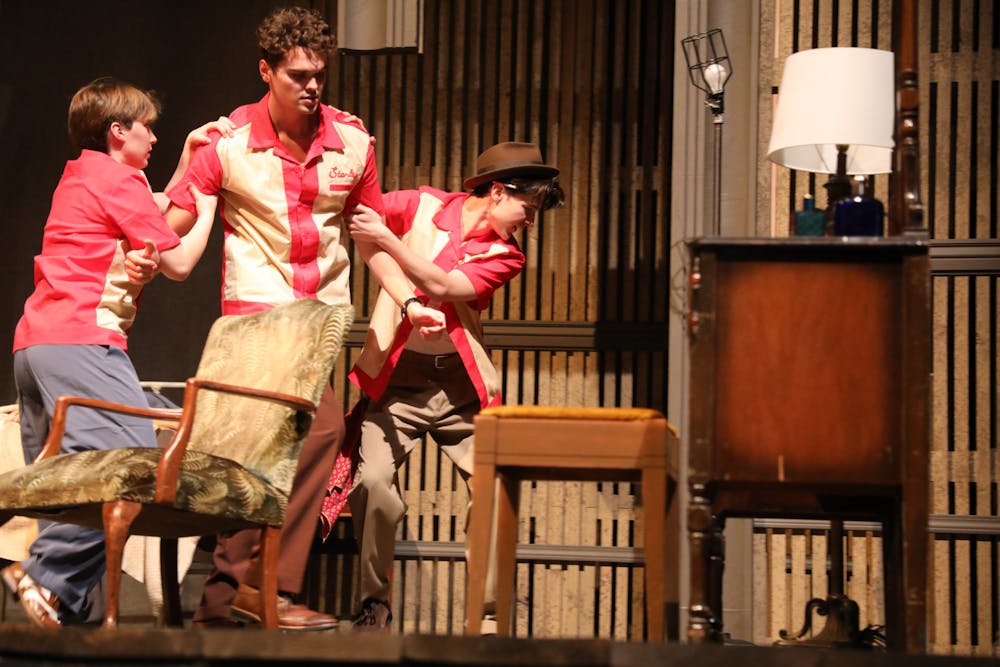
As the opening night of Western Washington University’s annual fall play approaches, the cast and crew are transforming the stage into late 1940s New Orleans and painstakingly embodying the characters of Tennessee Williams’ “A Streetcar Named Desire.”
The 1947 play follows the complicated and fraught relationships between Stanley Kowalski, his wife Stella, and her sister Blanche, as Blanche joins Stella and Stanley in their tiny apartment in the French Quarter. Stanley’s gritty, working-class livelihood clashes with Blanche’s genteel background of Southern wealth and propriety, and Stella is soon torn between the people she loves most.
Christina Gutierrez-Dennehy, associate professor in Western’s theatre department and director of the production, finds the story and its relationships both complex and compelling, with themes of control and desperation – that culminates in tension and violence – strung throughout the production.
“I think this notion of ‘what do we desire and what do we do to get the things that we desire?’ was a big motivator for me in proposing the show,” Gutierrez-Dennehy said. “It's these three people who are trapped in this death battle with each other, who are just doing whatever they can to keep what they think to be theirs.”
Western fourth-year Adriana Agudelo, who plays Stella, spent a lot of time in and out of rehearsals contemplating Stella’s past to understand how she perceives her world and how she communicates with or responds to it. When it comes to Stella and Blanche’s sisterhood, Agudelo emphasized Stella’s separation from how she grew up, and her desire to show this new way of life to her sister.
“I think we (Blanche and Stella) grew up in the same way, but the way we did life was so different,” Agudelo said. “Stella’s like, ‘I kind of like the grime. I like working hard for all these things.’ And I think Stella on her own has so much more autonomy than we think she does."
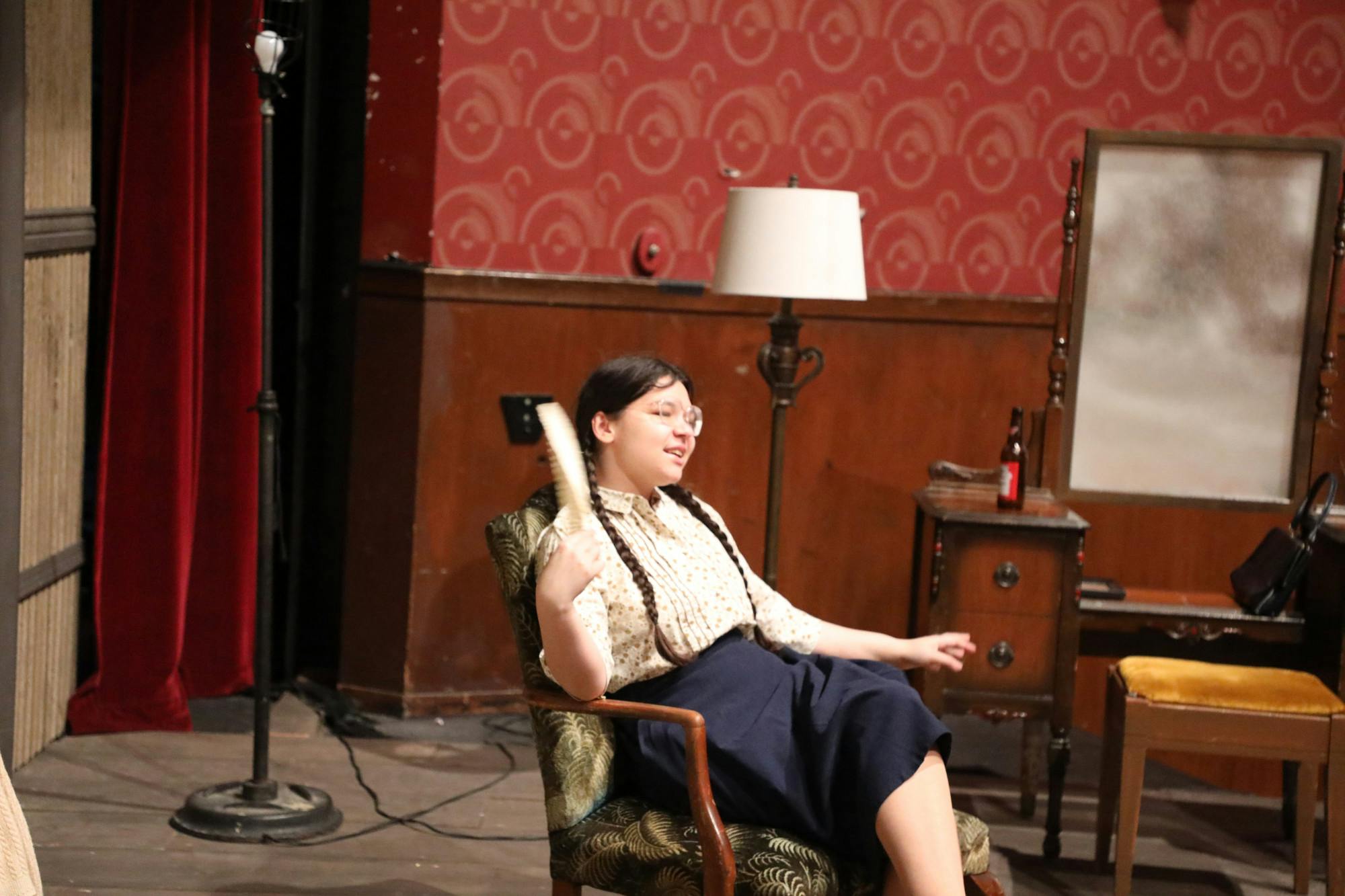
The difficult nuances of the play’s relationships also take form between Stella and Stanley, whose “animalistic” marriage, according to Agudelo, highlights how desire and desperation can be intertwined, and how it can toe the fine line of love or hatred so messily.
Western third-year Emmett Kineman plays Stanley in the production. Portraying a complicated character with often-fearsome tendencies has posed theatrical challenges to Kineman, but has also allowed him an opportunity to try to understand the characters and their distress-ridden shared lives.
“(Williams) doesn't really tell you what to think in his place. It's a lot more of the idea that these are just people rather than ‘this is the bad guy or a good guy,’” Kineman said. “These are flawed people and situations – although I would argue Stanley is a bad guy.”
The ambiguous tension and resulting mental strife and physical violence of “A Streetcar Named Desire” was a point of concern in selecting it as this fall’s play. However, the cast, crew and directors (who are Gutierrez-Dennehy with assistant director, Western fourth-year Parker Curtiss-Knox) find that not shying away from complex material is important to initiate necessary conversations of themes like domestic abuse.
What domestic abuse is, what to watch out for, and why people - specifically women - struggle to leave an abusive relationship are all questions Gutierrez-Dennehy hopes the audience will demand answers to after viewing the production.
“These things do happen in real life, and so I think it is important that Tennessee Williams did not shy away from it,” Kineman said. “You don't have to come see the show if you don’t want to, and I just think it's important not to censor things in the media, especially things that are still pretty prevalent.”
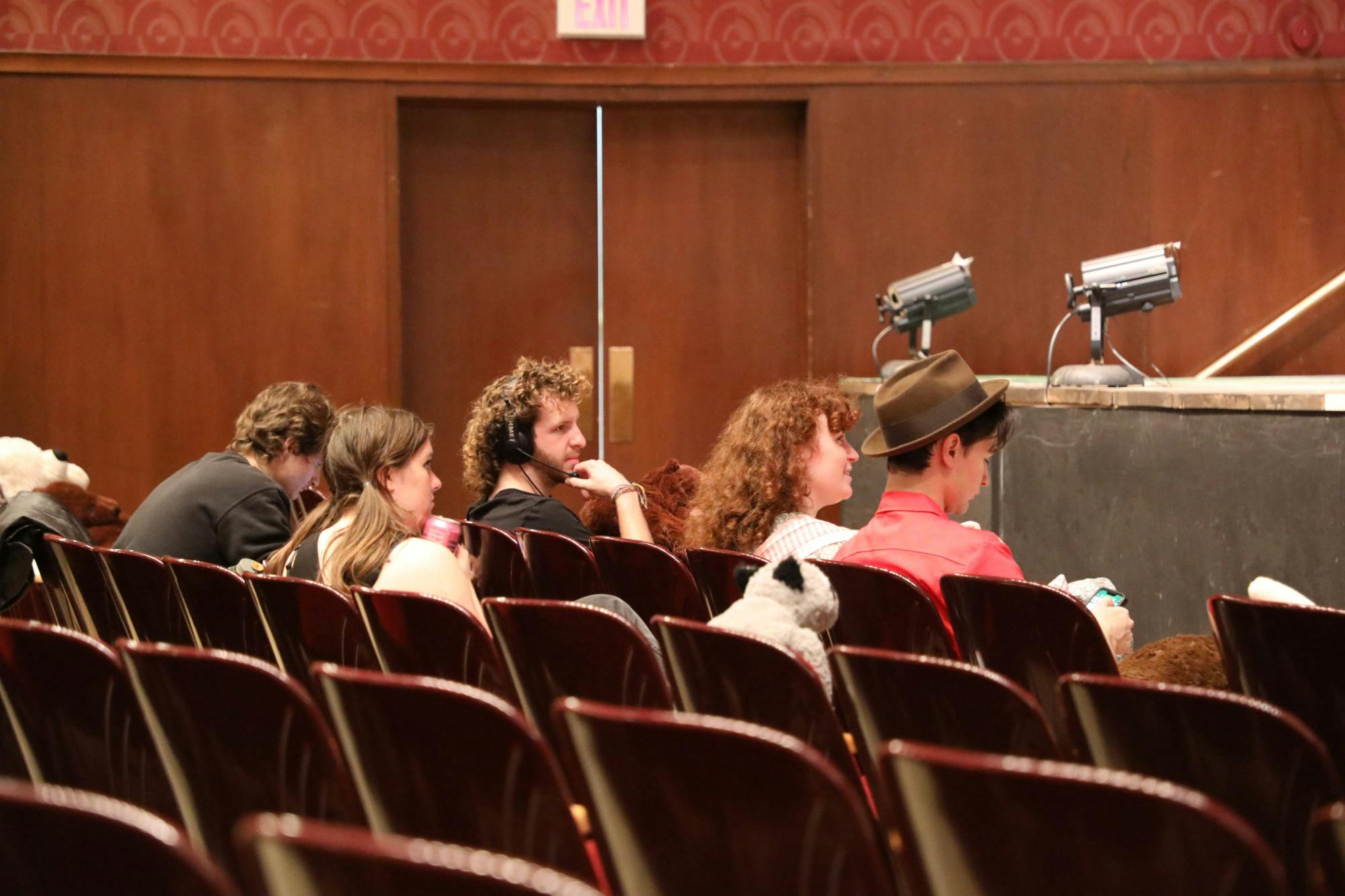
To Gutierrez-Dennehy, theatre is not an escapist space, but rather an opportunity to open up difficult conversations.
When the theatre department was deciding on whether or not “A Streetcar Named Desire” should be selected, given the violence of the text, they ultimately decided that uncomfortable topics throughout the show need to be brought to the forefront of conversations – because, according to Gutierrez-Dennehy, “stories only work when there are folks to hear them.”
In addition to demanding these stories be shared and discussed, Agudelo also said that the current political landscape has threatened art, freedom of speech, and freedom of expression.
“When we as artists say, ‘you've told us no, but we're going to do it anyway,’ there’s such power in that, but also it lets people who might be afraid of (censorship) realize ‘oh, they're doing it. I want to do it too,’” she said. “I just think it's important for us not to lose what gives the world color.”
The cast and crew encourage support of the production but advise viewers that the play depicts scenes involving domestic abuse, references a suicide that occurs outside the play, and has an occurrence of an implied sexual assault.
“A Streetcar Named Desire” opens on Nov. 21 at 7:30 p.m. in Western’s Performing Arts Center and runs through Nov. 23. Tickets are available through the College of Fine and Performing Arts’ website and are free for Western students.
Rosalie Johnson (she/her) is a campus life reporter for The Front this quarter. She is a second year journalism major on the news/editorial track and aims to finish a minor through Western’s Honors College. Outside of reporting, she enjoys watching new movies and exploring Bellingham with friends. You can contact her at rosaliejohnson.thefront@gmail.com.