

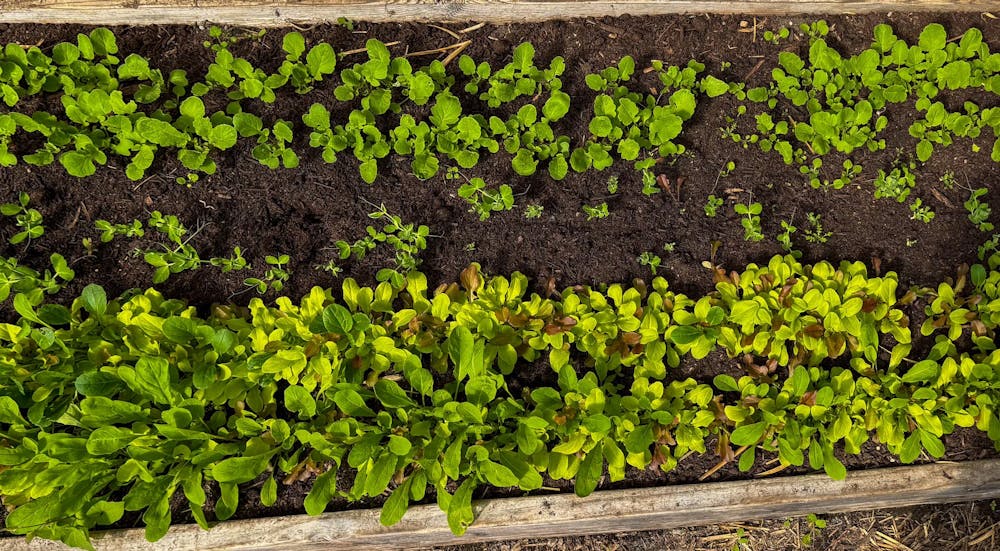
This spring, The Outback Farm at Western Washington University will implement new infrastructure and begin its Preservation Station, with new projects and continued efforts to provide food and community resources for students.
Recent projects include a fence replacement, building a new produce washing station and preparing crops for the growing season. Marlee Maloy, The Outback Farm operations coordinator, said several Western classes are also working on projects at the farm this quarter, including Outback Farm and Food Justice Praxis, and Feminist Food Justice.
Maloy said one of the farm’s biggest priorities this year is increasing food harvests to support the new food preservation initiative called the Preservation Station, coming into full swing in the summer of 2026.
The project, developed in partnership with the House of Healing longhouse and the Native American Student Union, aims to preserve food grown at The Outback Farm for year-round distribution to students.
“We're working to start to preserve part of the harvest from The Outback Farm to be distributed to the student community throughout the rest of the year, so that is happening this summer,” Maloy said.
She said The Outback Farm is both a learning space and a food justice resource on campus.
“I see it as like a site of praxis for people that are trying to study ecological restoration, farming, land work of all varieties, and I also see it as a really interesting model of mutual aid,” Maloy said. “The food that we grow is completely organic and completely free to students, I think that's pretty radical in these times.”
The farm is also continuing efforts to rebuild its chicken coop after a raccoon entered the enclosure last fall and killed two chickens. Maloy said the remaining hens were temporarily relocated and “on vacation” to another farm to disrupt predator activity around the coop while students work on repairs.
“That was kind of a wake-up call, being like, ‘Okay, so we have these chickens, we need to make sure that they are not going to get predated,’” she said. “It's a natural part of the environment – everything eats and is eaten, but at the same time, we're tasked with caring for these animals.”
Alongside ongoing projects, Maloy said the farm has faced funding challenges in recent years, particularly surrounding support for staff positions. However, she said recent funding from the Sustainability, Equity, & Justice Fund and the support from the Department Related Activities Committee have improved the outlook for the future.
“Those things are working well,” she said. “We have had issues, (but) the future is looking hopeful.”
Manna Spiro (she/her) is a campus life reporter. She is a third-year public relations student excited to start her first quarter writing for The Front. Manna directs the style and beauty team for The Rage Magazine and can be found going on spontaneous adventures with friends around Bellingham. You can contact her at mannaspiro.thefront@gmail.com.


