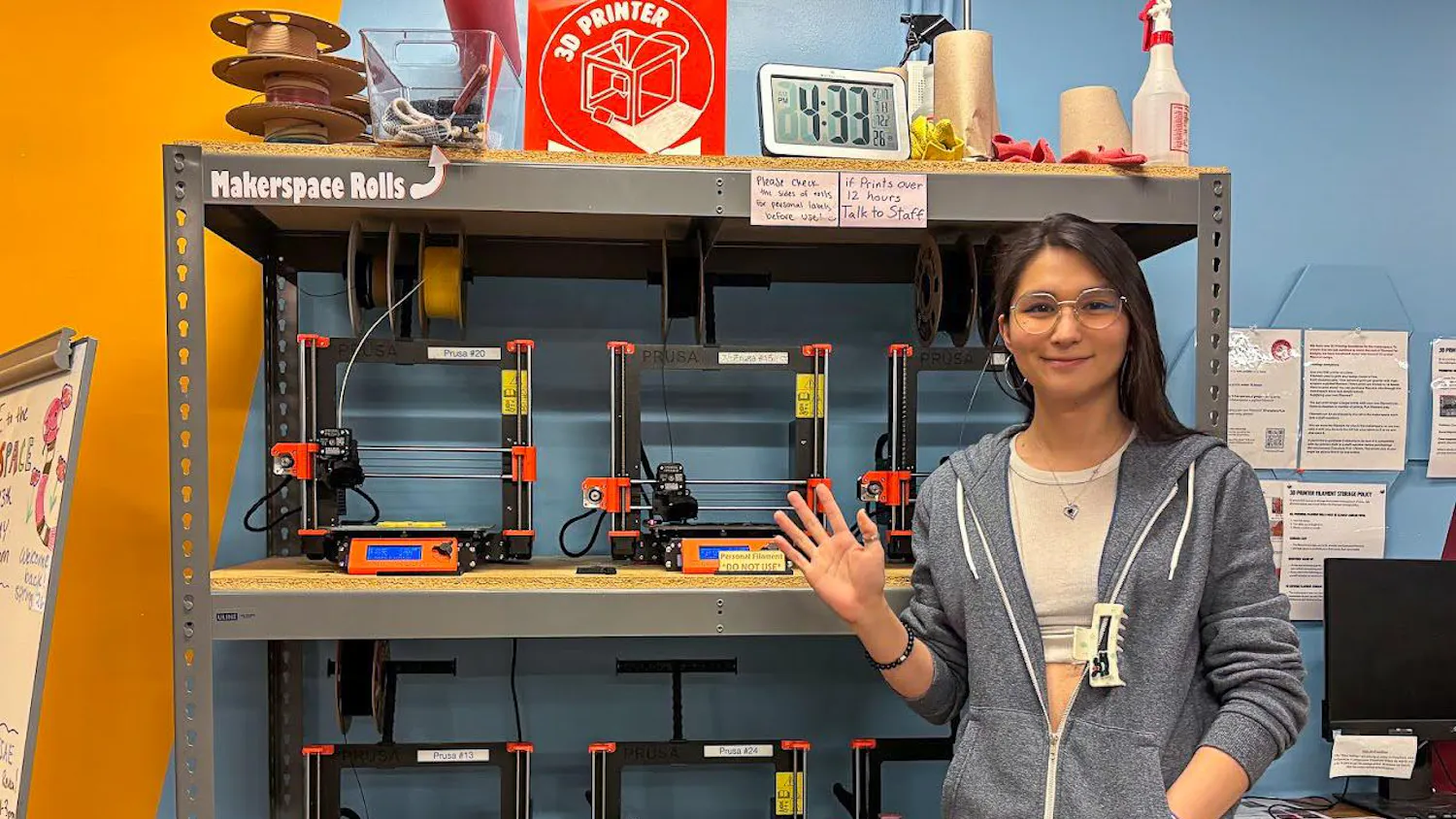

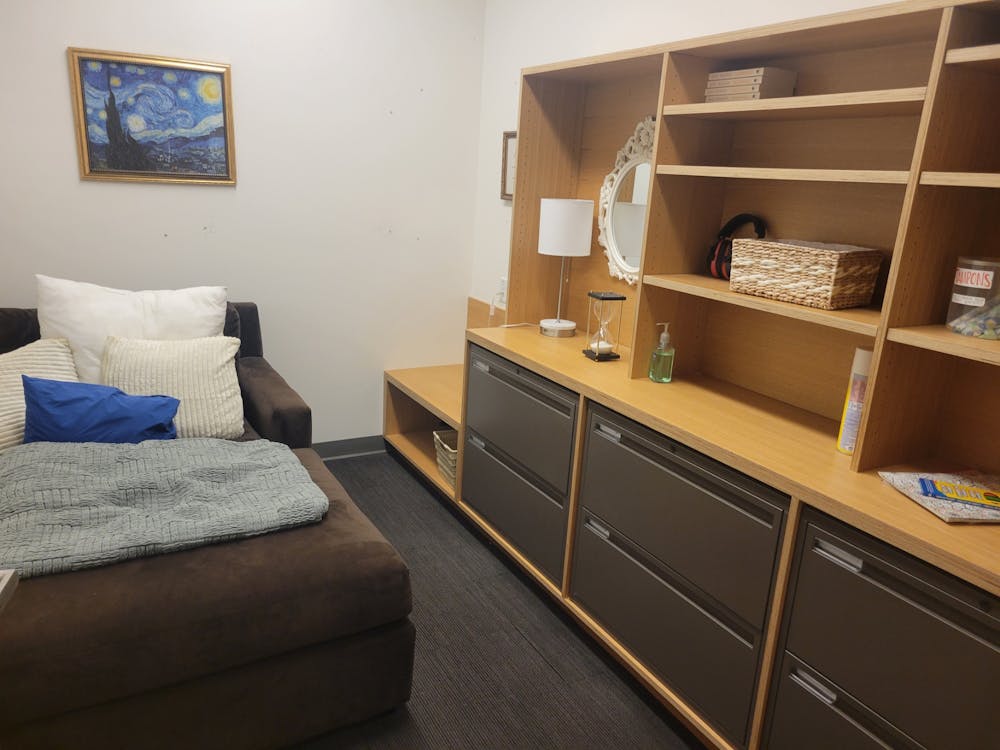
A student senator at Western Washington University is creating more low-sensory rooms to improve accessibility for neurodivergent students. A pilot room will be available by the end of fall quarter in Miller Hall 150.
Low-sensory rooms promote relaxation and emotional regulation. The room in Miller will be furnished with a bed, pillows, weighted blankets, low lighting, stim toys, white noise machine and a light projector to create a soft and quiet environment.
New York University, Cornell University, University of Washington, Tacoma and many other college campuses have implemented low-sensory spaces in the last few years.
Zelda Rood, a Woodring College of Education senator and third-year special education major, is leading the project, which started in October. Her past experiences and identity as an autistic person influenced her proposal.
Rood worked on a seminar for staff and students with data gathered from interviews with the neurodivergent community for the Associate Student Senate last year. Feedback from neurodivergent students about the lack of disability awareness among faculty inspired the seminar topic.
“I was able to realize that there wasn't a space for neurodivergent students to come and calm down because the college wasn't made for them,” Rood said. “Part of my role as a senator is to bridge the gap between staff and students. I realized that there was a huge gap between neurodivergent students and staff within my program.”
This will be the second low-sensory room at Western. The learning commons in Kaiser Borsari Hall was funded by a private donor and also designed to be a low-sensory study space. It contains plush mats, mood lighting and low-seated furniture behind frosted windows and a lockable door. The room opened alongside the rest of the building on Jan. 10, 2025.
John Lund, an electrical engineering professor, teaches classes in Kaiser Borsari. Lund said he always saw two to three people occupy the room, even on the weekends.
“It’s probably one of the most popular rooms here,” Lund said.
In an email, when Lund talked to students about study spaces, they said the only locations on the southern side of campus where they can be undisturbed were the low-sensory room and a few areas of the Interdisciplinary Science Building.
Rather than studying, Rood said the low-sensory space in Miller will primarily be used by students when they are distressed and need a place to calm down.
Rood talked to other neurodivergent students for their input on the room’s design and features, which was funded through Woodring’s budget.
“I would also see what my friends would use to calm down and what other schools have used as well,” Rood said.
Gizmo Perrine, a fourth-year anthropology student with autism, used low-sensory rooms when they attended Peninsula College. They were pleased to hear about the new addition to Miller Hall.
“I mask almost 90% of the time,” Perrine said. “When I get to go into a low-sensory room … it feels like I can finally take off (that) weight. I think it's really important because it helps me feel like I have a space to just not … wear all of these boundaries, all of these layers of normalcy.”
Sarah Kapostasy, neurodiversity specialist at the Western’s Counseling and Wellness Center, said 20% of students at Western qualified for academic accommodations.
“Now, not all of those folks are neurodivergent, but I would say a chunk of them are," Kapostasy said. “A fair amount of people who are asking for academic accommodations, may be qualifying for (them) because they are neurodivergent and they have some other qualifying disability.”
Kapostasy said this space will also benefit neurotypical students.
“If you are a student who's neurotypical but has, let's say generalized anxiety disorder, this low-sensory space might be an excellent spot for you too,” Kapostasy said. “(You can also use it) if you feel like you're developing some panic symptoms and you just need a space.”
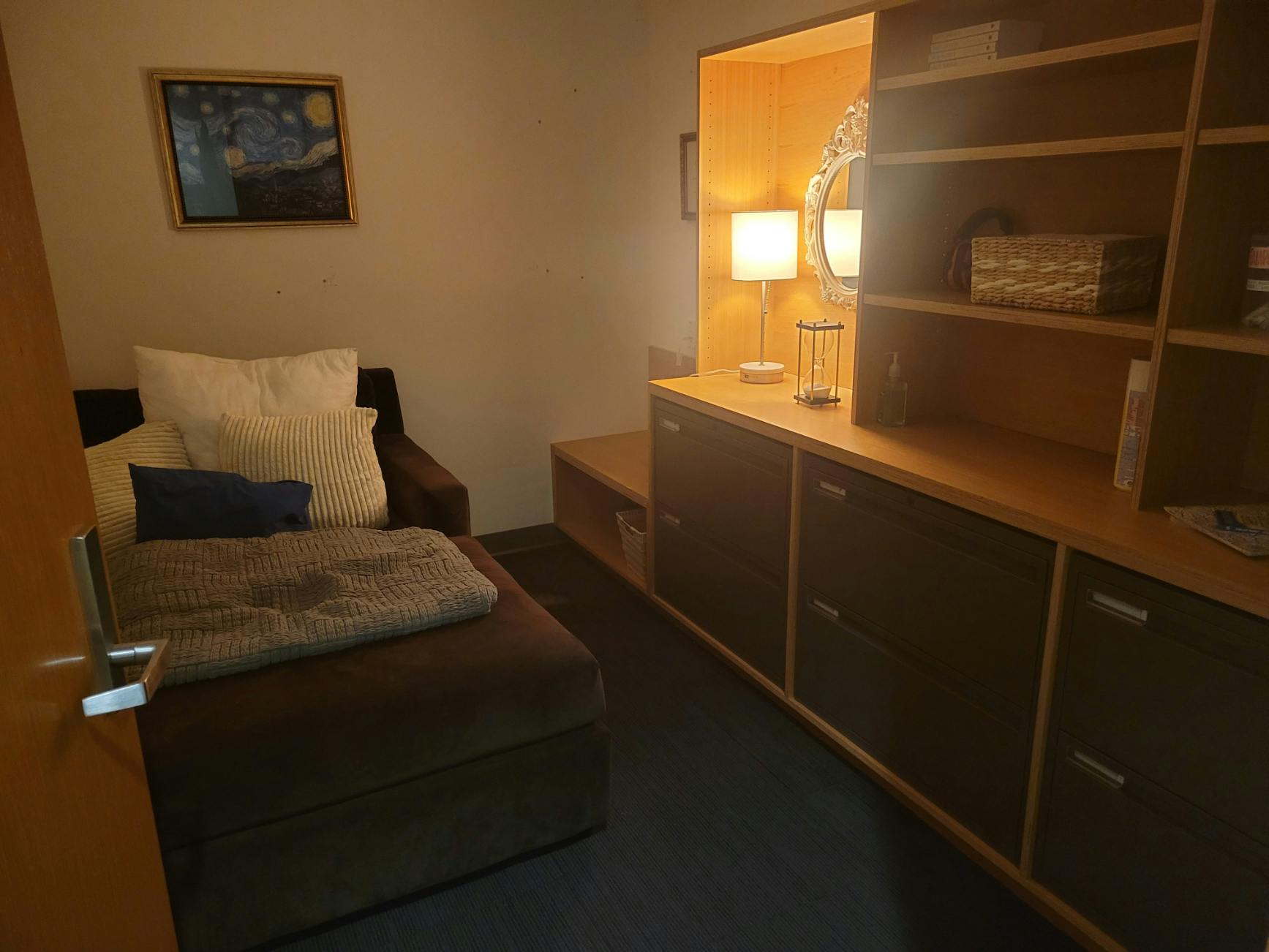
Rood plans to build seven more rooms, one for each college and the Viking Union.
“The idea is that neurodivergent students shouldn't have to run across campus to get access to a center that they need,” Rood said.
To find space for these rooms, Rood is working with Francisco Laso, environmental science professor and head of the Mapping Access and Disability at WWU project. According to Laso’s staff profile, his project highlighted accessible and non-accessible areas on campus for people with disabilities.
Verónica Vélez, a Woodring College associate dean, also assisted Rood with the project by buying supplies. Rood assembled a workforce when she presented the idea to the AS Senate meeting on Oct. 24, 2025. It consists of four students and two staff members, including Rood and Vélez.
“I’m going to have a person who’s managing the money, a person who’s decorating the rooms and the outreach,” Rood said. “It’s kind of intimidating, but it’s being worked out.”
The pilot room cost about $200. The low price point was due to the room already being furnished with the most expensive items: the bed and mattress.
She estimated that supplying the next rooms, along with paying people on the task force, will cost $10,000 to $12,000. She plans to finance the project through a Sustainability, Equity, & Justice Fund grant.
According to the SEJF website, the program provides grants up to $30,000 to fund student and staff proposals that seek to improve the campus community.
People can apply for the grant once a quarter. Rood was worried about how her Spring 2026 graduation will affect the progress of her project.
“If (the grant) gets denied I'm going to have to apply to that same grant next quarter,” Rood said. “Problem is, I'm going to be graduating by the time I apply for that grant again, I don’t know how many chances I have.”
Rood said she hopes to work for the Disability Access Center or Woodring after graduation so she can continue managing the project herself. If that does not happen, she plans to give the project to a DAC staff member.
“It’s likely going to be Axel (Cichocki, access manager for neurodiversity inclusion & DAC supervisor).” Rood said. “Ironically, he wanted to do the same project a few months ago. Plans fell through, but he was really excited that this project was getting off the ground.”
Rood was unsure why Cichocki did not finish his project.
Even if the seven additional rooms are not built, Rood said she was proud of the work she accomplished so far.
“If the pilot gets furnished and approved then great, that pilot is already there for students,” Rood said. “There will be one room where neurodivergent students can come and calm themselves down… At least (it will) help some.”
Allison Lam (she/her) is a guest contributor for The Front. She is a junior public relations pre-major with a communication studies minor. In her free time, she enjoys crocheting and watching sitcoms. She can be reached at itsallisonlam@gmail.com.