

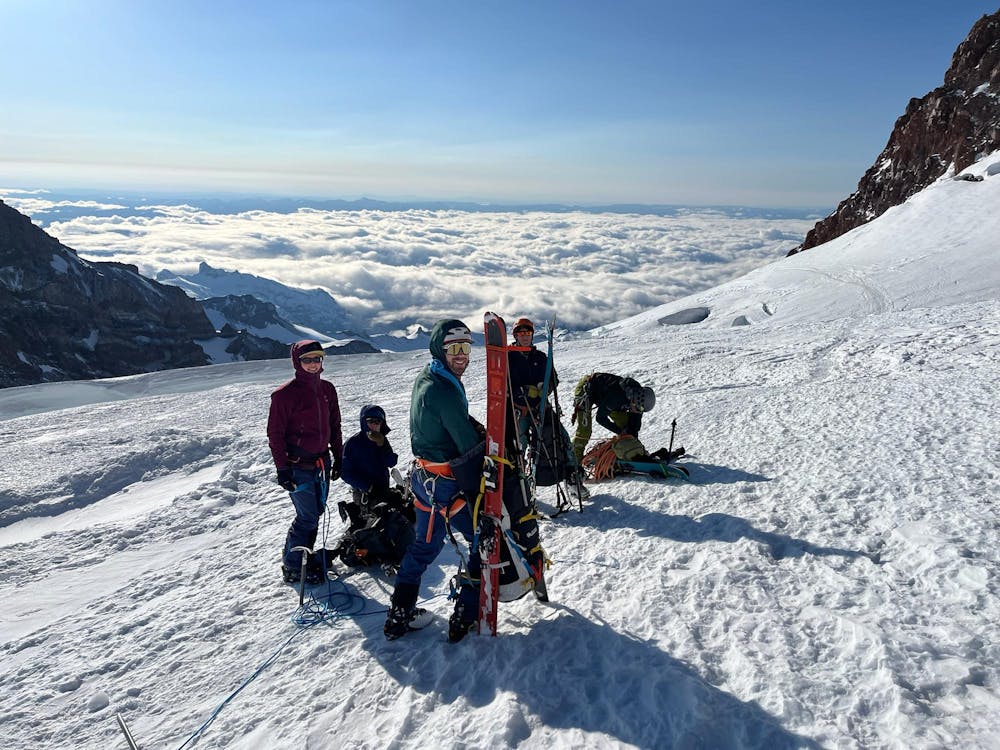
From May 20–21, I and five others were able to summit and partially ski down Mount Rainier, taking in beautiful views of the deep blue, snow-covered Cascade mountains below us and the vibrant blue glaciers surrounding us.
Our expectations of an epic adventure were definitely met, but our picture-perfect plans were humbled as the trip went on. This trip tested all of our mental and physical willpower, as we had to manage risk vs reward and life vs death decisions.
I went with my friend Ben Malouf, his parents Jake and Amy, his sister Jess and her boyfriend Cole Jones, a mountain guide on Rainier.
We headed out with skis on our feet towards Camp Muir at around 1 p.m. on May 20, stoked to be able to do this. The visibility was low, and for the majority of the way up to Camp Muir, we couldn’t see much. At around 9,000 feet elevation, the saddle of Camp Muir came into vision.
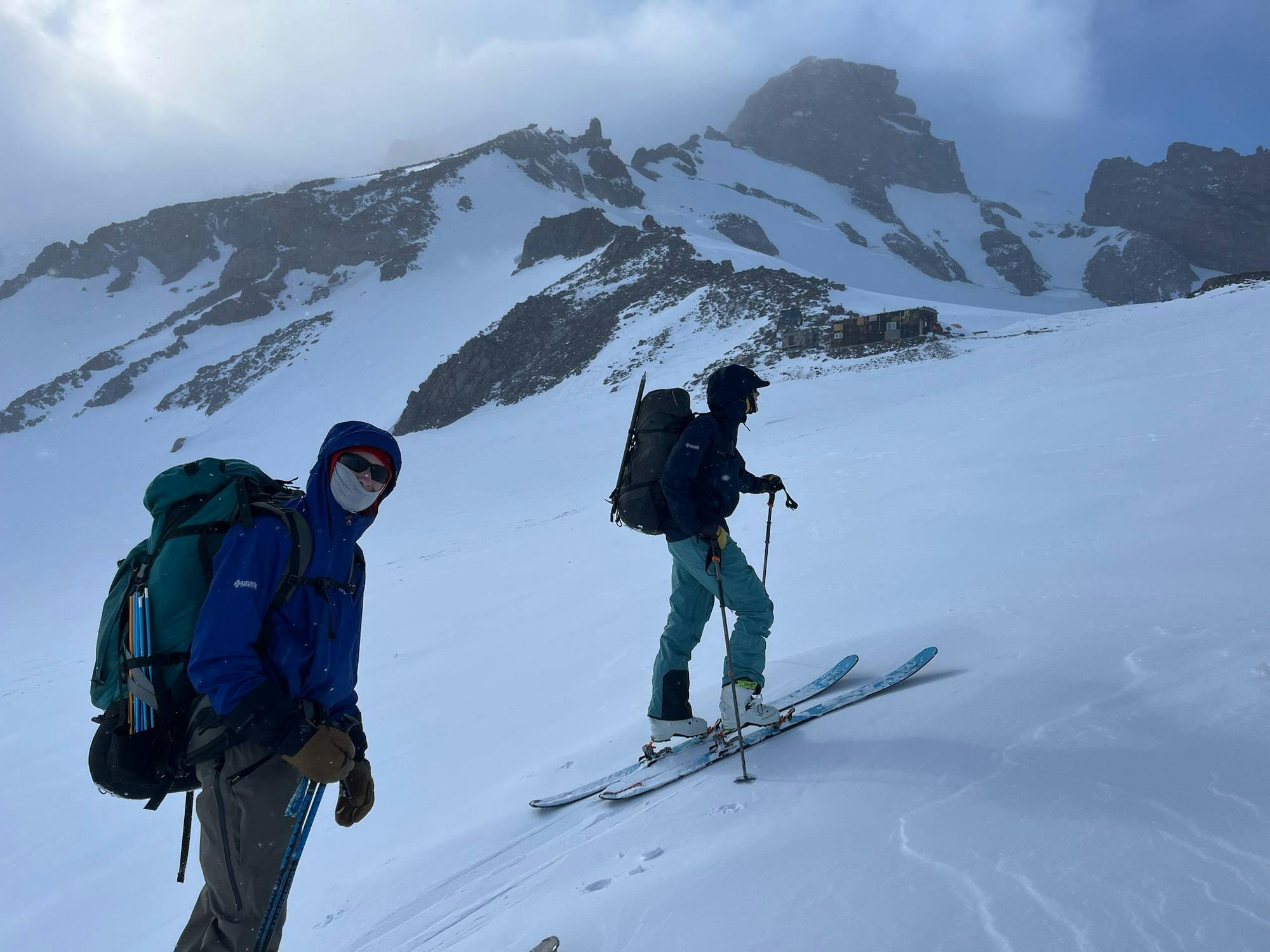
When we arrived, we had the public hut at Camp Muir to ourselves for the night. The hut had two long wooden sleeping platforms, a metal counter for cooking, and cubbies for clothes. The outside of the hut is made of stone, like something from the medieval times.
We took off all of our wet clothes and changed into dry, comfy clothing. Until this point, the day had been running smoothly.
Unfortunately, the whisperlite stove we brought was malfunctioning. We got it working enough to make warm, dehydrated food for dinner. The stove leaked and caught fire inside the hut as we were paying attention to rope training scenarios. Luckily Cole, with his guide experience, quickly put the fire out, but our stove was no longer functional.
This meant we wouldn’t have much water for the rest of the trip, but we decided to go as far as we could, and if we had to turn around, we would.
After very little sleep, we woke up to a beautiful sunrise over the saddle and headed up with crampons on and skis attached to our backpacks. We decided to take the Disappointment Cleaver/ Ingraham Glacier route, which is the most popular route for summiting.
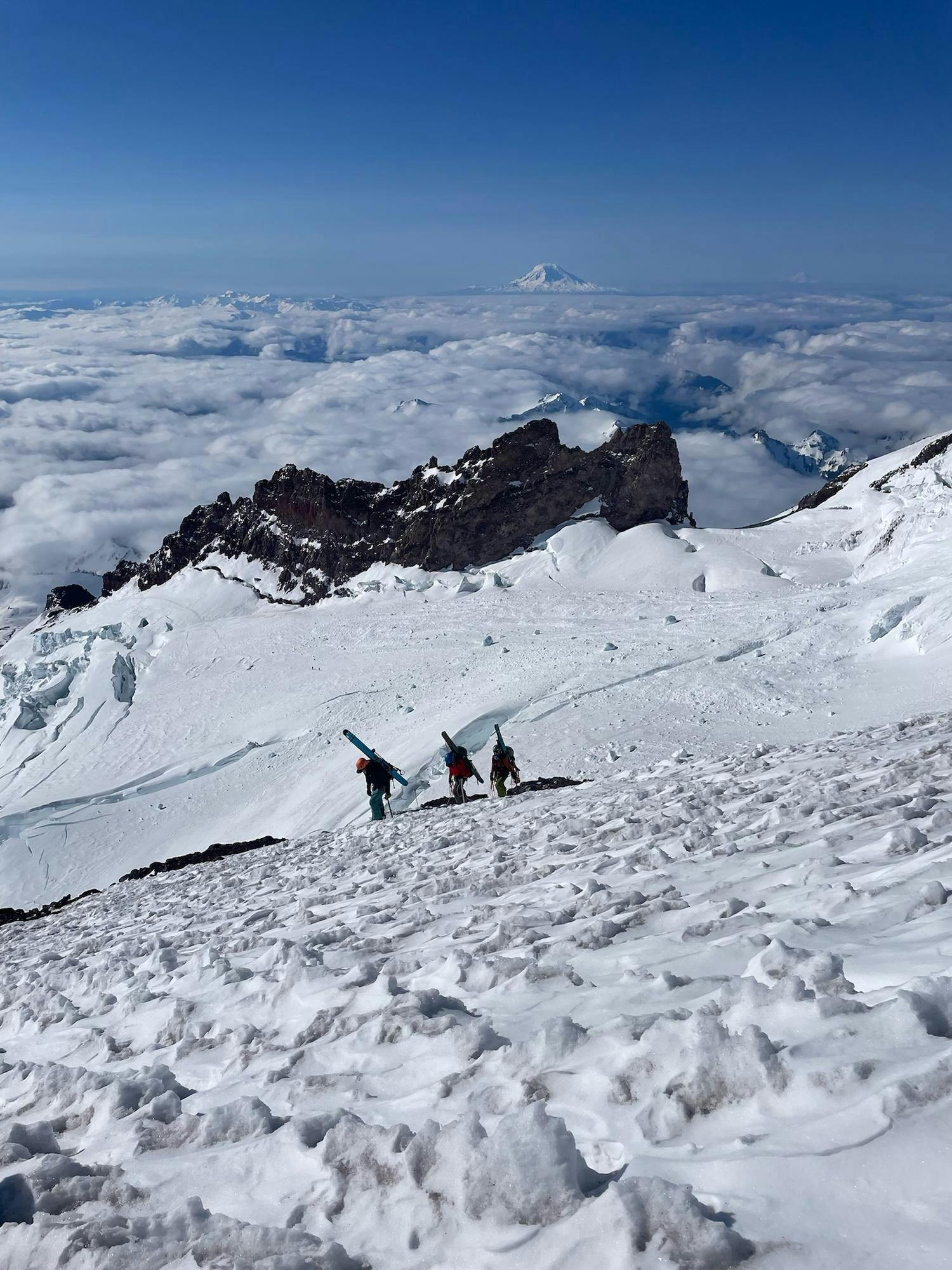
“We were navigating heavily glaciated, steep terrain at altitudes that made you feel unsteady on your feet to say the least,” Amy Malouf, Ben’s mother, said. “While the sweeping views and grand crevasses were beautiful and harshly unforgiving at the same time, high mountain adventures are an exercise in extremes on all fronts.”
The conditions were nice and clear all the way until the summit at 14,410 feet. We were feeling the altitude and thin air. At around 12,000 feet, I started to feel nauseous from the altitude and puked, which made me feel a lot better. We made the push to the windy summit around 2 p.m.
At the summit, we took a nice break to take in our accomplishment before preparing for the intense ski down.
“This is actually some insane skiing,” Jake said as we were skiing down. “It’s total boiler-plate, sastrugi, wind-slab, wind-lips, and we are heading into Ingraham Direct, which just had a massive serac fall. We are being careful.”
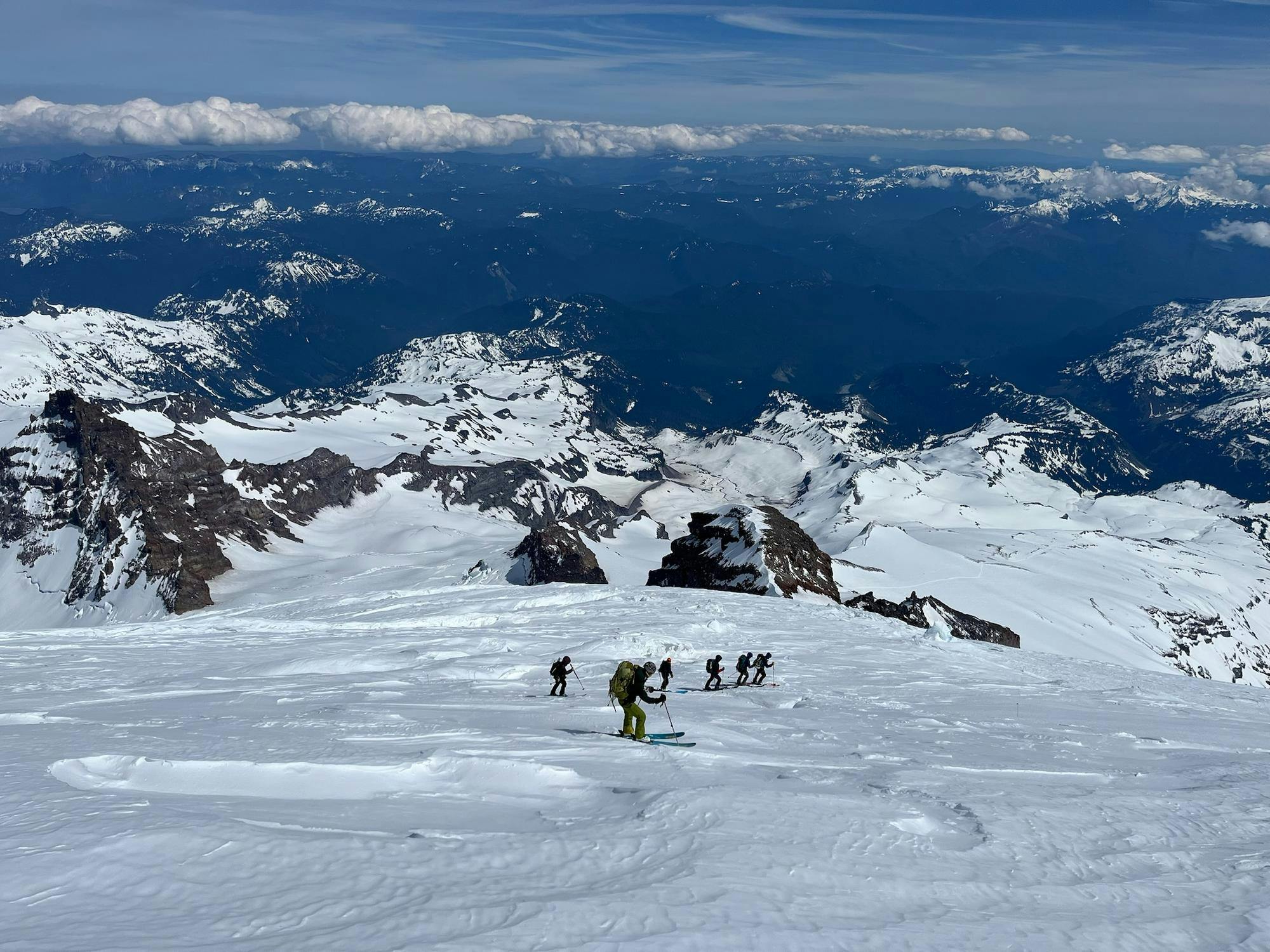
The skiing conditions weren’t ideal, and a fall could’ve led to serious trouble, such as not being able to stop in steep, wind-slab snow. At one point, a member of our group fell. They were ok, but it was a big reality check. We had to take every turn to heart, as one mistake would lead to unwanted problems.
By the time we made it down to Disappointment Cleaver, we were all shaken up and needed to catch our breath. We were no longer able to ski due to a serac fall, where blocks of ice detached from the main glacier. Our group was low on energy, but without a stove for water or food, we had to make it down that night.
“I expected time to pass by slower, but whenever I checked the time it was later than I thought,” Ben said. “Time feels different on a mountain, the normal rhythms of a day don't matter, all that matters is you do what needs to be done to stay safe and successful.”
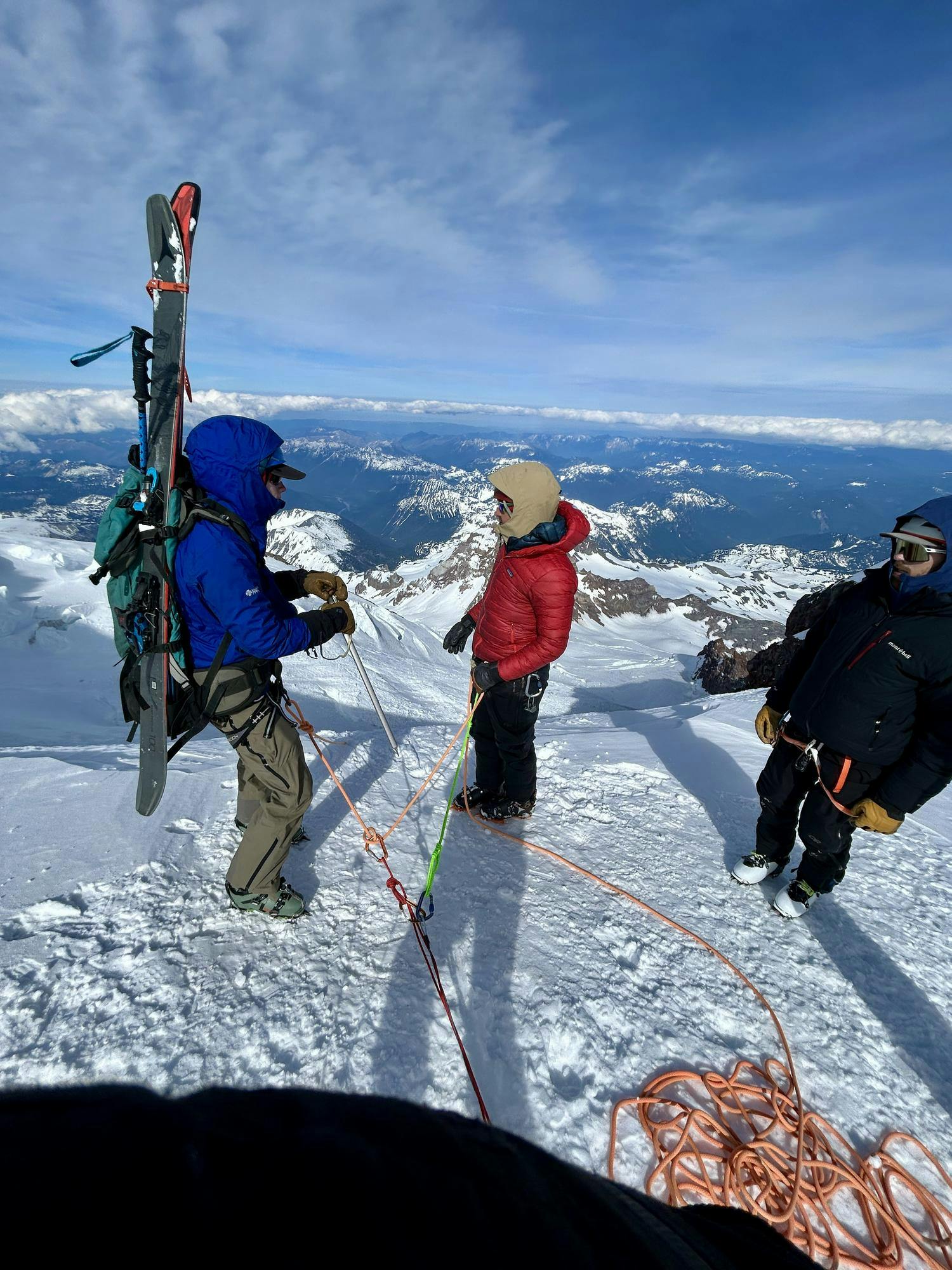
We repelled down with ropes and pickets through the serac fall and made it into Camp Muir at around 7:30 p.m. It was getting dark, and we had to quietly collect the gear we had stored at Camp Muir as people were sleeping.
“Walking around deep crevasses and bus-sized chunks of ice that had fallen down days prior really made me appreciate how beautifully dangerous mountains can be,” Ben said.
Legs heavy and minds weary, we were finally able to ski again, this time in the dark. We took a few tumbles skiing on the way down but finally made it into the parking lot at around 9:30 p.m. I raced pretty slowly towards the water filling station, finally able to quench my thirst after not having much water all day.
A sense of relief came as we finally got settled at the inn. We took nice, relaxing showers and enjoyed lots of Swedish Fish and snacks while processing what had just happened.
“It was difficult to watch team members suffer, understanding that all chose to do this (supposedly for fun),” Jake said. “The ultimate highlight was all of us making it back to the trailhead all with no injuries. High fives at the top were nice too.”
Each of us experienced different highs and lows throughout the trip, with a lot learned and experience gained.
“This trip was quite unlike how I’d imagined, and made me reflect on how I want to continue to recreate in similar environments with so many people I love,” Jess said. “Our lives and experiences are so precious, especially with those that you love. Climbing is and always has been such a good reminder of that.”
Climbing Mount Rainier can be a lot of work mentally and physically, but it is doable with the right training, mindset and safety precautions.
According to the National Park Service, 9,530 people attempted to climb Mount Rainier in 2022 and approximately half reached the summit.
One of the biggest takeaways I learned from this trip is to be more adaptive and flexible in situations that aren’t necessarily predictable.
There are resources to get into climbing mountains like Rainier. For this trip, I rented all of my gear through the Outdoor Center. Bellingham has a great community and resources to make the mountains fun and safe.
Brady Rufner (he/him) is a sports and recreation reporter for The Front. He is in his first year at Western and is majoring in visual journalism. When he isn’t covering stories or taking photos, he is usually running, skiing, or playing soccer. You can reach him at bradyrufner.thefront@gmail.com.


