
The Gamwell Home
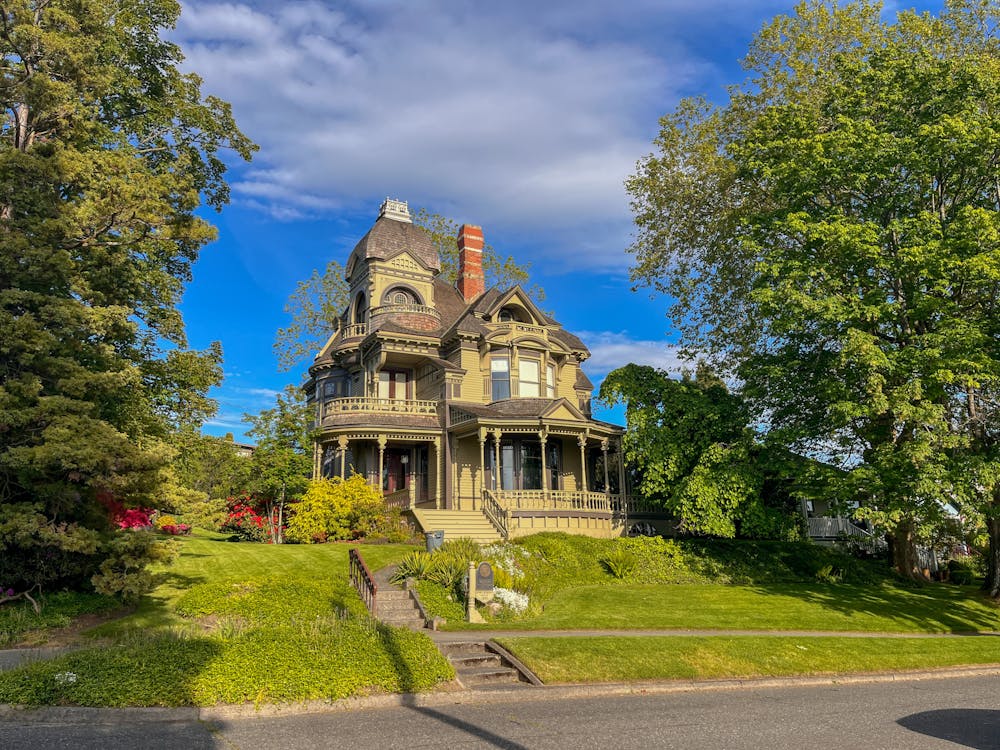
When Ken Culver first laid eyes on the historic Gamwell home, all he could think was, “God almighty, what is that?”
The home, built in 1890, is a hulking mass of intricate craftsmanship sitting on the corner of 16th Street and Douglas Avenue in Fairhaven.
When he knocked on the house’s door that day, Ken was greeted by a familiar face: his childhood Sunday school teacher, Marie Vosti – almost like it was meant to be.
After waiting two years for Vosti to be ready to sell, Ken said, he and his wife Marcia scrounged up the money.
“And next thing we knew, we owned the house,” Ken said.
The Culvers have lived in the home ever since, marking 53 years of dedication to the revival of the Victorian behemoth.
“We started working,” Ken said, “and we’ve been working ever since.”
Ken went to the library to learn about Victorian craftsmanship as they didn’t have the money to hire crews to work on the home.
When it comes to renovations and repairs, Marcia said, “We always try to be very respectful of the house.” Many aspects of the home are original, including some furniture pieces.
Despite the original owner, Roland Gamwell, dying in the home, the Culvers said they haven’t experienced anything paranormal.
“I was so concerned the first night we stayed here,” Marcia said. But there has been no
sign of a ghost. “I’m a little disappointed actually,” she said.
According to Kolby Labree, historic tour guide and researcher for The Good Time Girls, you don’t often hear about haunted mini-malls or McMansions.
“Places that appear old or weathered or abandoned seem to conjure up our curiosity about ‘what happened here’ that can really stir the imagination,” Labree said.
Despite its quirks, the Culvers are grateful that Vosti opened the door all those years ago.
“It’s a privilege to live here,” Marcia said.
While the rest of the city grows around it, the Gamwell home stays firmly rooted in history, serving as a monument for the birth of Fairhaven.
The Church House
Patrick Wickline first spotted the church as he was walking up the hill on Mill avenue with a friend.
According to Wickline, he told his friend that he’d like to live there. As they approached the church, they saw a ‘For Sale’ sign in the yard — almost like it was meant to be.
“I could feel this building just asking me to save it,” Wickline said.
According to Wickline, restoring the home to what it looked like in 1890 wouldn’t have been possible without Jeff Jewell, an archivist at the Whatcom Museum, who provided photos of the church when it was first built.
To help in the revival of the home, Wickline hired Alexei Ford, a local contractor, to collaborate on the project.
The church house is not on a historic registry, so Wickline had a bit more wiggle room when it came to transforming the church into a home.
The greatest challenge in resurrecting the old church was matching its entirely custom interior. One of those customizations was the redwood paneled ceiling that is original to the church and was floated up from California in 1890
Ford reused redwood paneling from the walls in the main room as backsplash in the kitchen and as trim in many of the other rooms of the house.
“That was Alexei’s wizardry," Wickline said. “There's no way I would have survived it without his creativity and resourcefulness, finding a way to get the effect within our limited budget.”
While the church did retain some vintage architecture, other aspects made the resurrection of the church house difficult.
One day during construction, the front lawn collapsed into the basement. The entire wall had to be rebuilt and set with new concrete. According to Wickline, it was a 36 hour scramble to save it which included holding up one side with a backhoe while steel supports were brought in.
When something bad would happen, something good would follow, according to Pat. Because of the lawn’s collapse, they now have light wells for the basement.
“We have light in the darkest corners now,” Wickline said.
After being ‘dechurched’ in the 60’s, it became a hub for partiers. Bands would stop by the church house for after parties — including the Jefferson Airplane, Joan Baez, Taj Mahal and Jimmy Buffet.
“The church wants to have people, it wants community,” said Sharon Streams, Wickline’s wife.
In Labree’s opinion, historic homes offer a sense of continuity in a world where things seem very impermanent and disconnected.
Despite its many lives, no ghosts seem to linger in the church, according to Wickline and Streams.
“We took it down to the studs, so all the ghosts left,” Streams said.
The Luci Pettibone Home
For Peter Roberts, living in a historic home was a childhood dream.
“All of my friend’s parents had these really big four square, three story historic houses,” Peter said. “When I was a kid, I said one day I was going to own one of those big old houses.”
Peter and his wife Pamela came to own the historic Luci Pettibone home, built in 1902. Peter is a real estate agent and was listing the home.
“It was a dump. There were a lot of problems,” Peter said.
Every room was wallpapered with at least nine layers of paper when the Roberts purchased it.
“Everything took so much longer than we thought,” Pamela said.
While doing research on his home, Peter learned that the Roberts’ wedding day was 100 years to the day from when the lot was originally platted, or divided into its official lot size.
He also learned their daughter was born exactly 50 years to the day from when Humphrey and Isabel Griggs bought the home. They named their daughter Isabel without knowing an Isabel had ever lived in the home — like it was meant to be.
The pair have done all the renovations on the home themselves, and according to Peter, it was all a labor of love.
“It’s an honor to buy one of these houses. We just feel so grateful,” Pam said.
Having been a realtor for almost 40 years, Peter’s expert advice to prospective historic home owners is this: it’s a lot of work.
But despite the work, the Roberts were more than happy to take it all on.
“We are caretakers,” Peter said, “We are shepherding this house through time. Everything we did to this house was to heal it.”
To learn more about the beauty and strife entangled in the stories of Bellingham’s historic homes, consider visiting the Whatcom Museum or taking a tour with LaBree and her team through Bellingham’s historic haunts.
Brenna Witchey (she/her) is a city life reporter for The Front this quarter. She is a third-year news/editorial pre-major and English minor. When she’s not working on a story, she likes practicing yoga, reading and going to the gym. You can reach her at brennawitchey.thefront@gmail.com.