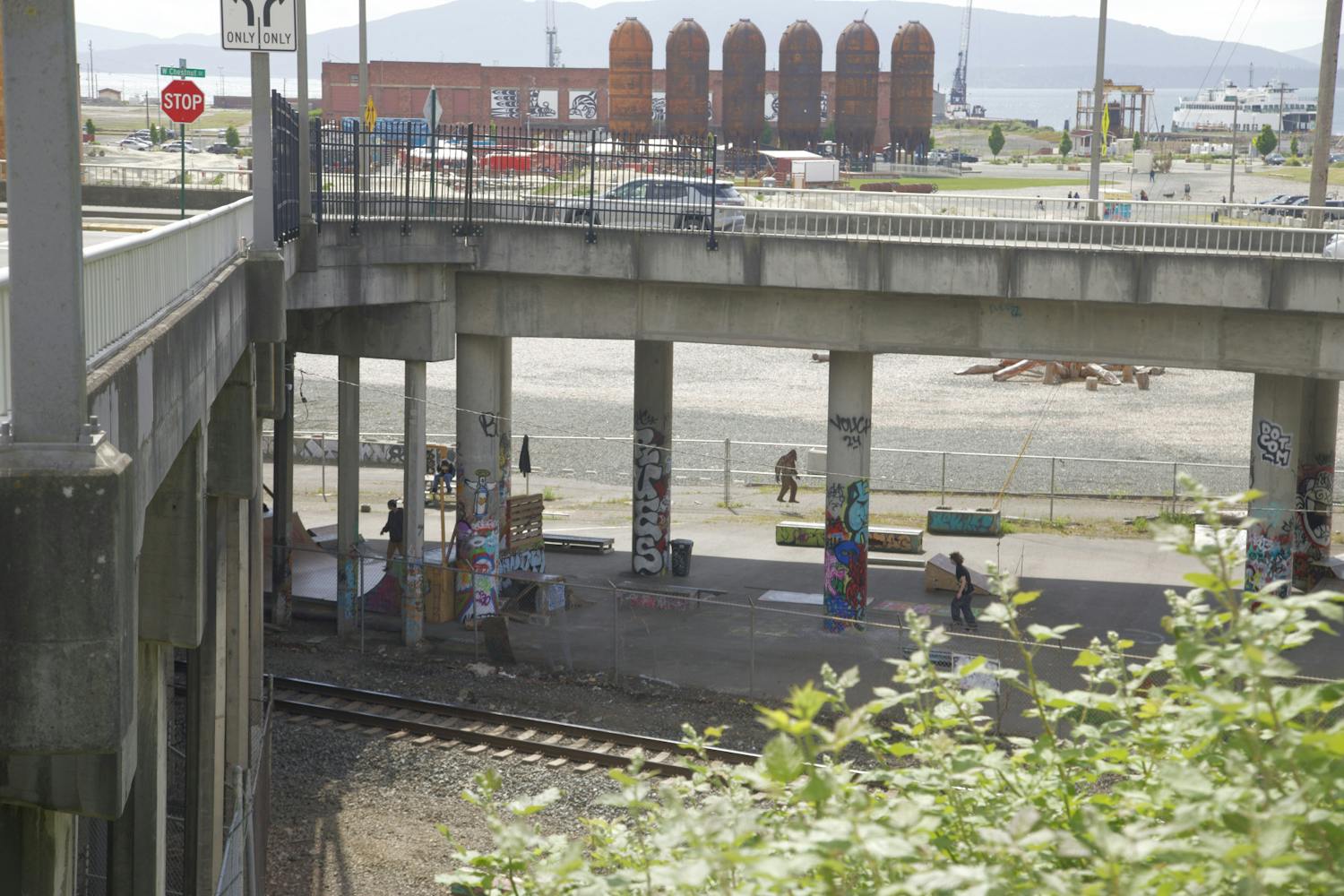
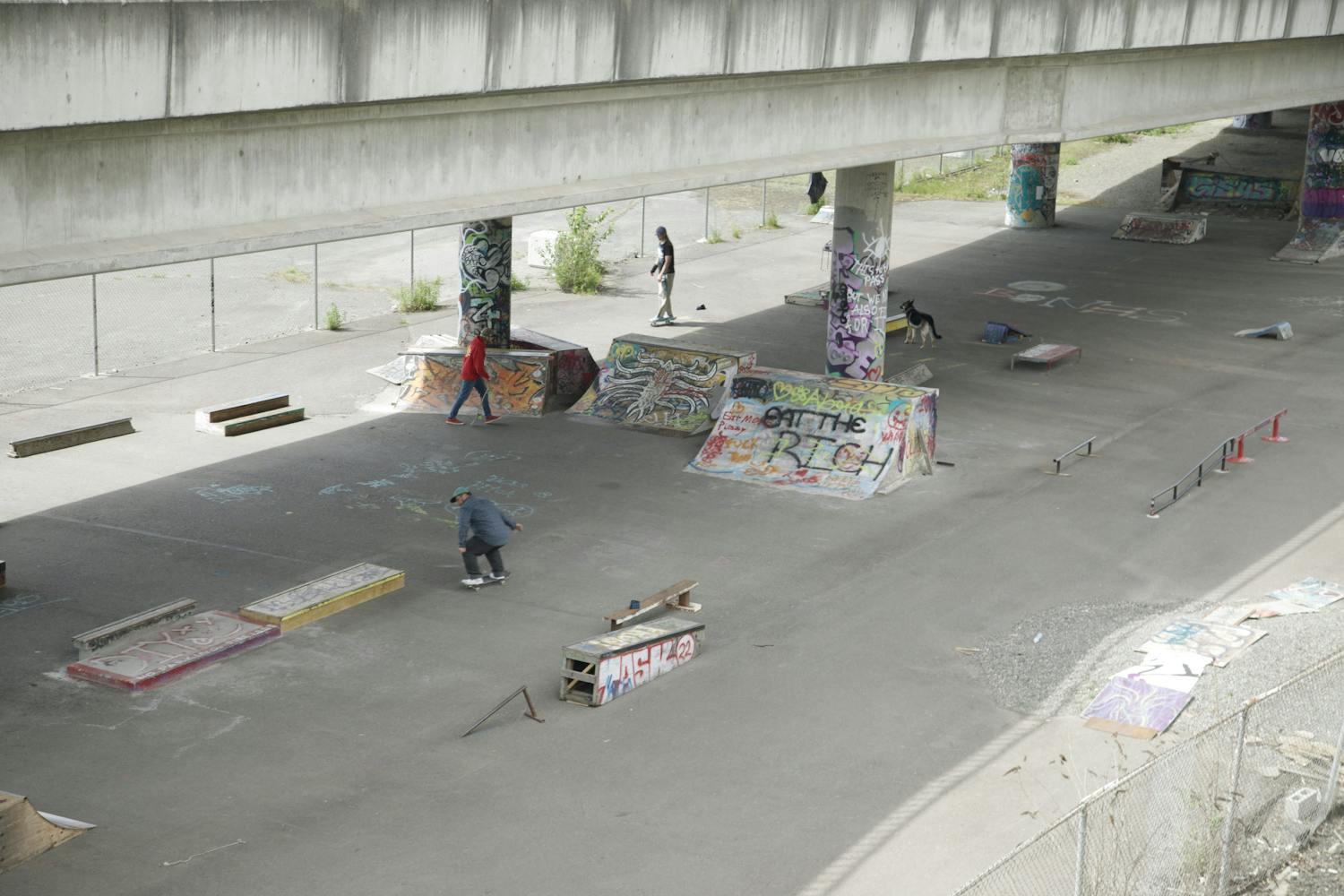
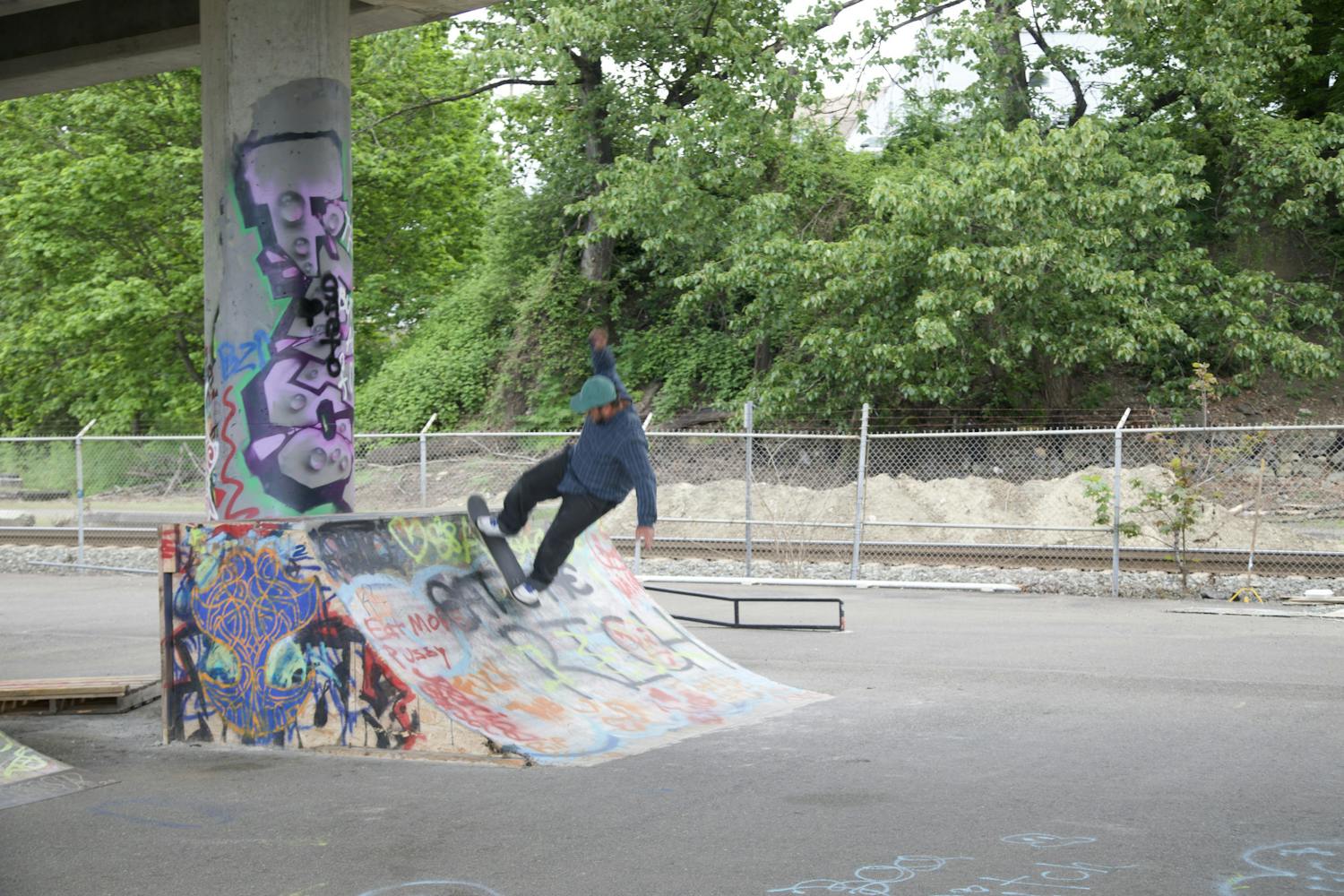
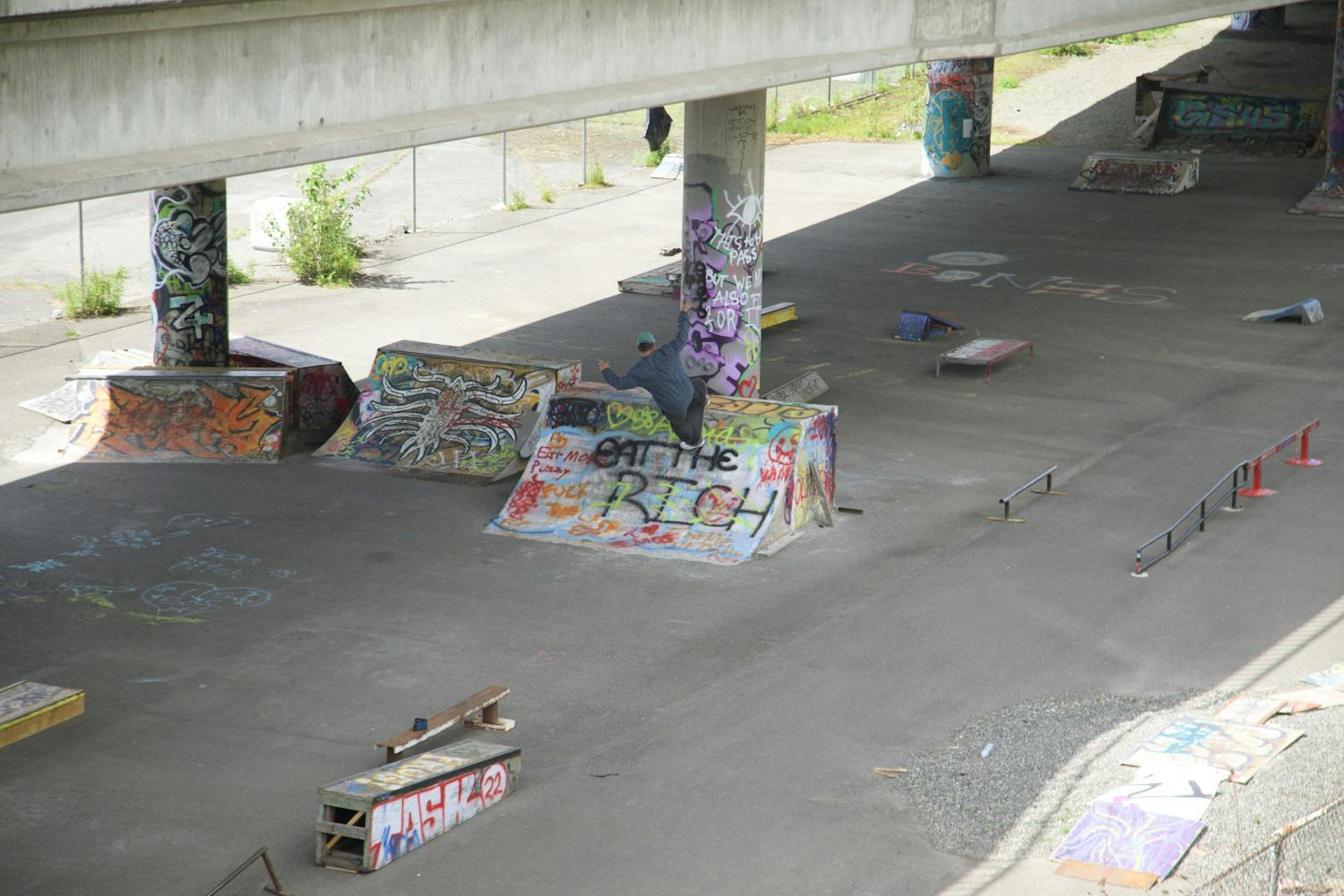
What was once a hidden gem for local skaters will be taking on a new life. The City of Bellingham, in cooperation with Northwest Skate Collective, is renovating the informal skate park under Roeder Avenue Bridge into an official city park.
The skate park began as a group of skateboarders seeking shelter from the ever-present Washington rain. Around 2021, those skateboarders decided to form Northwest Skate Collective, an organization dedicated to the prosperity of the skateboarding community in the Pacific Northwest.
The Collective began collaborating with the City of Bellingham in early 2024 to bring their dreams of a sheltered and accessible skate park to fruition, said Riley Grant, the communications and outreach manager for the City of Bellingham.
The City issued a memorandum on April 28, 2025 for its intent to purchase the land on which the skate park currently operates from the Port of Bellingham to begin development. Their goals for developing the skate park include increasing recreational opportunities within Bellingham and facilitating maintenance for Roeder Bridge and the park.
For Zac Garza, owner of Unknown Board Shop and life-long skateboarder, the project isn’t just for recreation — it’s a community and culture, wrapped into one.
“You become 100% present when you skate,” Garza said. “It makes you a stronger human when you're creating a problem that you have to solve.”
Garza hopes the park will become a haven for Bellingham’s youth to find a sense of community outside formal settings, like work and school.
“Kids just want to be seen,” Garza said. “If no one is checking in on them and they don’t feel like they’re a part of something, they fall out.”
One of the main goals of the renovations is to make the park accessible to skaters of all abilities. The City is working with Grindline Skateparks, a Seattle-based skatepark design company, to create conceptual designs for the park, and the Skate Collective is polling the community for feedback on what they want included.
“There's another skate park in town that had no input from actual skaters,” said Collin Whalen, the project manager for Northwest Skate Collective. “So it’s not accessible to people from different skill levels.”
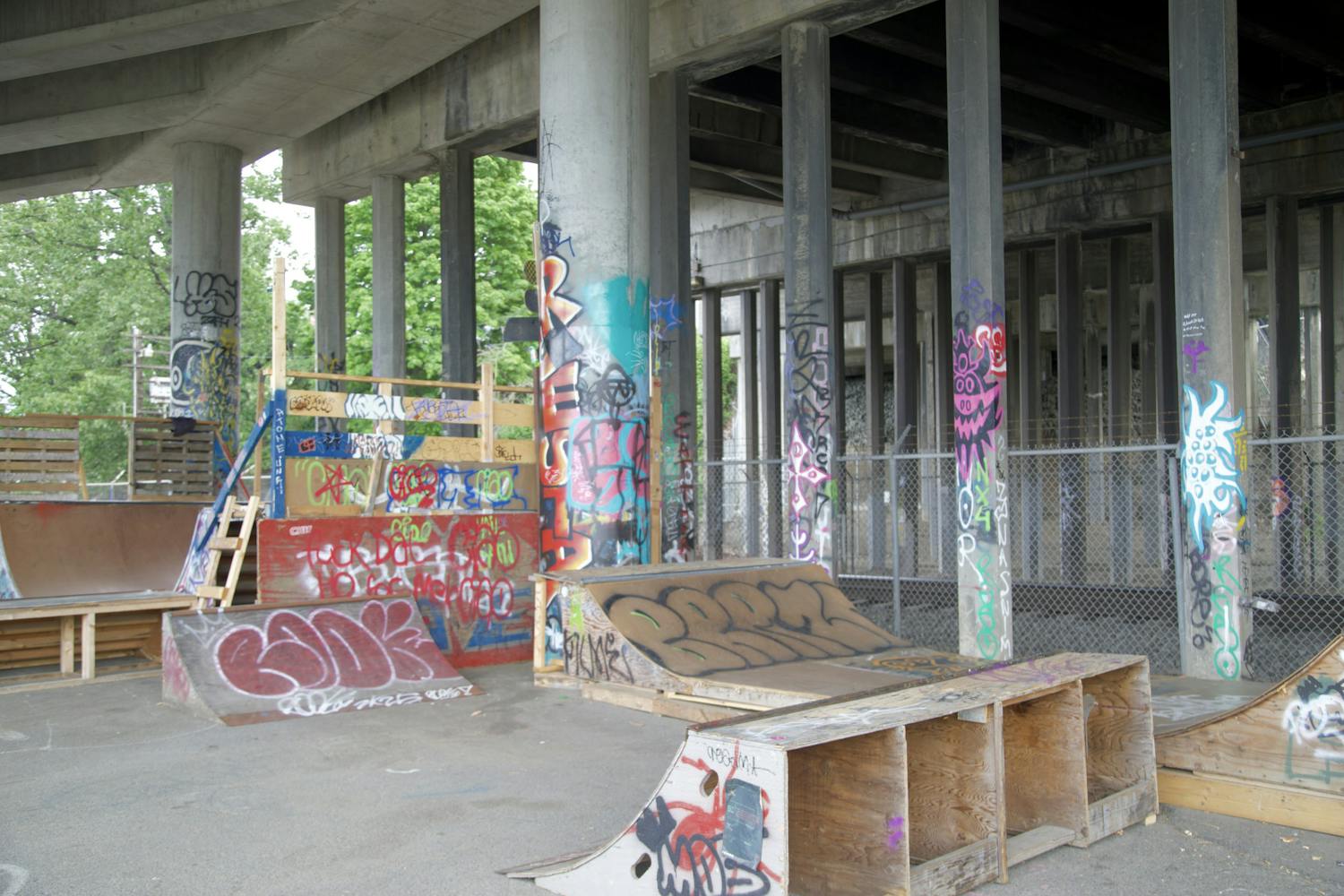
Skaters have set up trash bags and recycling cans along the chain link fences to keep the park clean, but graffiti covers almost every inch of the DIY wooden ramps. Garza and Whalen both said they hope to see the park graffiti-free to make it more welcoming to families with young children.
The homemade ramps also pose safety concerns. A benefit of the City taking ownership of the park is the reduced liability on skaters. The Skate Collective couldn’t cover insurance costs to own the park, and City funding allows professional designers and contractors to assist with the construction.
“Getting the City involved allows professionals to come in and build it to national skate park standards,” Whalen said.
The City and the Skate Collective have agreed to split costs for the project. The City will contribute up to $1.5 million, with a total budget cap of $3 million, Grant said. The Skate Collective will be hosting events and collecting donations for the remaining costs, including a block party on June 21, International Skateboarding Day.
Both groups hope to have the park’s new design completed by early 2026, with construction dates depending on funding.
“Some people will say, ‘Oh, skateboarding’s dead, it’s just a scene,’” Garza said. “It’s not. This will bring people together.”
Tori Lehman (she/her) is a city news reporter for The Front this quarter. Tori is in her third year at Western majoring in environmental journalism and minoring in women, gender, and sexuality studies. She enjoys immersing herself in nature and reading essays from authors like Joan Didion and Rayne Fisher-Quann in her spare time. You can reach her at torilehman.thefront@gmail.com.