
A community collaboration unfolded on Saturday, April 26, as volunteers gathered at Maple Creek Reach for an Earth Day celebration and work party to restore vital riparian habitat.
Co-hosted by the Nooksack Salmon Enhancement Association (NSEA), Whatcom Land Trust, the Nooksack Indian Tribe and the Whatcom Conservation District, more than 100 volunteers united to make a difference in the battle against invasive species and the restoration of native habitats essential to salmon and other wildlife.
"This is a very powerful day — people here today are getting the work done, but it’s also about raising community awareness," said Bryan Hennessy, a frequent volunteer and contributor to Whatcom Land Trust. "It’s about making people aware of the critical environmental work happening right here in our community."
The focus of the event’s efforts was the removal of Scotch broom, an invasive plant known for its aggressive spread and detrimental effect on native vegetation.
"Scotch broom is incredibly invasive and prolific," explained Talulla Amsbry, an intern with NSEA. "When it blooms, it produces tons of seeds, and those seeds can remain viable for up to 30 years."
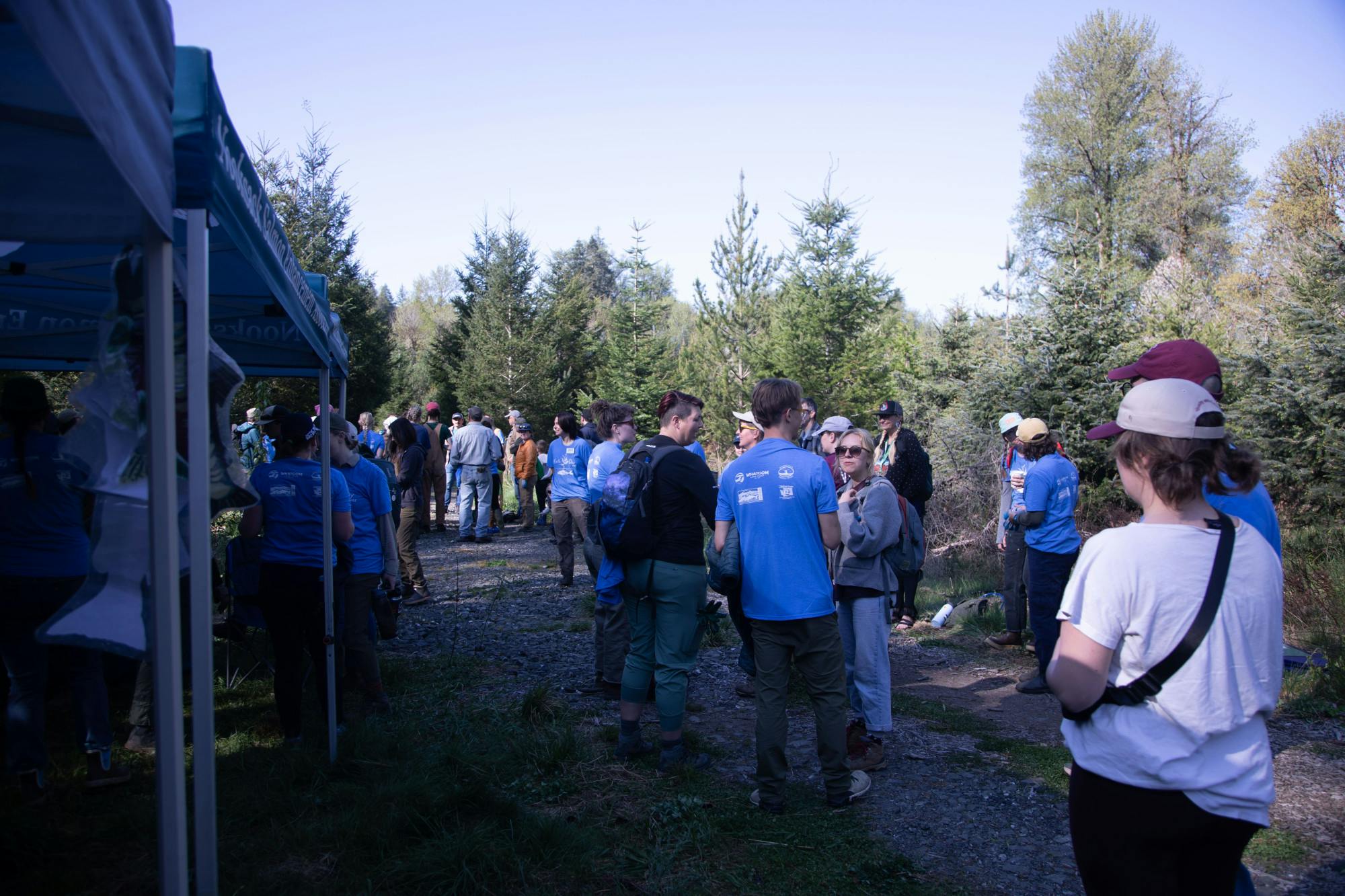
Volunteers gather at the entrance of Maple Creek Reach on Saturday, April 26, in Maple Falls, Wash. Nooksack Salmon Enhancement Association and Whatcom Land Trust hosted an Earth Day event in efforts to remove the invasive Scotch broom. // Photo by Liam Walsh
Volunteers worked tirelessly to clear the land, making space for native trees and shrubs that will eventually create a healthier, more resilient riparian environment.
Theodore Wing, 15, attended with his mother, Aimee Benton-Wing, drawn by the natural beauty and the sense of community the outing offered.
“We need to take better care of [the Earth]. Industrializing everything has just become the mindset,” Benton-Wing said. “We were just talking about how people don’t go out and hike anymore.”
Theodore agreed.
“I think we should have more people in general doing this kind of thing,” Theodore said.
Rachel Vasak, executive director of Whatcom Land Trust, highlighted the importance of such restoration efforts.
"By inviting community members to come out and remove invasive species like Scotch broom, we’re helping to restore the environment and provide resiliency and sustenance for the future," Vasak said.
Vasak stressed the community’s ongoing commitment required to maintain these efforts, explaining restoration is a long-term process involving consistent care and follow-up.
"Restoration is not something that happens in a day. It’s a perpetual effort, and we need the community’s continued support to make it successful," Vasak said.
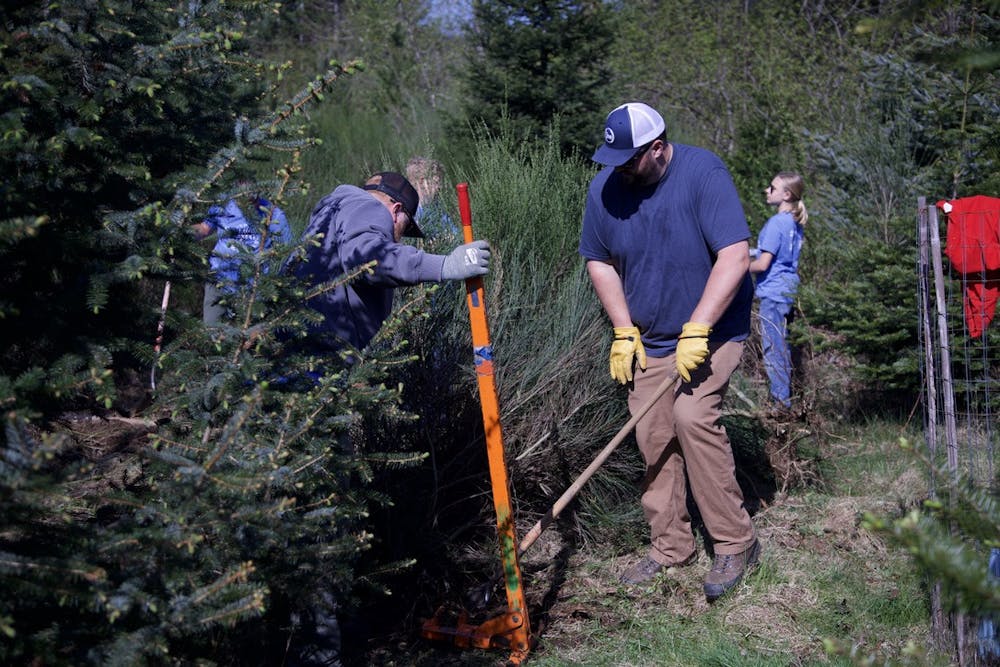
Volunteers use weed wrenches to uproot invasive Scotch broom on Saturday, April 26, in Maple Falls, Wash. Nooksack Salmon Enhancement Association and Whatcom Land Trust hosted an Earth Day event at Maple Creek Reach in efforts to remove the invasive plant and help protect salmon habitat. // Photo by Liam Walsh
Bella Rossi, an environmental studies major at Western Washington University, said she “came for the Earth.”
“I’m here to do my part and tend back to the land,” Rossi said. “It brings me hope seeing such a large number of people doing this work. When we come together and have fun, it seems more approachable to protect the land we love.”
The event reflected the deep ties local Indigenous communities, such as the Nooksack and Lummi nations, have to the land.
"As the original stewards of the land, we care deeply about the environment and salmon health," said Anna Brewer, vice chair of the Nooksack Tribe.
In a speech, Trevor Delgado, tribal historic preservation officer of the Nooksack Tribe, emphasized the importance of cultural stewardship and bridging gaps between communities.
"Together with these partnerships, we’re protecting these resources, not only for the tribes but for the entire community," Delgado said. "The work we’re doing now is for the generations that come after us."
This collaborative approach to land stewardship, Tristan Simons, a riparian habitat restoration specialist with the Whatcom Conservation District, echoed.
"The goal is to establish tree shade, as temperature is the primary factor that’s really keeping salmon from thriving in our county," Simons said. "A lot of it hinges on managing Scotch broom and other invasive plants that outcompete our native plants."
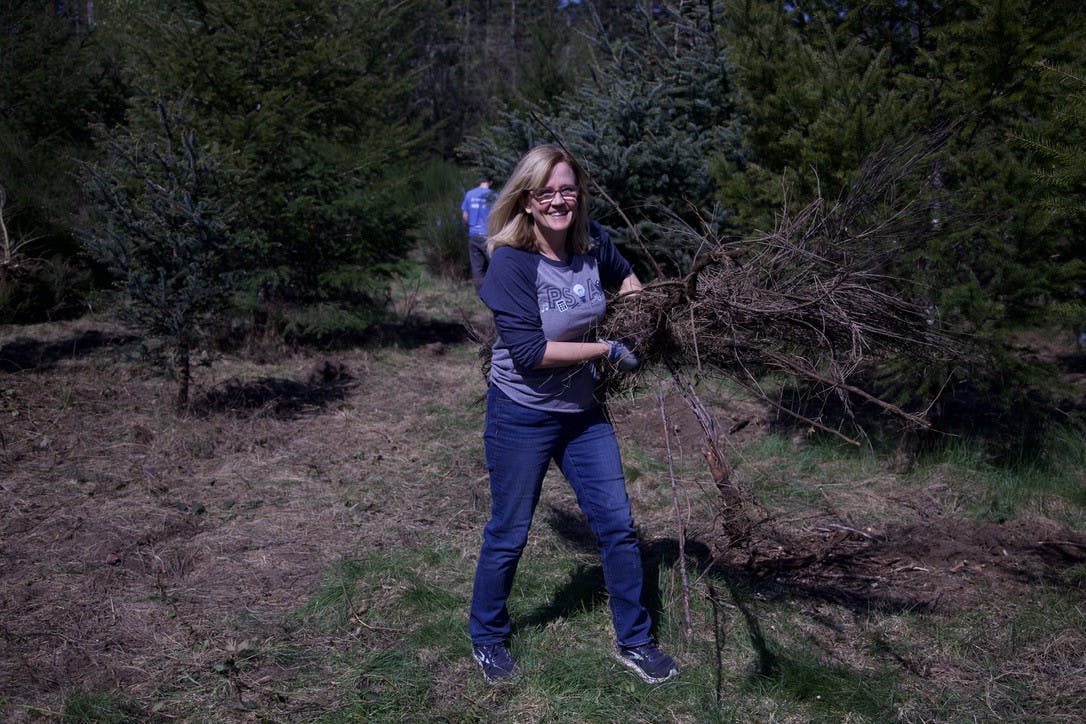
A volunteer smiles as she holds a large invasive Scotch broom at Maple Creek Reach on Saturday, April 26, in Maple Falls, Wash. This was a part of an event hosted by Nooksack Salmon Enhancement Association and Whatcom Land Trust for Earth Day in an effort to remove the invasive plant and help protect salmon habitat. // Photo by Liam Walsh
The event’s success was marked by its volunteer turnout, with more than 100 people registered to participate. Abe Lloyd, a senior instructor at Western, reflected on the significance of such community events.
"It’s amazing to be part of such a big group doing restoration work and to see the tangible change we’re making," Lloyd said.
Lloyd led a group of 25 new “stewards” as part of the Washington Native Plant Society Stewardship Program. Among them was Rachel Clark, who shared her unique reason for attending.
“I’m Tlingit Alaska Native, and I’ve really started to be more aware of what that means to me,” Clark said. “I need to be closer to the land. I have an 8-year-old; she needs to see her mama out doing restoration work, so that she can [one day] get involved as well.”
For many, like Hennessy, volunteering is not just about the physical work; it’s about connecting with the land and making a difference.
"Volunteering every Saturday morning has been the highlight of my week for years. Just getting my hands dirty in the rain — it’s amazing. It gives you the sense that you’re contributing something real," Hennessy said.
The work done today is part of a broader, ongoing effort to restore Maple Creek’s riparian areas, which are crucial for the survival of all five species of salmon: the chinook, coho, pink, chum and sockeye that spawn in the North Fork.
Work from local organizations is helping to improve water quality, create shade for cool, salmon-friendly waters and ensure a healthier environment for generations to come.
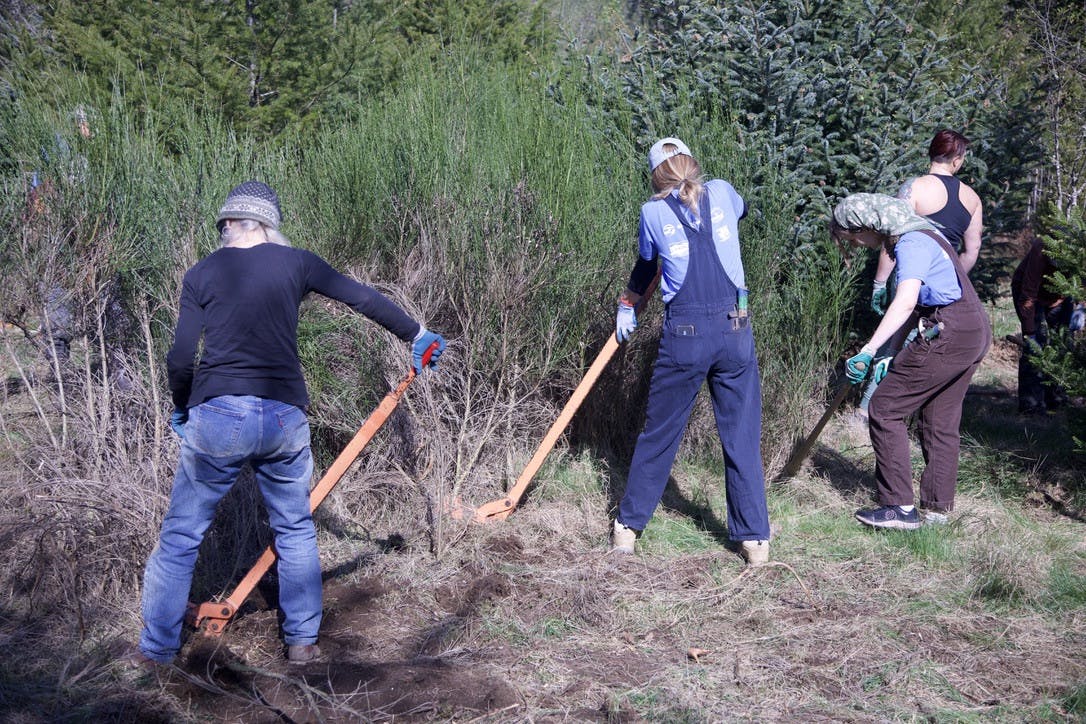
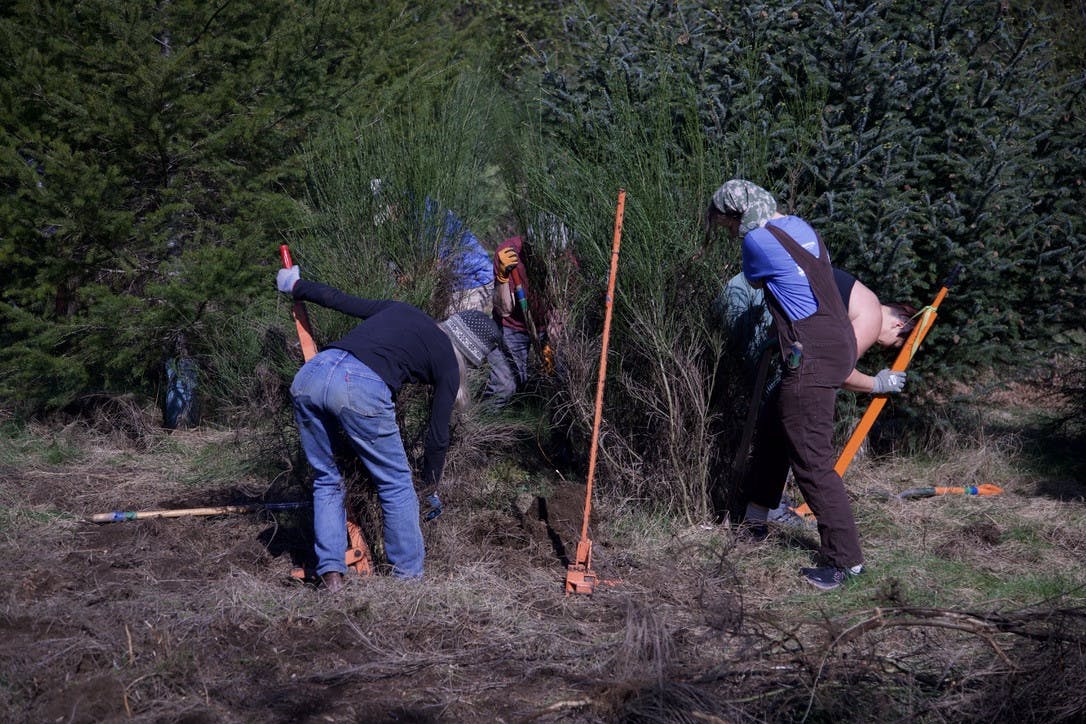
Volunteers use weed wrenches and shovels to remove invasive Scotch broom on Saturday, April 26, in Maple Falls, Wash. Volunteers showed up at Maple Creek Reach for an Earth Day event, hosted by Nooksack Salmon Enhancement Association and Whatcom Land Trust, to help protect salmon habitat. // Photo by Liam Walsh
As the volunteers worked side by side, from students to seasoned community members, the sense of collective action was palpable.
"This is one of those days that reminds me why the work we do matters," said Emily Segura Maze, communications manager for Whatcom Land Trust, who is also filming a documentary about the event. "It’s about showing that we can’t do this alone, and it’s going to take all of us to make a real difference."
As the day came to a close, volunteers left behind a transformed landscape and a renewed sense of connection to the land.
Bob Frank, Delgado’s uncle and Lummi Nation elder, closed out the day with a heartfelt speech.
“If you see somebody ripping a [native] plant out of the ground, stop them and ask them why they’re doing that,” Frank said. "We have to leave the place as we find it, so our children, our grandchildren, can enjoy it down the line."
Saturday’s Earth Day event is just one chapter in an ongoing story of environmental stewardship in Whatcom County. As the volunteers packed up their tools and headed home, they did so knowing they had made a lasting impact — one rooted in community, collaboration and a shared commitment to the land.
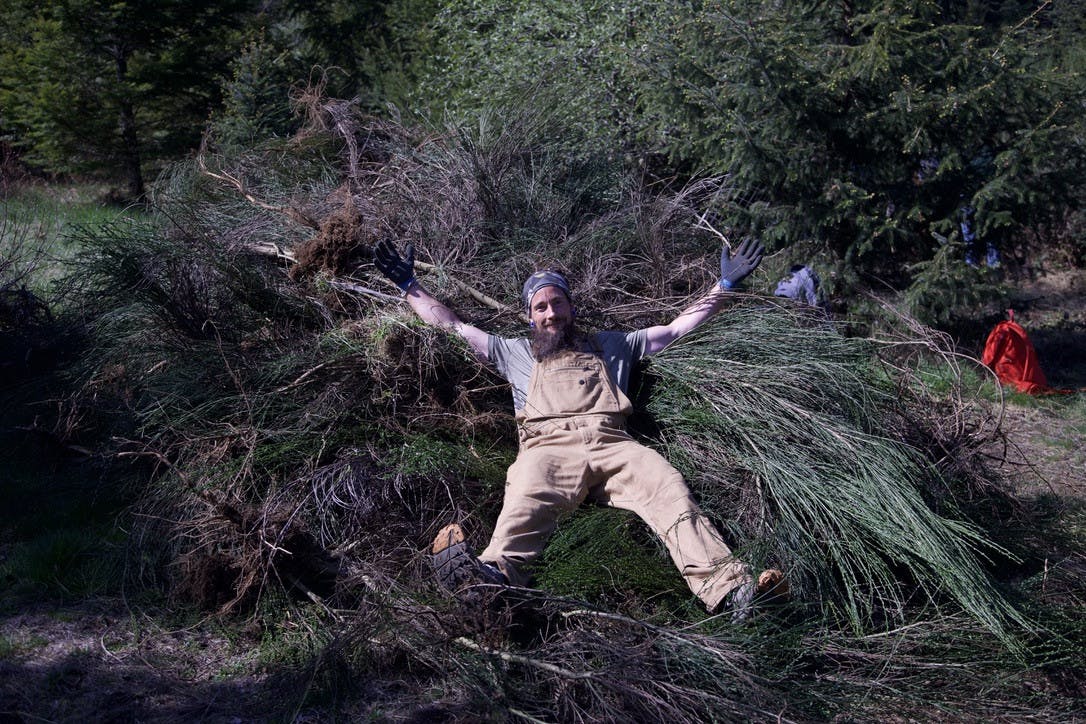
Nick Swisher, a volunteer, lies down on a mound of invasive Scotch broom that was piled up by volunteers at Maple Creek Reach on Saturday, April 26, in Maple Falls, Wash. Nooksack Salmon Enhancement Association and Whatcom Land Trust hosted an Earth Day event in an effort to remove the invasive plant and help protect salmon habitat. // Photo by Liam Walsh
Josh Maritz (he/him) is a city news reporter for The Front this quarter. He is a third-year environmental journalism student at Western with a minor in economics. In his free time, he enjoys going for long trail runs and listening to '90s grunge. You can reach him at joshmaritz.thefront@gmail.com.
Oliver Mortell (he/him) is a member of the city news beat team and is currently in his first quarter with The Front. He is a third-year public relations major with a passion for storytelling and community engagement. Outside the newsroom, Oliver enjoys reading, cooking, creating digital art, and exploring new places on foot. He can be reached at olivermortell.thefront@gmail.com.