
Housing affordability has been a hotly debated topic among Bellingham residents for years. According to a 2025 study by Construction Coverage, Bellingham had the fourth highest home price-to-income ratio out of 375 observed areas, making it one of the least affordable cities in the nation. One way the city planned to solve the issue is through investing in affordable housing as detailed in 2025’s Bellingham Comprehensive Plan.
The Bellingham and Whatcom County Housing Authorities, a government agency that provides affordable housing for city and county residents, is one of many organizations in the city taking strides to address the housing crisis.
Andrew Calkins, executive director of the BWCHA, said the organization was on the lookout for new strategies to provide more affordable housing resources for the community.
Q: What does affordable housing mean to the BWCHA?
Calkins: Our whole mission at the Housing Authority is finding ways to bring outside resources to create more affordable housing opportunities throughout the region. Our programs are trying to ensure that folks pay about 30% of their income each month on rent and utilities.
The Housing Choice Voucher Program is our largest subsidy program, serving around 2,000 households. A household can take their voucher to rent any unit around Whatcom County, provided it meets minimum inspection standards and has a reasonable rent.
With Public Housing, the subsidy is tied to a specific unit at a housing authority-owned building. If you're in both those programs, your rent will get adjusted so that you keep paying about 30% of your income. These programs mostly serve seniors, people with disabilities with fixed incomes and folks working in low-wage industries.
For housing developed by the Low-Income Housing Tax Credit (LIHTC) program, people pay a set rent amount every month. It's generally lower than the private rental market. People qualify based on their income, but they may pay a little more or less on their rent.
Q: How big is your waitlist?
Calkins: There is very high demand for Housing Choice Vouchers in our region. The last time we opened our waiting list in July 2024, 965 households applied over a five-day period. We randomly selected 600 to be placed on the waitlist.
Q: How has the BWCHA responded to the housing crisis?
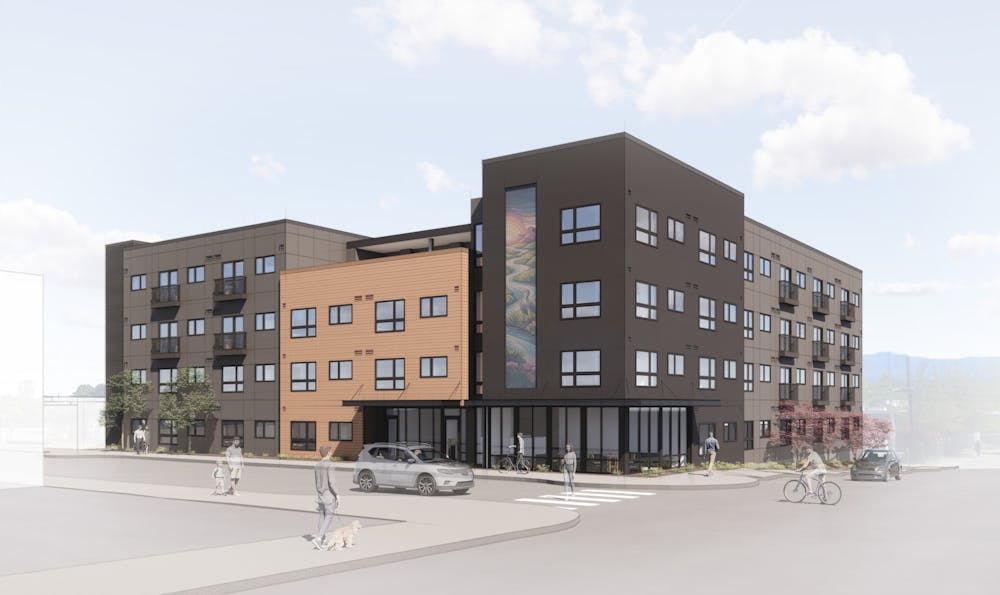
Calkins: Some of our goals include finding opportunities for us to acquire buildings, as seen with Samish Commons and the Unity Street Redevelopment project. We’re also trying to let the community know there’s a massive need for affordable housing resources. Our partnerships with other organizations make sure our programs support people who are experiencing homelessness are working well.
Q: What are some challenges the BWCHA has faced?
Calkins: There are not enough affordable housing resources to offer to folks who need them. We've seen a lot of demand for our programs, but we don't have enough resources to serve everyone. There's been a lot of uncertainty; Congress takes a while to approve a budget for that program. Once they do, it takes time to understand how much funding we’re receiving.
The Emergency Housing Voucher program, which serves about 50 households in our community, is ending. This was a program that was supposed to last until 2030, but funding will run out in 2026. Trying to manage our program in a way that those folks don't lose housing, even though their subsidies will be ending, has been a challenge.
Q: How have these challenges affected your goals?
Calkins: It pushes us to move quickly. The Unity Street project tries to bring housing on board as soon as possible. It has also pushed us to think about new strategies to maintain a financially stable organization that has different offerings for the community. Doing acquisitions of existing rental properties is one way of making sure we're not only operating in the federal bucket of programs. We have to live with uncertainty in this work sometimes. We're trying to make sure it doesn't hold us back from being innovative and pushing the envelope on some of our goals.
Q: How does affordable housing serve the public?
Calkins: Affordable housing creates stronger communities. Having a range of opportunities for people to live wherever they want, whether that be close to work, family or services, there's a huge public benefit to that. People can stabilize and not have to move so often when your rent goes up. Affordable housing is a great platform for pursuing our goals in other areas like workforce and economic development.
Allison Lam (she/her) is a city news reporter for The Front. She is a junior public relations pre-major with a communication studies minor. In her free time, she enjoys crocheting and watching sitcoms. She can be reached at allisonlam.thefront@gmail.com.