

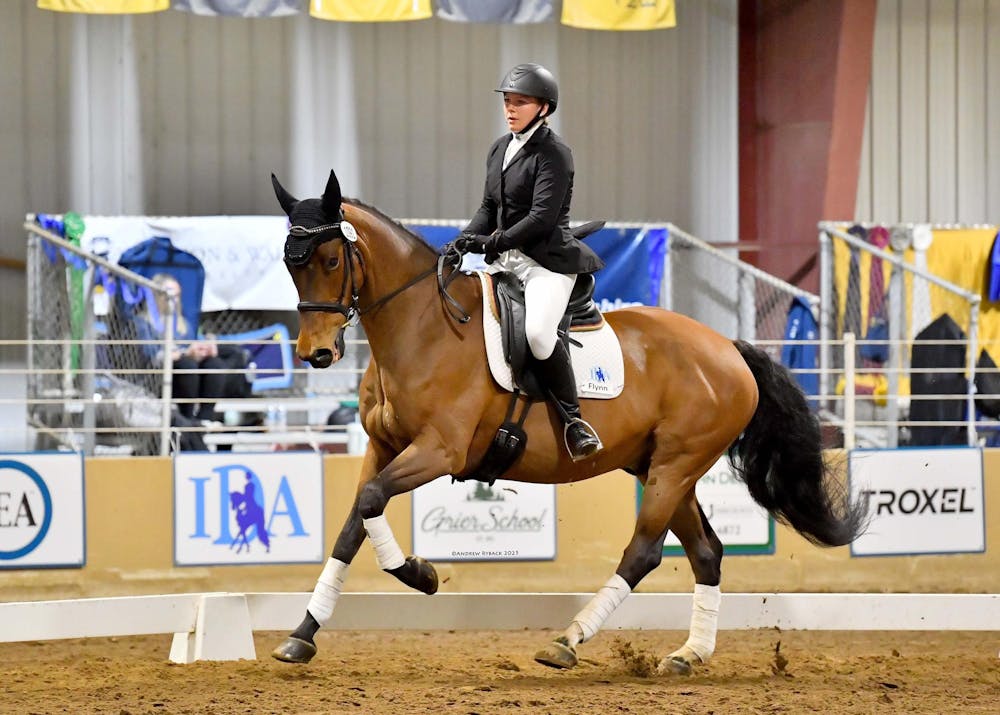
In 2025, Region O for the Intercollegiate Dressage Association was established, making it possible for Western Washington University to participate in the IDA and begin its dressage team from scratch.
With only one season of training, the student-led team made it to Nationals in April. The team continues to thrive and recently finished one of the first competitions of the season, hosted by Washington State University.
Dressage is an equestrian sport focused on the partnership between the rider and the horse to create graceful, effortless movements prompted by the rider's invisible cues.
The invisible cues stem from specific body movements riders make to signal to the horse to switch skills. To not confuse the horse, the riders have to be careful not to make any other excessive movements while riding, said Eleanor McMason, secretary of Western’s dressage team.
“You’re thinking through everything you do before you do it, and being super specific with cues, as well as ensuring that you’re not creating an excess movement that might confuse the horse,” said McMason.
Inherently within the sport, the rider can’t rely only on their own abilities, but also has to create trust and communication with the horse to execute precise movements.
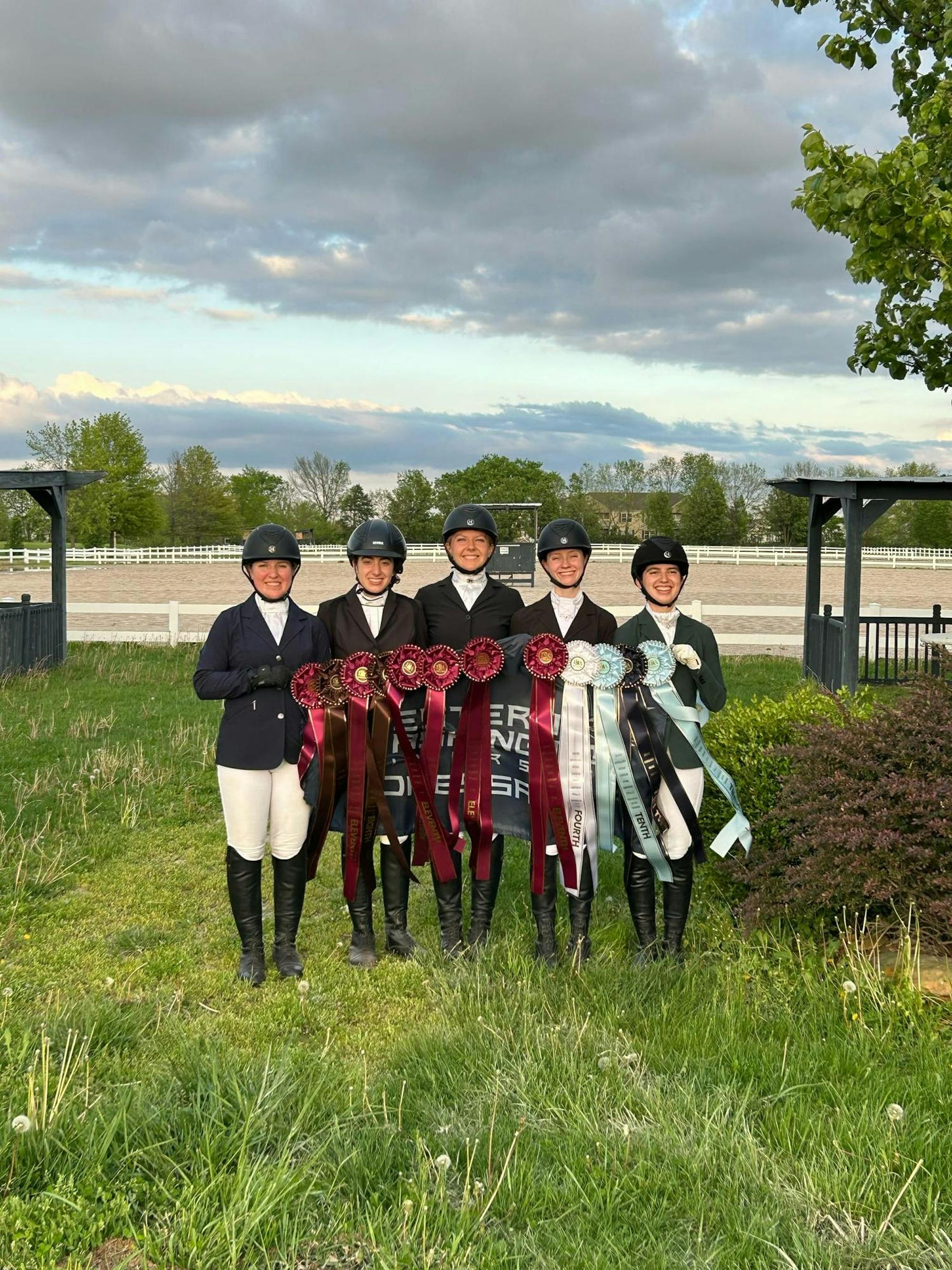
“I love working towards a goal and keep working on it till I’ve mastered it, and dressage works very well for that,” said Megan Gonzalez, president of the Western dressage team. “We are literally scored on how well we complete a specific movement, so I love seeing the progression and knowing what’s left to work on.”
In addition to riders having to be very specific with their cues, dressage is a draw-based sport, meaning in competitions, riders are working with horses they’ve never met or trained with before.
In preparation for competitions, the team trains with a pool of horses to share, sometimes switching between multiple a day, said Hope McCollom, a rider on Western’s dressage team.
The practice also improves a rider’s adaptability to working with a variety of horses.
“We have Howdy, he’ll give you a very different ride than Bombay will, so it's important for us to keep increasing our riders’ adaptability,” McCollom said. “With practices, you can expect to be riding different horses with just different ways of movement and different minds, of course.”
The sport comprises performing a variety of movements where you can be scored on a scale of one through ten at competitions. The team holds group lessons every Monday and Thursday in Blaine to practice, said Gonzalez.
“I’m always a big fan of a stretchy-chewy circle. That’s what we call them when on your test, you have a 20-meter circle where the goal is to allow the horse to stretch downwards and kind of relax through it, then you recollect them into a more carried position,” McMason said.
Any sport, like dressage, that works with animals calls for consideration and adaptation to any conditions that could impact the animal. Weather, noise and moving objects could all play a role in a horse’s performance, McCollom said.
In the team’s last competition, hosted by WSU, the riders had to brave 40 mph winds during the performance, McCollom said.
“It felt like I was riding into battle,” McCollom said. “I was like, ‘This is what horses were originally crafted for.’”
On top of everything, athletes on Western’s dressage team have to prepare for competitions behind the scenes, they're also staying late feeding, grooming and taking care of the horses.
“It's very important to make sure that everybody’s in good shape, you're looking over horses, making sure the blankets are on right, making sure that nobody has any cuts or scrapes or new swellings that might show up,” McCollom said.
Whether the riders are enduring the most demanding aspects of the sport or weathering the harshest conditions, it’s all done between people who share passion and hard work spent on the sport, fostering a community in a seemingly individual sport, McCollom said.
“College teams like ours make the equestrian community more accessible and extend the community. A lot of people do not have access to horses or a lesson program, so I love that people have the chance to explore what has been such a big part of my life,” Gonzalez said.
The team’s next competition will be on Jan. 11 and 12 at Oregon State University.
“I think that dressage is its own art form,” McCollom said. “It really lets you have a really powerful and delicate connection with the horses, and lets you showcase your skills in a really unique way.”
Katherine Konicke-Dunlop (she/her) is a Sports and Recreation reporter for The Front. She is in her second year at Western, majoring in News and Editorial Journalism. Katherine can be spotted out hiking or with her eyes glued to a book in her spare time. You can reach her at katherinekonickedunlop.thefront@gmail.com.


