
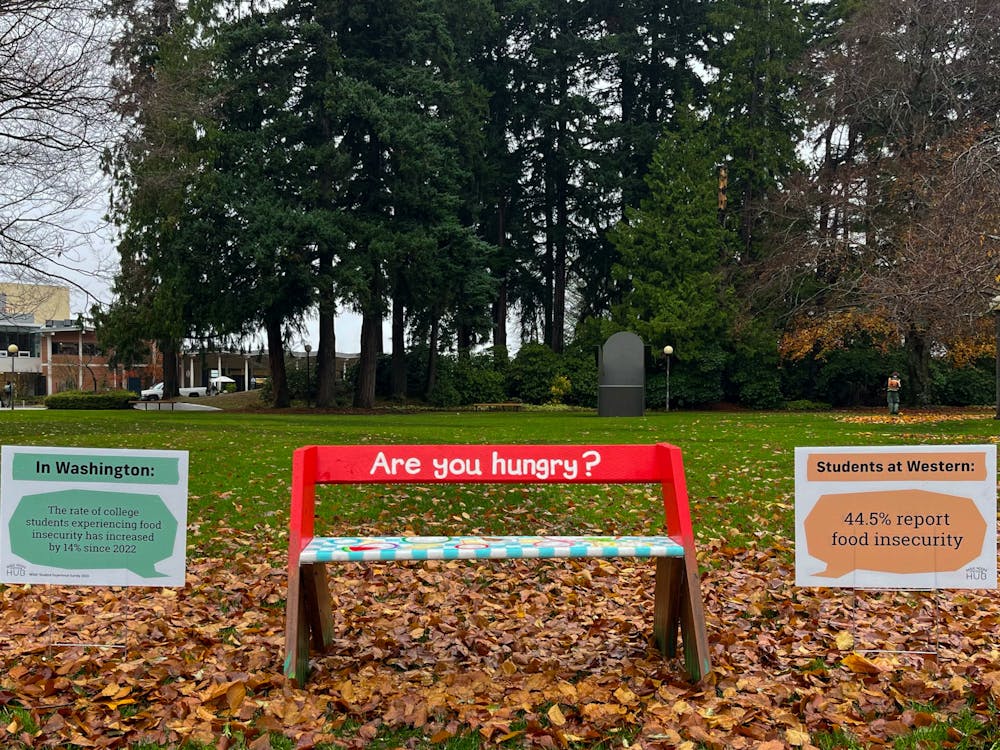
Food insecurity rates among Western Washington University students are on the rise, according to a survey conducted by Western’s Basic Needs Hub. Exacerbated by threats to SNAP funding, inflation and increases in costs of living, food insecurity for college students only continues to worsen.
Western’s Basic Needs Resource Navigator, Gina Ebbeling, said that the WHOLE pantry’s number of visitors has quadrupled since last academic year. Though she thinks part of that increase is awareness of the pantry and its outreach efforts, the primary driver of increased pantry use is the rise in living expenses.
“The cost of living is ridiculously high, and we know that full-ride financial aid does not cover living expenses,” Ebbeling said. “As we see costs increase, whether you're on-campus or off-campus, students aren't able to meet that need. And the students most affected are first-gen students, low-income students and our marginalized student population.”
Recently, visits to the WHOLE pantry have stabilized at around 2,000 students per week, according to the WHOLE Pantry Coordinator Tulea Enochs. However, during the first week of November, as SNAP delays hit, the WHOLE food pantry saw an additional 400 students and spent $1,000 more from donated funds to the pantry than the original budget for that week to address student needs.
According to Enochs, heightened awareness, along with stable funding of the pantry, has increased its use; but also the rise in cost of living, specifically in housing and food expenses, has led to spikes in food insecurity among students and members of the Bellingham population in general.
Food affordability largely dwindled over the past five years due to the disruption in economic activity over COVID, and has been worsened by recent tariffs imposed by the Trump administration, according to Western Associate Professor of Economics Zoë Plakias.
Plakias said that inflation is relatively low overall for food right now, but food is still so expensive because of the major food inflation that took place over the course of the pandemic, so the current low rate of growth in food prices is on top of exorbitant pricing.
“What (tariffs) did is they put some of the food and agriculture industry into disarray,” Plakias said. “It caused people to change their trading relationships, et cetera, and so that impacts the cost of food.”
According to Plakias, Bellingham residents and Western students also have local factors affecting food security rates. When it comes to the affordability of basic needs like housing and groceries, Bellingham’s desirability leads to higher demand for these needs even when there is less available supply of them.
“I think that it's not so much that housing (prices) are rising the fastest, it's that they’re such a large share of household expenses,” Plakias said.
Bellingham’s housing vacancy rate – the percentage of unoccupied residential spaces – is currently at 3% for rentals, indicating an expensive and competitive housing market in which landlords increase rent prices as housing demand grows. As rent prices take up a large portion of students’ budgets, they have less money to spend on already-expensive groceries.
“Gas prices are high, food prices are high, and rent just keeps going up in Bellingham,” Enochs said about students’ budgets and access to basic needs. “But everywhere, cost of living seems to be going up, and wages are not keeping that same pace.”
Combating food insecurity among college students ultimately returns to education’s accessibility in general, according to Ebbeling. She said if college were more accessible and affordable, then students could focus on receiving an education and not struggle as much.
Careful examination of students’ basic needs insecurity is necessary for a thorough community response, Ebbeling said. She finds that as fewer students can afford basic needs, the response must be a community effort, as it isn’t realistic or sustainable for one office to reach every student.
“I just want (students) to know that they're not alone,” Ebbeling said. “They don't need to struggle alone.”
Rosalie Johnson (she/her) is a campus life reporter for The Front this quarter. She is a second year journalism major on the news/editorial track and aims to finish a minor through Western’s Honors College. Outside of reporting, she enjoys watching new movies and exploring Bellingham with friends. You can contact her at rosaliejohnson.thefront@gmail.com.